
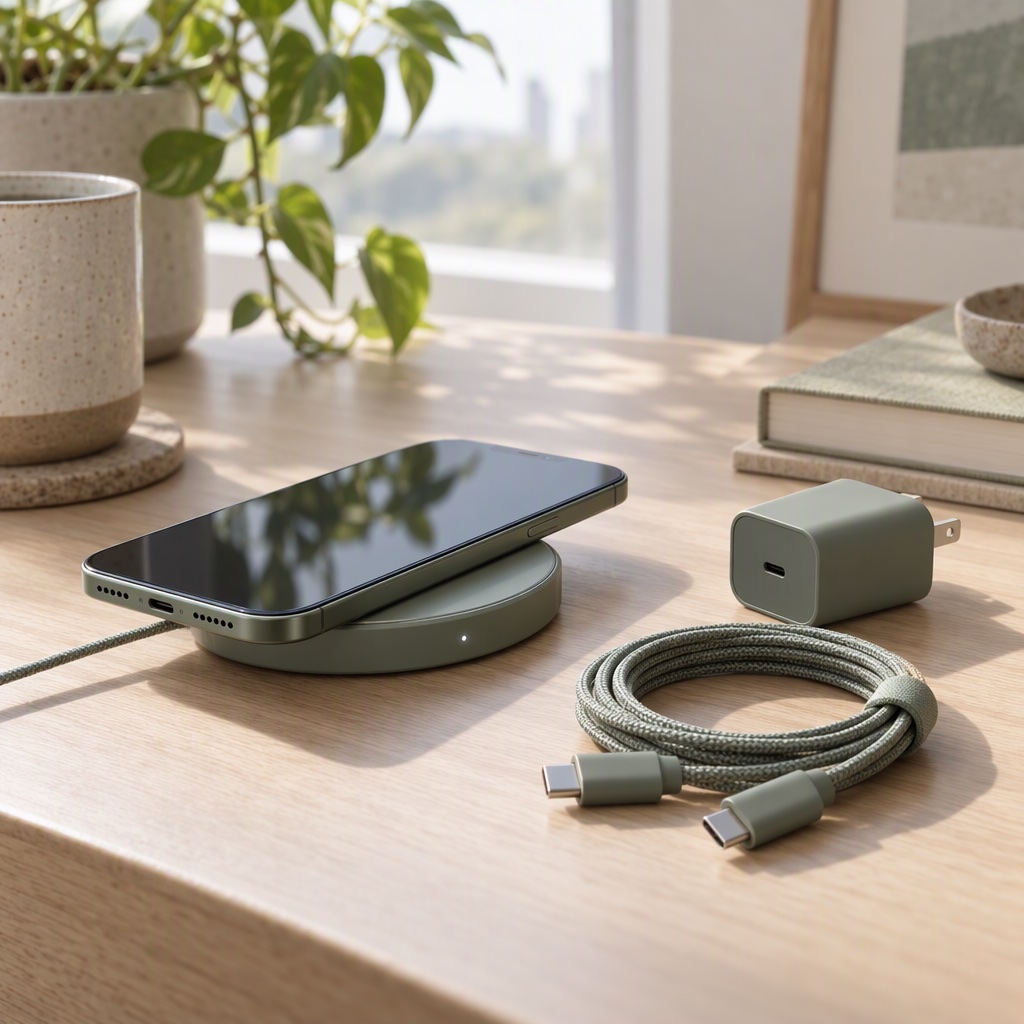
A universal travel adapter is a small block with sliding or interchangeable pins that lets your charger plug into different wall sockets around the world. It does one job: it changes the shape of the plug. It does not change the voltage, it does not speed up charging and it is not the same thing as a converter. That distinction is the single most important thing to understand, because the wrong assumption can damage your device. If you get it right, one adapter and your usual charger will cover almost every trip you take. If you get it wrong, you may end up carrying a brick that does nothing useful at all.
- An adapter changes the plug shape; it does not change the voltage.
- Most modern phone chargers handle a wide voltage range already.
- Buy a reputable adapter with a firm fit and clear ratings.
- Do not use a travel adapter for high-power appliances like hair dryers.
What does a universal travel adapter actually do?
It bridges the gap between the plug on your charger and the socket in the wall. Different regions use different pin shapes and layouts, and an adapter carries the same electrical current through a different physical arrangement. That is the whole function. It does not transform the electricity, and it does not have any clever charging circuitry inside. Most universal adapters cover the common socket types used across much of the world, which is why one device can serve several countries. Some models have a slide mechanism, while others use a set of interchangeable plugs that click into place. Both work, and the choice comes down to how much you value compactness versus simplicity. Whichever you choose, treat it as a plug converter and nothing more.

Cables & Adapters — cable. Designed for everyday carry and backed by our 30-day happiness guarantee.
Do I need a voltage converter as well?
For a phone, almost certainly not, because phone chargers are built to handle a wide range of voltages. Check the small print on your charger; if it lists a broad range rather than a single figure, it will work with the local supply through an adapter alone. A voltage converter is a different, heavier device that actually changes the electricity, and it is needed for appliances that only accept one voltage. The practical point is that you rarely need to carry one for phone charging. Where people get into trouble is plugging a single-voltage appliance into a foreign socket through a travel adapter. The adapter does nothing to protect it. Read the label before you plug anything in, every time.
What should I look for when buying one?
Start with the socket types you actually need, and resist paying for worldwide coverage you will never use. Check the power rating and make sure it comfortably exceeds what your charger draws, because an adapter pushed beyond its rating will run hot. Look for a firm, positive fit: a loose adapter that wobbles in the socket is a genuine hazard and will also cut out at inconvenient moments. A built-in safety shutter that stops anything touching the live pins is a useful feature, especially if you travel with children. Size and weight matter more than people expect, since a bulky adapter competes for space in a small bag. Finally, read reviews about durability, because the moving parts are the first thing to fail on any travel adapter.
Why do my chargers still seem slow abroad?
Usually it has nothing to do with the adapter at all. The adapter only passes power through, so the speed is decided by your charger, your cable and your phone. If any one of those is modest, the charge will be slow wherever you are. A long, thin cable is a common culprit, because it loses power along its length. A charger with a low output is another. Charging a phone while using it heavily adds another reason for slow progress. If you want to understand where the time actually goes, our guide to choosing a power bank covers how output ratings affect real charging. Upgrading the cable is often the cheapest fix.
MagSafe & Charging — charger. Designed for everyday carry and backed by our 30-day happiness guarantee.
Can I plug several devices into one adapter?
You can, but you should think about the total load rather than the number of plugs. Many travel adapters include a socket on the front plus one or two charging ports, which is convenient for a phone and a pair of earbuds. The limit is the total power the adapter can handle, and that figure is often lower than people assume. Charging a phone and a tablet together is usually fine; adding a laptop may not be. The adapter will generally protect itself by cutting out or running hot, neither of which is ideal. If you travel with several devices, consider taking a small multi-port charger and using the adapter only for the plug conversion. That way the adapter carries the load it was designed for and nothing more.
What safety rules should I follow?
Keep the adapter dry, because water and electricity are an obvious and serious combination. Do not leave one plugged in and unattended for long periods, and unplug it when you leave the room. Avoid cheap adapters with thin pins and loose housings, since they are the ones most likely to overheat or arc. Never force a plug into an adapter that does not quite fit, and never bend the pins to make something work. Do not use a travel adapter for high-power appliances such as hair dryers, kettles or heaters, which draw far more than it can handle. Check that the adapter is cool after use, and stop using it if it ever feels hot or smells of burning. If you are ever unsure, buy a local charger instead. Our guide to travelling with a phone covers the wider packing list for a trip.
Frequently asked questions
- Will a travel adapter charge my phone faster? No. An adapter only changes the shape of the plug, so charging speed depends on your charger, your cable and your phone. If charging feels slow abroad, the adapter is almost never the reason.
- Do I need a different adapter for every country? Not usually. A universal adapter with interchangeable pins covers most common socket types, so one device handles many destinations. Check the specific countries on your route before you travel.
- Is it safe to leave a travel adapter plugged in overnight? It is better not to. Charge while you are awake and nearby, then unplug. Adapters are simple devices with no smart circuitry, so unattended use for hours is not ideal.
- Can I use a travel adapter with a power strip? Sometimes, but watch the total load. A power strip multiplies the number of devices, not the power the adapter can safely carry, so keep the combined draw modest and check that nothing gets warm.
- What is the difference between an adapter and a converter? An adapter changes the plug shape and passes the same electricity through. A converter changes the voltage itself. For phone chargers, an adapter is normally all you need.


