
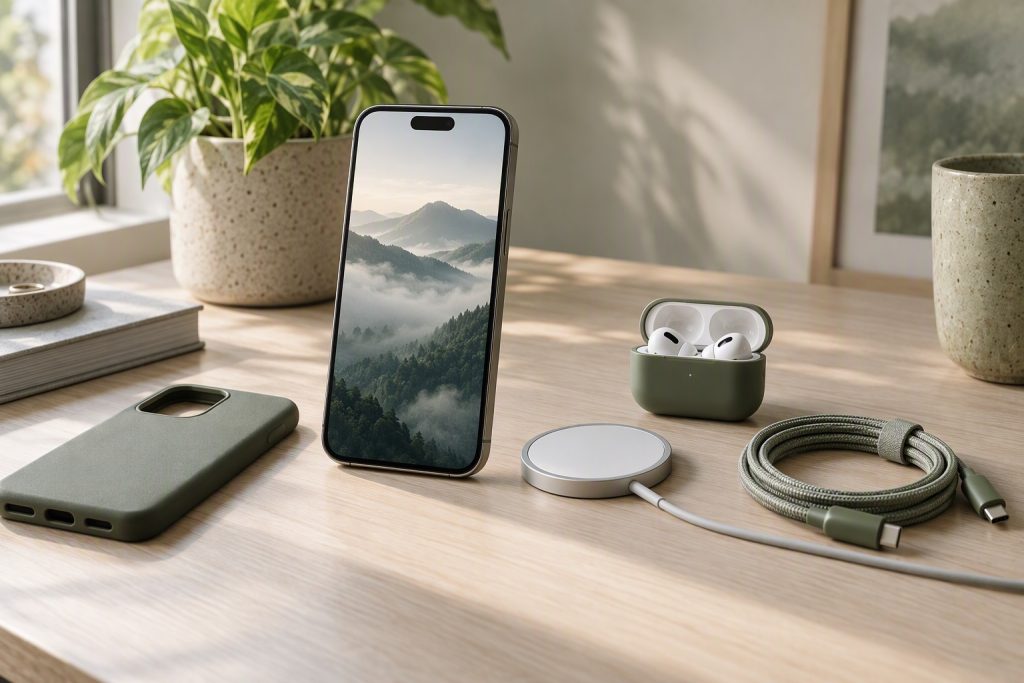
A shared room changes what a phone case has to do. There is more traffic, more surfaces, and more chances for someone to knock the phone off a desk or a bunk, so grip and stability matter more than they would in a room of your own. A case also has to help you keep track of the phone when other people are around, and it should be easy to clean, since shared spaces gather dust faster. The right case for a shared room is one that holds on, stands out, and wipes down easily.
- Choose a case with grip, because shared surfaces get bumped more often.
- Raised edges protect the screen when the phone is set down in a hurry.
- A strap or a distinct color helps you keep track of a phone in a busy room.
- Pick a material you can wipe clean, since shared rooms collect dust quickly.
What is different about a shared room?
A shared room is busier, and that changes the risks. A phone left on a desk can be knocked by someone passing, a phone on a bunk can be pulled off by bedding, and a phone charging on the floor can be stepped on. There is also more dust, more surfaces, and less certainty about where your things are. A case cannot solve all of that, but it can make the phone harder to knock, easier to spot, and simpler to keep clean. The priorities shift toward grip, protection at the edges, and a finish that does not show every mark. In a room of your own, looks might come first; in a shared room, holding on comes first. A distinct colour per person is the simplest way to stop cases migrating between housemates.
iPhone Cases — case. Designed for everyday carry and backed by our 30-day happiness guarantee.
Why does grip matter when a phone is in shared space?
Grip matters because most shared-room accidents start with a phone sliding. A glossy case on a smooth desk moves when the table is bumped, and a slippery phone slips out of a hand during a quick grab. A case with a textured or matte back grips both the surface and your hand, which reduces the two most common ways a phone ends up on the floor. Grip also helps on a bunk, where a phone can slide off a mattress or a shelf with the slightest nudge. If you already like a smooth case, a ring or a strap adds grip without changing the look. On balance, a slightly grippy case is the simplest upgrade for a shared room. A case with a raised lip protects the screen on a shared desk that everyone dumps things on.
How do you keep a phone private in a shared room?
Privacy is mostly about habit, but a case can help. Facing the screen down when you set the phone on a desk keeps messages out of sight, and a case with raised edges makes that safe for the glass. If you leave the phone charging, place it screen-down or angled away from the room. A case that covers the screen, such as a fold-over design, hides the display completely and protects it at the same time. You can also use a screen film that narrows the viewing angle, so the screen is only readable from directly in front. None of this replaces locking the phone, but it removes the easy glances that happen in a shared space. Pick a material that wipes clean, because a shared room means more hands and more crumbs near the phone.
How does a strap or case help you keep track of it?
In a shared room, a phone is easy to misplace because it moves between hands, desks, and beds. A case with a strap attachment lets you keep the phone on your person or hang it somewhere you will see it, rather than leaving it loose on a shared surface. A distinct color or pattern makes the phone easy to identify at a glance, which matters when several people in a room have similar devices. If you charge the phone on a shared desk, a strap can hang it off the edge of a shelf so it is not in anyone’s way. Keeping the phone attached or visible is the simplest way to stop it going missing. If this is a recurring worry, see how to stop losing your phone. Avoid anything with a strong smell, since a new case odour lingers in a small space.
What should you avoid with roommates around?
Avoid cases with loose parts that can catch on bedding or be picked up by mistake, and avoid a case so plain that it blends into everyone else’s. Avoid smooth, glossy finishes that slide off shared surfaces, and avoid anything that makes the phone hard to clean, such as deep grooves or fabric that holds dust. Avoid a case that blocks the charging port, because in a shared room you will often be charging on a desk or a floor socket. And avoid leaving a bare phone out at all; a case is what stands between a busy room and a cracked screen. Choose something simple, grippy, and easy to wipe, and you remove most of the shared-room risks in one decision. A slim case slips into a shared drawer more easily than a bulky one, which is where the phone usually lives.
How do you keep a shared-room case clean?
Clean the case more often than you would in a room of your own, because shared spaces gather dust and the phone passes between more surfaces. Wipe the outside every week with a damp cloth and mild soap, and take the case off once a month to clear the grit that builds up around the camera and the edges. Pay attention to any strap or attachment point, since those trap dirt. Let everything dry fully before reassembling. If the case has softened or discolored, replace it rather than waiting, because a worn case protects less than it appears to. For the wider topic, read how to keep your phone secure in public.
Frequently asked questions
- Do I need a special case for a shared room? Not a special one, but a grippy case with raised edges and an easy-to-clean finish handles shared-room life best.
- How does a strap help? It keeps the phone on you or hanging somewhere visible, so it is less likely to be left on a shared surface and misplaced.
- Is a fold-over case better for privacy? It hides the screen when closed and protects the glass, which suits a room where the phone is often left out.
- How often should I clean the case? Weekly, in a shared room. More people and more surfaces mean more dust and oil.
- Should I worry about roommates using my phone? Lock it as usual. A screen-down habit and a cover reduce casual glances, but a passcode is still the real protection.


