
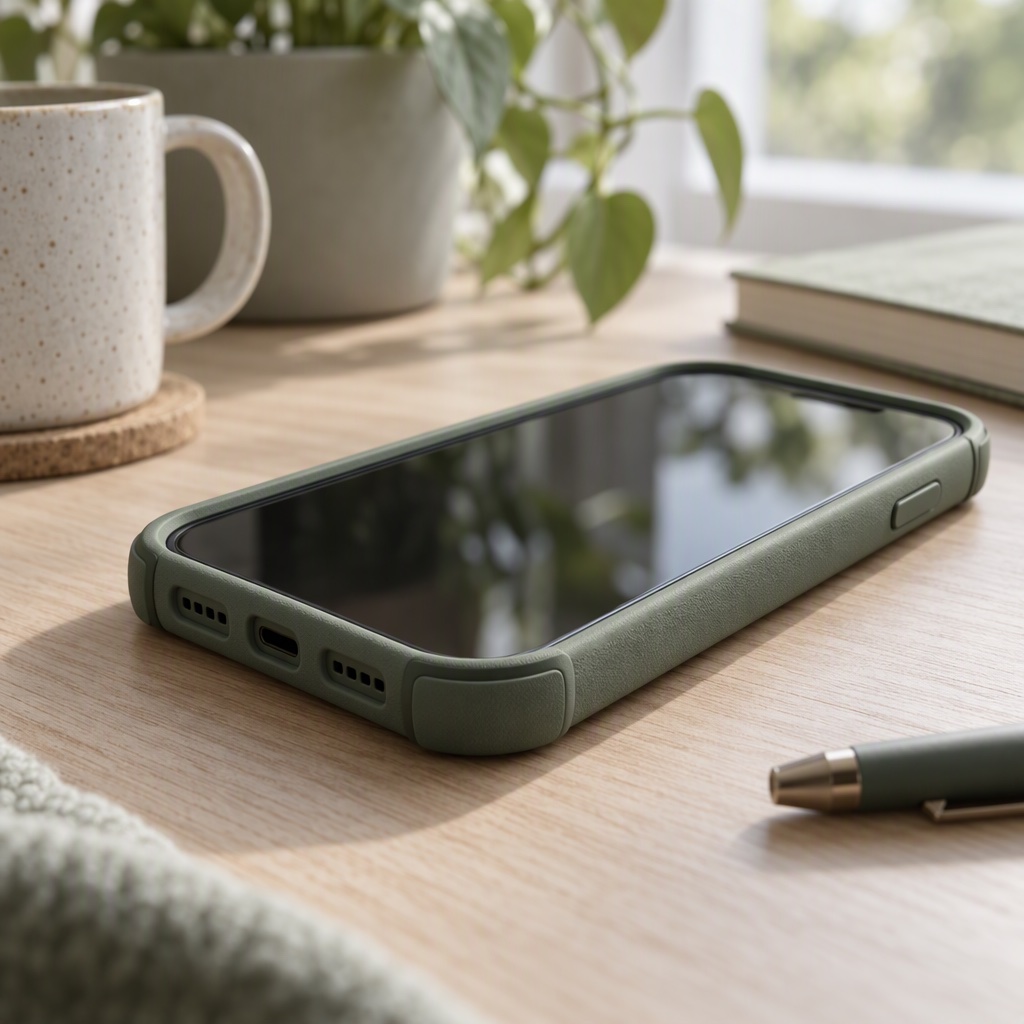
An anti-microbial phone case is a case whose surface has been treated to slow the growth of microbes on the material itself. The treatment is built into the plastic, the coating, or the fabric during manufacture, so it works continuously rather than only when you clean. It is not a coating you apply at home, and it does not make the case sterile. What it does is reduce how quickly the surface becomes a friendly place for microbes to multiply between cleanings, which is a modest but real difference in a product you handle dozens of times a day.
- The treatment is built into the material, not sprayed on afterwards.
- It slows microbial growth on the surface; it does not sterilize the case.
- You still need to clean the case, because dirt and oils build up anyway.
- The benefit fades if the surface wears or the treatment is only on the coating.
What does anti-microbial actually mean on a phone case?
It means the manufacturer has added an agent to the material that interferes with the growth of microbes on the surface. The agent may be mixed into the plastic itself, applied as part of a coating, or woven into a fabric back. In practice the effect is a slower buildup of microbes between cleanings rather than a permanently clean surface. Two cases with the same description can behave very differently, depending on whether the treatment is throughout the material or only on the outer layer. That is why the useful question is not whether a case is labelled anti-microbial, but where the treatment sits and how long it is expected to last. A treatment that only lives in a coating will fade as the coating wears.
iPhone Cases — case. Designed for everyday carry and backed by our 30-day happiness guarantee.
How does an anti-microbial case differ from a regular one?
Visually, not at all. The difference is in the material, not the design, so you cannot tell by looking or by feel. In everyday use the two are similar, which is why the honest answer is that an anti-microbial case is a regular case with an extra property built in. What changes is the interval between cleanings before the surface becomes a comfortable place for microbes to grow. For a phone that is handled constantly, set down on public surfaces, and shared between family members, that interval may matter to you. For a phone that lives in a pocket and is rarely shared, the practical difference is small. The case should still be chosen first for fit, grip, and protection, with the treatment as a bonus rather than the main reason to buy.
Does it mean you can stop cleaning your phone?
No. An anti-microbial treatment works on the material, but it does nothing about the dust, oils, sunscreen, and general grime that collect on a case through the day. Cleaning removes those, and a clean surface is easier to keep clean. The sensible routine is the same as for any case: wipe it regularly with a soft cloth, use a mild soap and water solution when it needs more, and pay attention to the edges, the camera cutout, and the area around the buttons, where grime collects. If you use a screen protector, clean that too, since it is the surface you touch most. The treatment reduces what grows between cleanings; it does not replace the cleaning. Our guide to cleaning a phone without damaging it covers the method.
Which parts of a case are usually treated?
Usually the outer shell, because that is what your hands touch. Some designs also treat the inner lining, which matters less because it sits against the phone rather than your skin. On fabric-backed cases the treatment is often in the fabric, while on hard plastic it is usually mixed into the shell material. The parts that are rarely treated are the ones added afterwards: metal rings, magnets, brackets, and any soft inserts. That means a case with a large ring or grip may have untreated surfaces in exactly the spots your fingers rest. If the treatment is important to you, look for a case with a simple, single-material design rather than one with lots of attached parts.
Is an anti-microbial case worth the extra cost?
It depends on how you use the phone. If you share it, set it down on public surfaces, use it in a kitchen or a gym, or hand it to children, an anti-microbial surface is a reasonable extra. If your phone lives in your pocket and your bag and is rarely handled by anyone else, the benefit is smaller and you may prefer to spend the difference on better grip or a more protective design. Treat the treatment as one small factor among several. Fit matters more, because a case that blocks a port or covers a microphone is a daily annoyance. Protection matters more, because a cracked screen costs far more than a case. Buy the case that suits your phone, and let the surface treatment be the tie-breaker. Our notes on what collects on a phone screen are a useful companion.
How should you look after an anti-microbial case?
Clean it gently and often, and avoid anything abrasive. Harsh solvents, scouring pads, and alcohol-heavy wipes can strip a coating, and once the coating is gone the treatment goes with it. A soft cloth with mild soap and water is enough for most marks, and a dry cloth finishes the job. Remove the case from the phone occasionally so you can clean the inside and the edges, where dust and grit collect, and check the camera cutout for buildup. If the case has a fabric back, follow the maker’s guidance rather than soaking it. Replace the case when the surface becomes shiny, tacky, or visibly worn, because a worn surface both traps more grime and may have lost its treatment. A simple cleaning habit does more for a case than any additive.
Frequently asked questions
- Does an anti-microbial case kill germs instantly? No. The treatment is designed to slow growth on the surface over time rather than to destroy everything that lands on it. Cleaning is still what removes dirt, oils, and grime from the case.
- How long does the treatment last? It depends on the design. A treatment mixed through the material lasts as long as the case, while one in a coating can wear away with use. Follow the maker’s guidance and replace the case when the surface looks worn.
- Can I use alcohol wipes on an anti-microbial case? Check the maker’s guidance first. Frequent alcohol use can dull coatings and finishes, so a soft cloth with mild soap and water is usually the safer everyday option.
- Is an anti-microbial case better for a family phone? It can be a sensible extra if a phone is passed between several people, since it slows growth on the surface between cleanings. It is not a substitute for cleaning, and it does not protect against drops.
- Do anti-microbial cases protect the screen? No. The treatment applies to the case surface, not the display. Screen protection comes from a raised lip on the case and, if you want it, a screen protector.


