
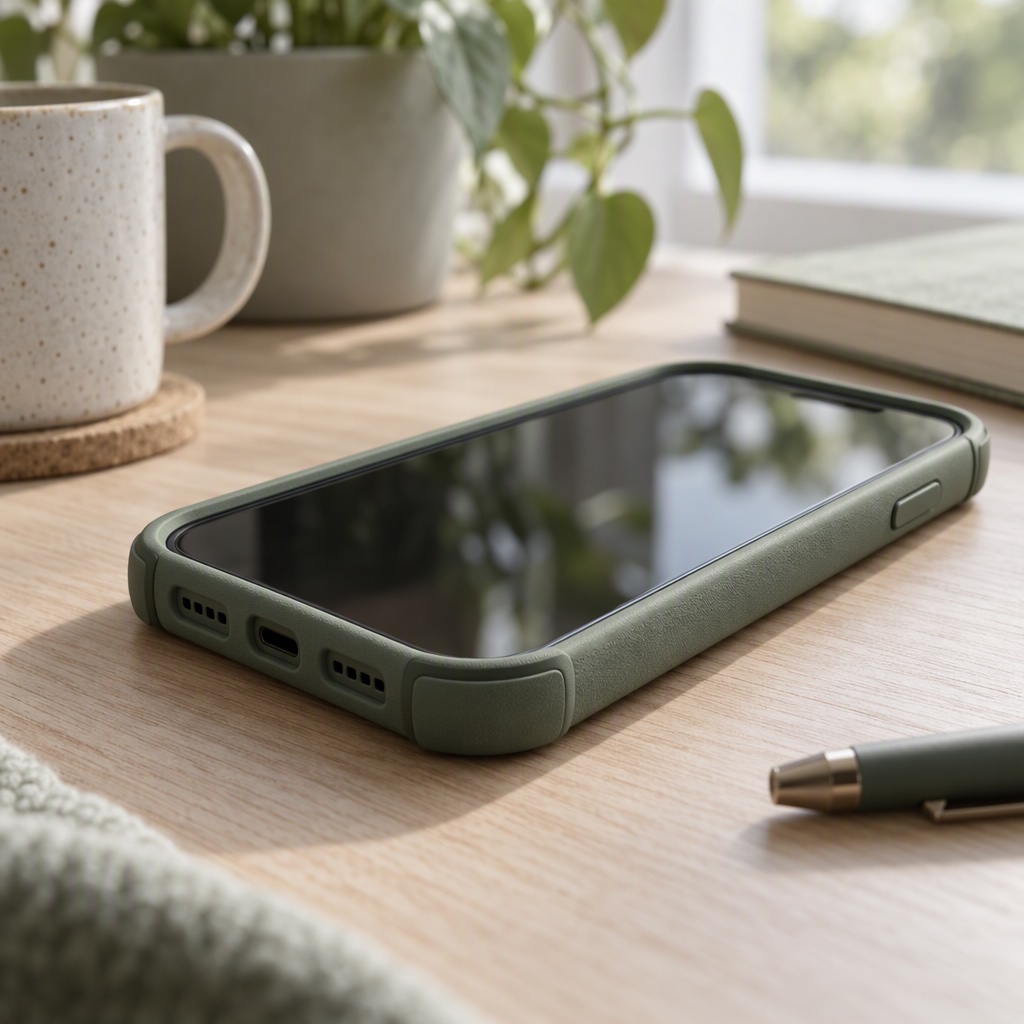
A heat-dissipating phone case is designed to move warmth away from the back of your phone instead of holding it in. Every phone sheds heat through its surface, and a case sits directly over that surface, so the material and thickness of the case decide how easily that heat escapes. A case built for heat dissipation uses materials and shapes that spread and release warmth rather than trapping it. It will not make a phone run cold, and it is not a substitute for keeping the phone out of the sun, but it can help a warm phone recover faster and stay steadier during long, heavy use in summer. Understanding what the term really means helps you tell a genuinely useful design from a marketing claim.
- A heat-dissipating case spreads and releases heat instead of trapping it.
- Thin, thermally conductive materials work better than thick, insulating ones.
- No case can cool a phone below the surrounding air temperature.
- The biggest gains come from shade, airflow, and not charging while hot.
What does “heat-dissipating” actually mean?
Heat dissipation is the process of moving warmth away from a hot object and spreading it into the surrounding air. In a phone case, that means using a material that conducts heat reasonably well and a shape that exposes more surface area to the air. Metal-backed panels, thin hard shells, and cases with vented or grooved backs are all approaches to the same idea. The goal is not to generate cold, which no passive case can do, but to avoid adding insulation. A heat-dissipating case accepts that your phone will produce heat and tries to help it leave rather than holding it against the device. That is the whole principle, and while the effect is modest, it is real. It is a design intent, not a magic trick. If a case promises to keep a phone genuinely cold, that claim is worth treating with suspicion, because no passive shell can do it.
iPhone Cases — case. Designed for everyday carry and backed by our 30-day happiness guarantee.
How does a case affect how a phone sheds heat?
A phone loses heat mainly through its back and edges, so anything covering those surfaces changes the rate of cooling. A thin shell with a conductive back lets warmth pass through and spread out, while a thick rubber or padded case acts like a blanket and slows the process. The difference is most noticeable during heavy tasks, like gaming, navigation, or recording video, when the phone is producing a lot of heat. In those moments, a case that insulates can push the phone toward a heat warning sooner. A case that conducts spreads the warmth across a wider area, so no single spot gets as hot. Neither case breaks the laws of physics, but one clearly helps the phone more than the other when the workload is heavy. A tight, thin case also transfers heat to the air more readily than a bulky one with gaps and padding inside.
Which materials conduct heat away best?
Metals conduct heat well, which is why some cases use a metal plate or a metal-backed panel. Hard plastics fall in the middle, conducting better than rubber or silicone but worse than metal. Soft rubberized and padded cases are the best insulators, so they hold heat in the most. That does not automatically make a metal case the right choice, because metal can feel hot to the touch and can interfere with wireless charging if it is placed wrongly. A practical middle ground is a thin hard shell with a conductive back panel, or a case with a grooved, textured back that increases surface area. The best choice is the one that balances protection, grip, and heat for how you actually use your phone. Whichever you pick, check that it still fits snugly, because a loose case leaves gaps that trap warm air.
Does a heat-dissipating case really help?
It helps, but modestly. Any passive case tends to show small differences rather than dramatic ones, because the phone’s own cooling and the surrounding temperature do most of the work. What a good case can do is avoid making things worse, which is more than an insulating case manages. During a long session in warm weather, a conductive case may delay a heat warning and let the phone recover faster once you stop. It will not rescue a phone left in direct sunlight or one that is fast-charging in a hot car. Treat a heat-dissipating case as one helpful piece of a summer routine, not as a fix on its own. In short, it is a small edge, not a cure. For the wider picture, see our piece on whether a phone case traps heat.

iPhone Cases — case. Designed for everyday carry and backed by our 30-day happiness guarantee.
What about metal plates and magnetic rings?
Accessories attached to the back of a case change the thermal picture. A thin metal plate for a magnetic mount adds a conductive layer that can spread heat, but if it sits between the phone and the case it can also create a small air gap that insulates. A magnetic ring holder does something similar: the ring adds metal, but the mount adds bulk and sometimes a layer of adhesive. The practical answer is that these accessories matter far less than the case material and how much you use the phone. If you rely on a magnetic mount, choose a case that is already thin and conductive rather than adding several layers on top. Keep the stack of back-panel accessories as simple as you reasonably can, and the heat has fewer places to hide.
When is a heat-dissipating case worth buying?
It is worth considering if you use your phone heavily in warm weather, whether that is gaming, filming, or long drives with navigation running. It is also a sensible choice if you have ever seen a heat warning and want to reduce the odds of seeing another. If you mostly use your phone lightly in a temperate climate, the difference will be small and you should choose your case for protection and grip instead. When you do buy one, look for a thin hard shell, a conductive or grooved back, and a design that leaves the phone’s edges exposed to the air. For material comparisons, our guide to silicone, TPU, and polycarbonate cases is a good next read.
Frequently asked questions
- Can a case actually cool my phone? No passive case can cool a phone below the air around it. A good case simply lets heat escape faster than an insulating one.
- Are metal cases best for heat? Metal conducts heat well, but it can feel hot and may interfere with wireless charging. A thin hard shell with a conductive back is often a better balance.
- Does removing the case help a hot phone? Yes. Removing the case exposes the back of the phone to the air and speeds cooling, which is the simplest fix when a phone runs warm.
- Will a heat-dissipating case stop heat warnings? It may delay them, but it cannot prevent them if the phone is in direct sun or charging while hot.
- Is a thick case always bad for heat? Thick, padded cases insulate the most, so they tend to run warmer. If heat matters to you, keep the case thin.


