
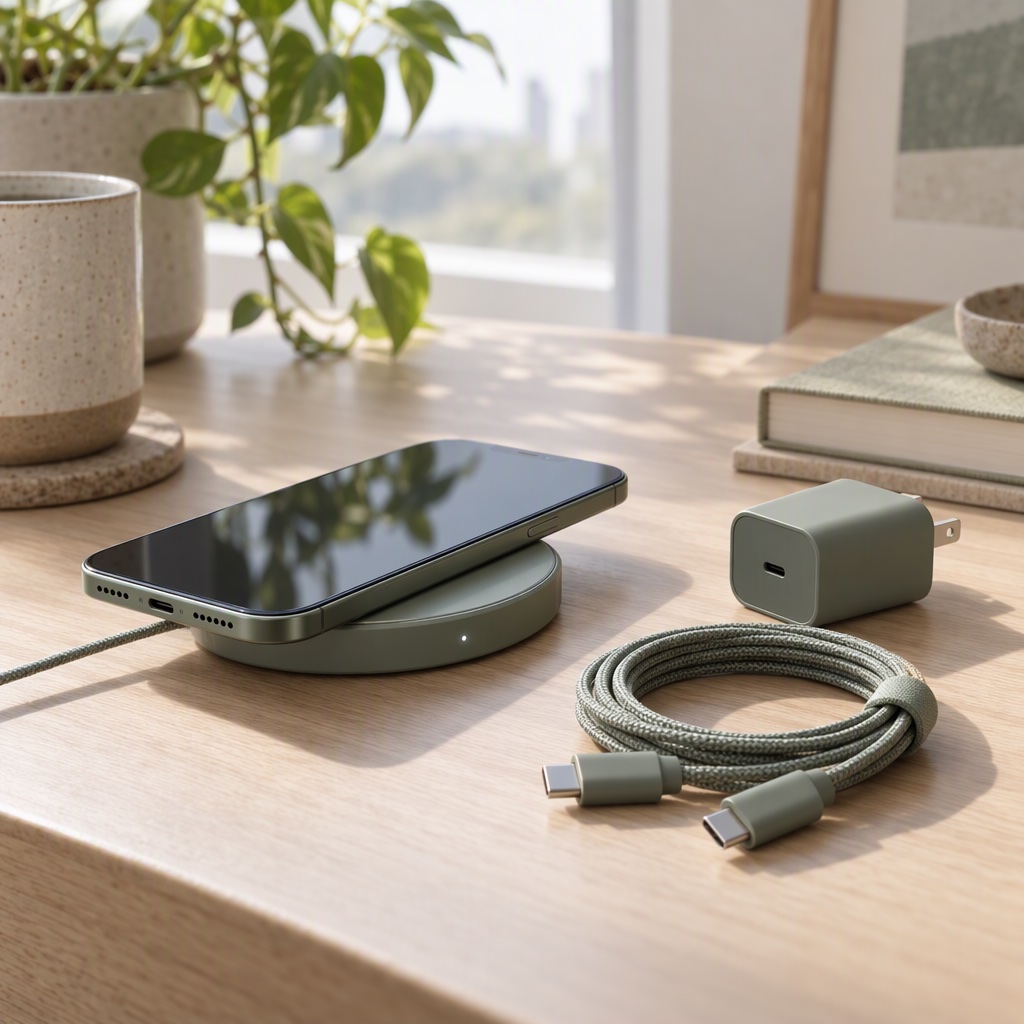
A good travel cable kit is small, boring, and complete. Most kits fail in the opposite direction: three cables for one device, two chargers for one phone, and a tangle that takes five minutes to sort out in a hotel room at midnight. The principle is simple — one cable per device, one charger with enough ports to run everything at once, one adapter that bridges a format gap, and a small pouch to keep it all together. Everything else should have to justify its place against a single question: if I leave this at home, what stops working? Answer honestly and the kit gets smaller every trip.
- One cable per device plus one spare covers almost every trip; extra cables add weight and tangle.
- A charger with several ports matters more than spare cables, because hotel rooms rarely have free outlets.
- Carry small adapters that convert between connector types, and leave the bulky ones at home.
- Coil cables loosely, secure them with soft ties, and keep them in a pouch with separate compartments.
What actually belongs in a travel cable kit?
A good travel kit is small, boring, and complete. Start with one cable for the phone you carry, one charger with enough ports to run everything at once, and one adapter that bridges the gap between the plugs you will meet. Add a small pouch to hold it all and a short cloth for cleaning ports and screens. That is the core. Everything beyond it should have to justify its place against the question: if I leave this at home, what stops working? Most travel kits fail in the opposite direction — three cables for one device, two chargers for one phone, and a tangle that takes five minutes to untangle in a hotel room at midnight. Fewer, better items, checked before you leave, is the whole principle.
MagSafe & Charging — charger. Designed for everyday carry and backed by our 30-day happiness guarantee.
How many cables do you really need?
One per device, plus one spare if the trip is longer than a few days. That is it. Cables are cheap to replace and expensive to carry in bulk, because they take up space, tangle, and add weight. The spare matters because a cable that fails on day one of a week away leaves you reliant on hotel ports and shop prices. If you charge several things — a phone, earbuds, a watch — a charger with multiple ports means you can run them all from one wall socket, which matters far more in a hotel room with one free outlet than the cables themselves. Match the cable to the port on your phone, and label the ends if you travel with more than two.
What adapters earn their place?
Adapters are the smallest items in a kit and the ones most likely to save a trip. A small plug that converts one connector type to another costs almost nothing in weight and lets you use whatever cable is available. An adapter that turns a phone connector into a standard USB port is useful for reading a card, a keyboard, or a camera, and it is the kind of thing you only miss when you need it. A short cable that handles a specific job — connecting a phone to a screen, for example — earns its place only if you know you will use it. The rule is simple: carry adapters that convert between formats you will actually meet, and leave the rest. It is also worth checking that the adapter works with the case on your phone, because a bulky case can stop a short plug seating fully — a small detail that wastes an evening when you discover it.
How do you pack cables so they stay usable?
Coil each cable loosely into a loop and hold it with a soft tie or a strip of hook-and-loop tape. Do not fold a cable sharply at the connector, which is exactly where cables break, and do not wind them tightly around a charger. A small pouch with separate compartments stops everything tangling into one knot and lets you find the cable you want without emptying the bag. If the kit lives in a backpack, put it in the same place every time so you notice immediately when something is missing. Keep the pouch out of the bottom of the bag where heavy items press on the connectors, and check the kit before every trip rather than assuming it is still complete. If you fly, keep the pouch in your carry-on rather than a checked bag, so you can charge during a layover and a delayed bag does not take your cables with it.

Cables & Adapters — cable. Designed for everyday carry and backed by our 30-day happiness guarantee.
What should stay at home?
Most of what people pack for a short trip, honestly. Long cables you never use, a second charger for a device you left behind, a hub with six ports, and any cable whose device is not in the bag. The heaviest item in a travel kit is usually the one you brought just in case. Be strict: if you cannot name the moment you will use it, it stays home. One exception is a short adapter that covers a format gap, since it weighs almost nothing and covers a real risk. Another is a spare cable for your main device on any trip longer than a few days. Beyond that, travel light and buy locally if something turns out to be missing.
How do you keep a travel kit organized over time?
A kit drifts. Cables get borrowed, chargers get left in hotel rooms, and after a few trips the pouch contains three of something you never use and none of what you need. The fix is a short reset after every trip. Empty the pouch, check each item works, and put back only what you actually used. Replace anything that frayed or that you had to wiggle to make work, since a cable that is failing at home will fail completely on the road. Keep a list of what belongs in the kit and check it before you pack, which takes about a minute and saves the trip. If you travel often, a dedicated kit that never gets used at home stays complete. For the wider topic, read universal travel adapters for phone charging and how to pick the right USB-C cable.
Frequently asked questions
- How many cables should I pack for a week away? One for your main device plus one spare is enough. Extra cables add weight and tangle, and are easy to buy locally.
- Do I need a multi-port charger? It helps when a hotel room has one free outlet, which is common. It also means fewer chargers to carry overall.
- Are travel adapters worth carrying? The small ones that convert between connector types are, because they weigh almost nothing and solve a real problem. Bulky ones rarely are.
- How do I stop cables tangling? Coil them loosely, secure each with a soft tie, and keep them in a pouch with separate compartments rather than loose in a bag.
- When should I replace a travel cable? As soon as it needs wiggling to work or the outer sheath has split at the connector. A cable failing at home will fail completely on a trip.


