Pocket, bag and pouch each win in different situations, so there is no single right answer. A pocket is fastest and needs nothing extra. A bag protects the phone best and carries everything else with it. A pouch sits between the two, keeping the phone separate from your other items and holding a card, while staying on your body. The best choice matches how often you reach for the phone and what else you are carrying.
- Pocket wins on speed and simplicity as long as you keep that pocket clear.
- Bag wins on protection and capacity, but the phone is out of reach when you need it.
- Pouch wins on separation, keeping the phone away from keys, coins and grit.
- Choose by how often you reach for the phone rather than by what looks best.
What is the difference between a pocket, a bag and a pouch?
A pocket is part of what you are already wearing, so it costs nothing and adds no bulk, but it shares space with whatever else is in there. A bag is a separate container that carries the phone plus everything else, which protects the phone well but puts it out of reach and makes it easy to walk away from. A pouch is a small soft case worn on a belt or a strap, sized for a phone and a card or two, and it keeps the phone separate from other items while keeping it on your body. The three differ mainly in how quickly you can reach the phone and how much else travels with it. A pocket holds the phone against your body, while a bag lets it ride loose among other objects.
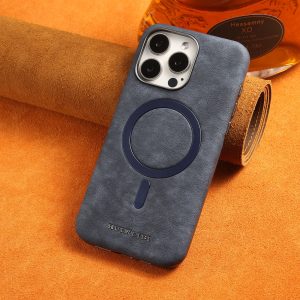
Which one protects a phone best?
A bag protects best, as long as the phone sits in its own compartment. Inside a bag the phone is cushioned by fabric, shielded from rain and never pressed against keys or coins, provided you use a padded pocket or a sleeve rather than dropping it loose among a water bottle and a set of keys. A pouch comes second, because it separates the phone from other items and covers it, though it offers less padding than a bag. A pocket comes last for protection, because it is thin, exposed to body heat and sweat and usually shared with something that can scratch. In all three cases, how corner protection works does more for the phone than the carrier itself.
Which carry method is fastest when you need your phone?
A pocket wins clearly, because the phone is already on your body at hand height with no zip, strap or flap in the way. A pouch is next, since a good one opens one-handed and lets the phone slide out without snagging, but there is still an extra step. A bag is slowest, because you have to reach in, find the phone among other items and often open a zip or a magnetic flap. If you check your phone dozens of times a day, speed matters and a bag will annoy you. If you check it a few times a day, the extra protection of a bag is worth the slower access. When you are in a hurry, that extra second is the whole difference between a pocket and a pouch.
Which one is best for a phone and a few cards?
A pouch, or a case with an integrated card slot. Both keep the phone and the cards in one object, which means nothing separate to remember and nothing sliding around loose. A pouch usually gives the cards their own compartment, so they do not rub against the glass or the camera lens. A card slot case is even faster to use, but it is limited to about two cards before it stops closing flat. A pocket can work if you use a slim wallet, though the phone and the wallet will press against each other. A bag is fine but overkill if a phone and two cards are all you carry, so match the container to the load. That is the simplest way to carry both without a bag, and it keeps one hand free.
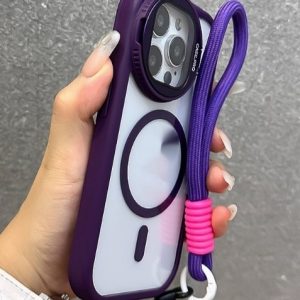
How does weather change the answer?
Rain changes it a lot. A pocket offers almost no protection, and a soaked phone in a wet pocket is how water damage starts, particularly at the charging port and the speaker grilles. A pouch with a flap or a zip keeps most rain off and is easy to wipe dry. A bag with a padded inner pocket is the safest option in heavy rain, provided the bag itself is not soaked through. Heat matters too, because a phone in a trouser pocket pressed against your leg gets warm, and a phone in a bag in direct sun also heats up. Cold affects battery behaviour in all three. In bad weather, prioritise coverage over speed. If budget is on your mind, how much to spend on a case explains where the money is best spent.
Which should you choose for a normal day?
For a normal day, start with a pocket and a good case, and add a pouch only if your pockets are shallow or shared with keys. That combination is fast, free and protected. If you commute with a laptop, a bag is already there, so use its padded pocket and keep the phone off your body. If you work on your feet and need the phone quickly and safely, a belt pouch is the compromise that keeps it accessible and separate from everything else. Reassess whenever your habits change, because the right answer in summer, with light clothing, is often different from the right answer in winter, with a coat. There is no single answer that suits every day of the year, so treat this as a default rather than a rule.
Frequently asked questions
- Is it bad to keep a phone in a trouser pocket all day? It is workable if the pocket is deep and shared with nothing else. The main drawbacks are warmth from your leg, sweat and the risk of the phone bending when you sit, so avoid back pockets.
- Do I need a pouch if I already use a bag? Usually not. A padded pocket inside the bag gives the phone the same separation and more padding, so a pouch would be a second container for the same job.
- Can a pouch and a bag be used together? Yes, and some people do it on purpose. Keep cards and the phone in the pouch while travelling and put the pouch itself in the bag, which means one object to move rather than several loose items.
- Which option is best for the gym? A pocket and a pouch are both poor choices during exercise because of sweat and movement. Use an armband or a strap so the phone is fixed to you and the screen is covered.
- How do shipping and returns work? Tracked shipping is free on orders over $49 with baskets up to 1.25 kg and takes 10 to 20 business days, below $49 shipping is calculated at checkout, and unused items in original packaging are covered by the 30-day happiness guarantee.