Corner protection works by absorbing impact where a phone is most likely to land and least able to survive it. Corners concentrate force into the smallest possible area, and they sit at the joint between the glass and the frame, which is the weakest part of the structure. A case protects a corner by adding material there, by flexing to absorb energy, and by spreading the load away from the display. The shape of the corners matters more than the overall thickness of the case.
- Corners take the most force because they concentrate impact into the smallest area.
- Reinforced corners are thicker and often combine a flexible bumper with an internal rib.
- Air pockets and honeycomb structures flex on impact instead of passing force to the frame.
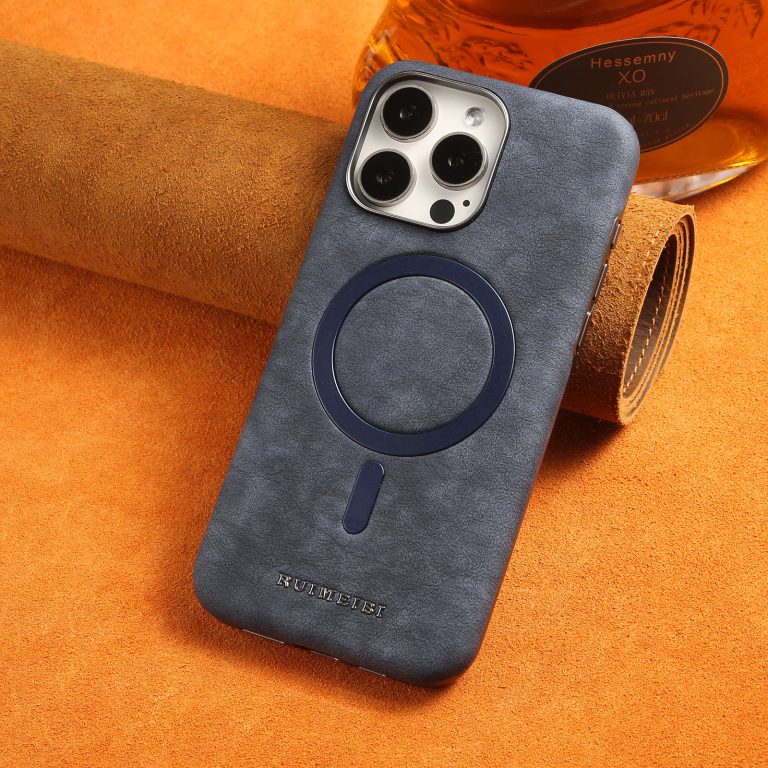
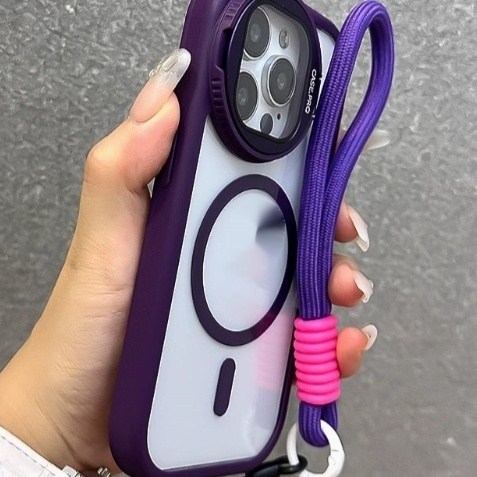
- Check the corner photos rather than the back photo when judging how well a case protects.
Why do corners take the most damage?
Corners are the sharpest points on a phone, so they concentrate force into the smallest area. When a phone falls and lands on a corner, the energy does not spread across a flat face but goes into a point, which is why corner strikes crack screens and dent frames far more often than flat drops do. Corners are also where the glass meets the metal or plastic frame, and that joint is the weakest part of the structure. A flex at the corner puts stress on the display panel from the edge inward, and screens typically crack from the edge. That combination of small contact area, structural joint and display edge is why corners need more material than the back. That is also why corner thickness is worth more than a thicker back panel.
What does reinforced corner protection look like?
Reinforced corners are visibly thicker than the rest of the shell, often with a rounded or bulbous shape rather than a sharp corner. Inside, they usually combine a flexible bumper with a rigid inner frame or ribs that run diagonally from the corner into the back panel. Some designs use a two-layer build, with a soft TPU inner layer that compresses on impact and a hard polycarbonate outer shell that holds the shape. Others add a small raised bumper at each corner so the corner rather than the back contacts the ground. You can usually see the difference in a product photo, so look for corners that are noticeably wider than the edges between them. Rounded corners are usually a sign that the designer thought about impact rather than appearance alone.
Do air pockets or honeycomb corners really work?
They work in the same way any crush structure does, which is by deforming to absorb energy instead of passing it straight into the phone. Air pockets, ribs and honeycomb patterns create small voids that collapse or flex on impact, which lengthens the time over which the phone decelerates. Slower deceleration means less peak force reaching the frame and the glass. The effect is modest on a short drop onto carpet and more useful on a hard surface such as tile or tarmac. It is not a guarantee against a cracked screen, but a case with a crush structure at the corners handles a corner drop better than a plain shell of the same thickness. It is also worth knowing that how much to spend on a case tends to buy better corners rather than thicker backs.
How thick should corner protection be?
Thick enough to compress, and no thicker than you are willing to carry. A corner bumper of roughly two to three millimetres beyond the phone’s own corner is the practical range for everyday drops. Below that there is not enough material to flex and absorb energy. Well above it the case becomes bulky, the phone stops sitting flat and it may no longer fit a pouch, a car mount or a wireless charger. The shape matters as much as the number, because a rounded corner that spreads the contact patch will outperform a sharp one at the same thickness. Judge the corners against the edges: if the corners are not thicker than the sides, they are not reinforced. A case that is thin everywhere but reinforced at the corners usually protects better than one that is uniformly thick.
Does corner protection make a case bulky?
It adds bulk, but it does not have to make the case awkward. Corner bumpers add width and depth at four points, which is why some cases feel wider in the hand than their back panel suggests. The solution is a tapered design, with corners that swell only where they need to while the sides and back stay thin. Hybrid cases do this well, because the flexible corner material can be shaped while the rigid back panel stays flat. If a case feels too bulky, check whether the bulk is at the corners or across the whole shell. Corner-only bulk is usually a fair trade for protection, while uniform bulk is not, and a case you stop using protects nothing.
How do you check corner protection before buying?
Look at three things. First, the corner photos, because a top-down or angled shot will show whether the corners are thicker than the edges. Second, the description, which should mention reinforced corners, bumpers, ribs, air pockets or a two-layer shell. Third, the fit notes for your exact model, because a loose case moves in a drop and movement is what breaks screens. When the case arrives, fit the phone and press each corner with your thumb; it should flex slightly and spring back rather than feel hollow or rock hard. Then hold the phone by one corner and tap the opposite corner lightly against your palm to feel how the case moves as a whole. A phone that is easy to lose is a separate problem, and keeping track of your phone covers that.
Frequently asked questions
- Are rounded corners weaker than square ones? No, they are usually stronger in a case, because a rounded bumper spreads the contact patch across more material instead of concentrating the strike on a single point.
- Can a case be too hard at the corners? Yes. If the corner material is completely rigid, the impact passes straight into the phone frame. You want corners that flex a little on impact and spring back afterwards.
- Does a case with reinforced corners still fit a wireless charger? Usually, as long as the case stays thin overall and the corners do not lift the phone off the pad. Test it on the charger, and remove the case if charging slows or becomes intermittent.
- Do I need corner protection if I use a screen protector? Yes. A screen protector covers the glass face but does nothing for the frame or the joint at the corner, which is where corner drops cause the most damage.
- What are your shipping and returns terms? Tracked shipping is free on orders over $49 with baskets up to 1.25 kg and takes 10 to 20 business days, below $49 shipping is calculated at checkout, and unused items in original packaging are covered by the 30-day happiness guarantee.