
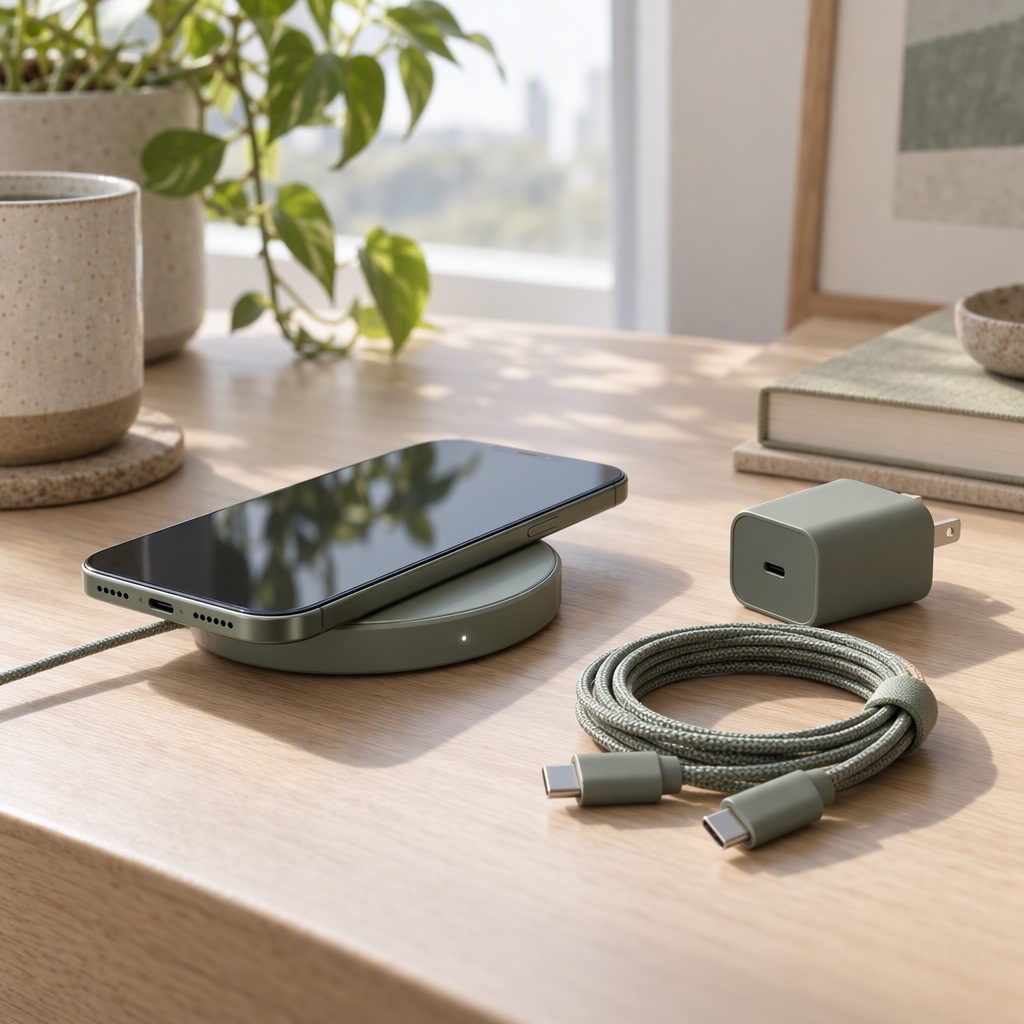
A school-day power bank has to do one thing well: get your phone from a low battery to a comfortable one while you are away from a socket, without weighing down your bag. That means a capacity that matches a typical day, a size you are willing to carry, and a charging speed that is quick enough to be useful between classes. You do not need the largest bank on the shelf. You need one that fits your routine, survives being carried in a bag, and is reliably charged before you leave in the morning.
- Match capacity to your day — enough for one full phone charge is plenty for most students.
- Choose a size you will actually carry; a heavy bank left at home helps nobody.
- A magnetic bank is convenient if your case supports it; a cable bank works with anything.
- Keep it charged overnight so it is ready when the day runs long.
How much capacity does a school day need?
For most students, a bank that holds roughly one full phone charge is enough to cover a day that runs long. The logic is simple: you start the day with a full phone, and the bank is there for the hours after your battery drops, so you do not need several charges in reserve. A very large bank only makes sense if you are away overnight or use the phone heavily for filming or navigation. Capacity also adds weight, and a bank that is too heavy to carry is the same as no bank at all. Pick the smallest capacity that reliably covers your worst normal day, then check it against the size of your phone’s battery rather than chasing the biggest number on the label. A bank that is only ever half-used still ages, so there is little point carrying capacity you will not draw on.
Should you choose a magnetic or a cable power bank?
A magnetic bank snaps to the back of a compatible phone and charges without a cable, which is genuinely convenient when you are moving between classes and do not want to hold a cable. It works best if your case supports the attachment, since a thick or non-magnetic case weakens the connection. A cable bank works with any phone and any case, and it usually charges faster and holds more capacity for the same weight. If you value convenience and carry a compatible case, magnetic is a good fit. If you want reliability across devices or you charge a friend’s phone too, a cable bank is the safer choice. Many students end up preferring whichever one they will actually remember to charge. Magnetic charging also adds heat, which is worth knowing if you keep the phone in a pocket while it charges.
How fast should a school power bank charge?
Speed matters less than consistency on a school day, but it still matters. A bank that charges your phone at a reasonable rate is far more useful than one that trickles, because you may only have a short window between classes to top up. Check that the bank’s output is enough to charge your phone at a normal pace rather than slowly, and that it can recharge itself overnight. Fast charging features only help if your phone supports them, so there is no point paying for a speed your device cannot use. A sensible middle ground is a bank that charges your phone at a steady rate and refills overnight, so it is ready each morning without you thinking about it. A bank that lists several outputs often shares its power between ports, so a single device may charge slower when two are connected.
How big is too big to carry?
A power bank is too big when you stop bringing it. Weight and size are the two reasons students leave banks at home, and a bank left at home cannot help. A bank that fits in a jacket pocket or a small bag pouch is more useful than a high-capacity one that stays in a drawer. If you need more charge than a pocket-sized bank provides, consider a middle size rather than the largest available, and check the weight before you buy. Remember that capacity and weight rise together, so the question is not how much the bank can hold but how much you are willing to carry every day. Comfort wins over maximum capacity for a school routine. Check the shape as well as the weight, since a slim bank slides into a pocket while a chunky one does not.
What safety points matter in a school bag?
A power bank travels in a bag full of other things, so a few safety habits are worth building. Keep it away from keys, coins, and anything metal that could touch the charging ports. Do not leave it pressed against a laptop or another heat source, and avoid carrying it where it can be crushed or bent. Use a cable that fits properly, and unplug the bank when the phone is charged rather than leaving it connected all day. If the bank feels unusually hot, swells, or smells odd, stop using it. These are simple precautions, but they are the difference between a useful tool and a hazard in a crowded bag. Do not leave a bank charging overnight under a pillow or on a bed, where heat cannot escape.
How do you keep a power bank ready every day?
The habit matters more than the hardware. Charge the bank overnight along with your phone, so both start the day full. Keep the charging cable with the bank rather than loose in the bag, and store the bank in the same pocket so you always know where it is. Check the remaining charge now and then, especially before a long day, and top it up rather than letting it run flat for weeks. If you notice the bank holds less than it used to, it is aging and should be replaced. For the broader picture, read how to choose a power bank for your phone and how to make your phone battery last longer. A short cable kept with the bank means you are never hunting for one when the battery drops.
Frequently asked questions
- How much capacity do I need for one school day? Enough for about one full phone charge is usually plenty. You start the day full, so the bank only covers the hours after that.
- Which type should I pick? A magnetic bank is handy if your case supports it, while a cable bank works with anything and often charges faster.
- Can I charge my phone and the bank at the same time? Some banks allow it, but it is slower and adds heat. It is usually better to charge them separately.
- Where should I keep a power bank in my bag? In a pocket away from keys and coins, and not pressed against a laptop or anything that gets warm.
- How do I know when to replace it? When it holds noticeably less charge, charges slowly, or feels hot or swollen. Stop using it if it swells.


