
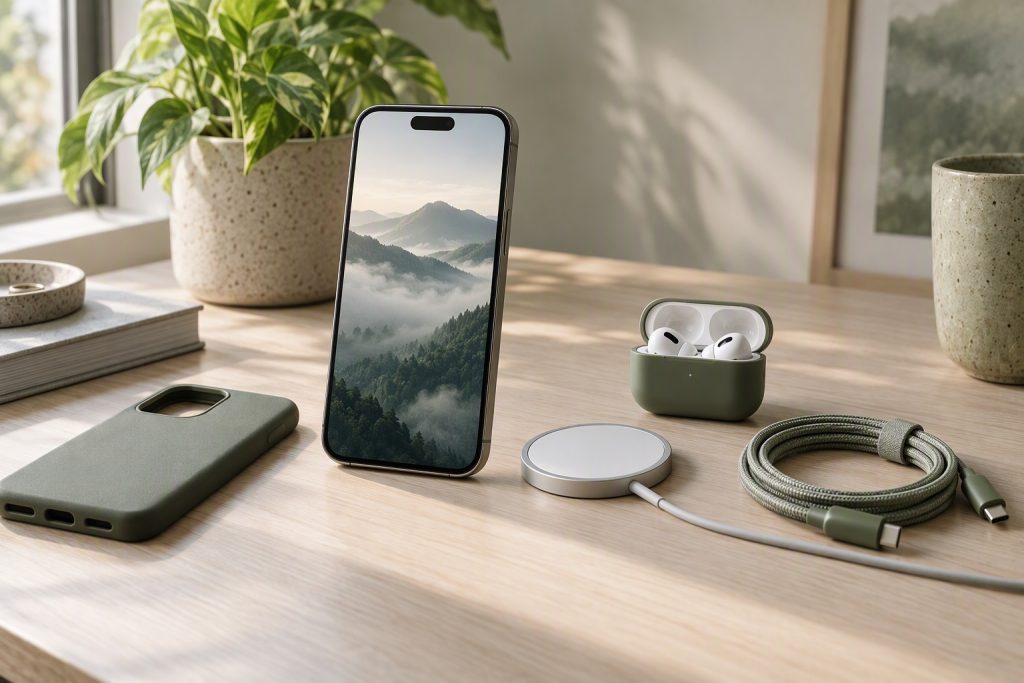
A back-to-school phone kit is short by design. The goal is not to own every accessory on a shelf but to carry the handful that prevent the problems that actually derail a school year: a cracked screen, a flat battery, a phone left behind, and a cable that quits halfway through the term. Once those four are covered, every extra item is a choice rather than a requirement, and the smallest kit you will actually carry is worth more than a drawer full of things you never touch.
- Start with protection: a case that fits tightly and a screen protector applied without bubbles.
- Add power: a wall charger for home and a power bank for long days away from a socket.
- Sort out carrying: a lanyard or strap keeps the phone attached to you between classes.
- Keep it small — a kit you carry beats a drawer of accessories you never use.
What belongs in a back-to-school phone kit?
The essential list has five items. First, a case that fits your exact phone and wraps the corners. Second, a screen protector, because scratches never come off and a protector is the cheapest protection you can buy. Third, a wall charger with a cable long enough to reach a desk or a bed. Fourth, a power bank for the days that run past your battery. Fifth, something that keeps the phone attached to you, whether that is a lanyard, a strap, or a ring on the case. Notice what is missing: no second case, no novelty stand, no spare cable for a drawer. The list is deliberately short, because a kit you carry every day beats a collection you leave at home.
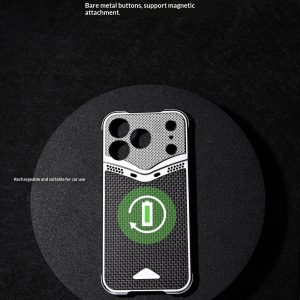
iPhone Cases — case. Designed for everyday carry and backed by our 30-day happiness guarantee.
Why does protection come first?
Protection comes first because a broken phone is the one problem you cannot work around. A dead battery can be solved with a power bank or a friend’s charger, but a cracked screen or a damaged camera means repair bills, lost notes, and a phone that has to go away for days. A case absorbs the everyday knocks that happen in a bag, on a desk, or in a crowded corridor, and a screen protector takes the scratches that would otherwise sit on the glass. Neither needs to be expensive or bulky. What matters is fit: a case that is slightly loose lets grit work its way in and does nothing to hold the corners, while a protector that does not sit flush lifts at the edges. Buy for the phone you actually own, and check that the camera opening lines up before you commit.
How do you keep a phone with you between classes?
Between classes a phone moves more than it does at any other time of day: out of a pocket, into a bag, onto a desk, into a hand, and back again. That is exactly where phones get lost and dropped. The simplest fix is to keep the phone attached to you rather than trusting a pocket or a bag. A lanyard, a crossbody strap, or a wrist strap all do the same job in different ways, and the choice comes down to how you carry your other things. If you use a backpack, a strap that sits across your body keeps the phone reachable without unpacking. If you keep everything in pockets, a shorter strap or a ring on the case is enough. The goal is not to add weight; it is to remove the moment where you set the phone down and forget it.
How much charging gear does a student actually need?
How much charging gear a student needs depends on how far they are from a socket. A wall charger covers the obvious case: charging at home, in a dorm, or wherever you study. Pick one with enough power for your phone and enough ports to charge a second device without waiting, and keep a cable with it that is long enough to reach from the socket to a desk or a bed. For days that run long, a power bank is the difference between a phone that lasts and one that does not. Choose a capacity you are willing to carry, because a large bank that stays at home is no help at all. A compact bank you top up overnight is worth more than a heavy one you leave behind.

MagSafe & Charging — charger. Designed for everyday carry and backed by our 30-day happiness guarantee.
What should you leave out?
Leave out anything you will not carry. The most common mistake is buying a long list of accessories at the start of the year and then using three of them. A second case, a spare cable in a drawer, a mount for a desk you do not have — none of these help on a normal school day. Also skip anything that adds bulk without adding protection, such as a novelty case with no raised edges around the screen or camera. Be careful with cheap charging gear, since a cable that fails early is worse than no spare at all, and a charger that runs hot is not worth the risk. Finally, do not buy protection before you know the phone: a case and a protector only work if they match the exact model, including the camera layout.
How do you keep the kit working all year?
A kit lasts a school year if you check it now and then. Every few weeks, look at the case for cracks at the corners and give it a clean, since dust and oil build up where the phone meets the shell. Check the screen protector for chips at the edges and replace it before it lifts and traps grit. Test the cable by charging and watching for a loose connection, and replace it at the first sign of fraying near the plug. Keep the power bank topped up rather than draining it flat and leaving it that way for weeks. Store the whole kit in one place so it travels together. None of this takes long, and it is far cheaper than replacing a phone mid-term. For a wider view, see phone accessories for students: a starter kit.
Frequently asked questions
- What is the single most important item? A case that fits well, because it prevents the most common and most expensive problem. Everything else is easier to replace than a phone.
- Do I need a power bank if I charge at home? Only if your day runs longer than your battery. A small bank kept charged is a cheap backup for the days that do.
- Is an expensive case worth it? Not necessarily. Fit and corner coverage matter more than price or branding, and a mid-priced case can protect just as well.
- How do I choose a screen protector? Match it to your phone model and to the case, then pick a type you can apply without bubbles. Read how to choose a power bank for your phone if charging is your main worry.
- How long should a kit last? A case and protector should last a school year with occasional checks. Cables are usually the first part to wear out.


