
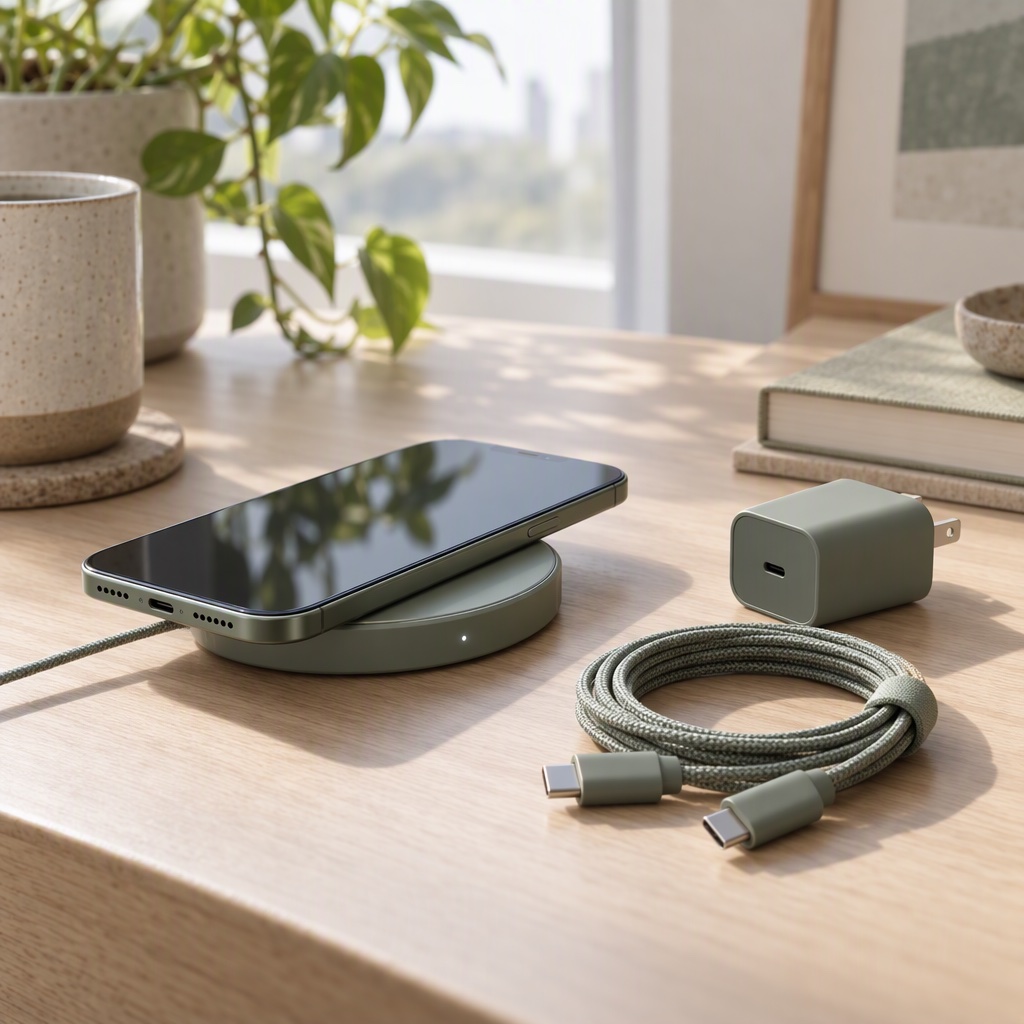
A braided cable is a charging cable with an outer sleeve woven from nylon or polyester threads, wrapped over the usual inner wires and shielding. The braid is only about the outside, not the electronics inside, so it does not make a cable charge faster or carry more power by itself. What it does change is how the cable feels and how long it survives daily handling. For many people a braided cable is the more durable choice, but it is not automatically better in every situation, and a well-made smooth cable can still outlast a cheap braided one. Understanding what the braid does, and does not do, is the fastest way to decide whether it is worth paying more for.
- A braided cable has a woven nylon or polyester sleeve over the usual inner wires.
- The braid protects the outside of the cable, not the electronics inside.
- It usually resists fraying and tangling better than a smooth jacket.
- It does not make charging faster; the cable and charger ratings do that.
What is a braided cable actually made of?
A braided cable starts with the same core as any other cable: metal conductors, insulation around each wire, and often a foil or woven shield to reduce electrical interference. What sets it apart is the outer layer, a woven sleeve of nylon or polyester thread that sits over the inner jacket. That weave is tight and slightly textured, which is why braided cables feel a little rougher and often look more premium than smooth plastic ones. The sleeve is both protective and cosmetic. It takes the wear of being pulled, coiled, and stuffed into bags, so the inner wires are less likely to be exposed and damaged. The electronics underneath are what actually carry power and data, and the braid neither helps nor hinders them. It is protection for the outside, nothing more.

Cables & Adapters — cable. Designed for everyday carry and backed by our 30-day happiness guarantee.
Is a braided cable stronger than a plastic one?
Generally, yes, but with an important caveat. The woven sleeve resists the fraying and splitting that smooth rubber and plastic jackets often develop near the connector, which is the most common place a cable fails. Because the braid flexes without cracking as easily, a good braided cable tends to survive more bending and pulling over its life. That said, strength depends on the whole build, not just the outer layer. A braided cable with weak strain relief, the short reinforced section where the cable meets the plug, can still fail quickly. A plain cable with solid strain relief can outlast a cheap braided one. The braid is a useful sign of care, but it is not a guarantee. Look at the connector and the overall feel, not the sleeve alone.
Does a braided cable charge faster?
No. The braid has nothing to do with charging speed. What determines how fast a cable charges is the thickness and quality of the internal conductors, the power rating the cable is built for, and the charger and phone at each end. A braided cable and a smooth cable with identical internals will charge at exactly the same rate. This is where marketing can mislead, because a premium-looking braid is sometimes used to imply better performance that is not there. When you buy, check the wattage the cable supports rather than the look of the sleeve. If you are unsure how ratings work, our guide on how to pick the right USB-C cable walks through what to look for. The braid is a durability feature, not a speed feature.
When is a braided cable worth choosing?
A braided cable earns its place when the cable lives a hard life. If it travels in a bag, gets coiled and uncoiled daily, or is shared between rooms, the extra abrasion resistance is genuinely useful. It is also a good choice for cables that stay plugged into a wall and bend constantly, since the braid helps that bend point last longer. For a cable that sits still on a desk and rarely moves, the benefit is smaller, and a well-made smooth cable is perfectly fine. The practical rule is to match the cable to the wear it will see. High-traffic, high-movement cables benefit most, while a cable that mostly stays put can be simpler. If a cable needs to reach a different port, a small adapter such as a phone charging and data adapter can extend what one good cable is able to do, so you are not forced to buy several.
Cables & Adapters — cable. Designed for everyday carry and backed by our 30-day happiness guarantee.
Are there downsides to braided cables?
There are a few. A woven sleeve can fray at the ends over time, and once a braid starts to unravel it looks worn even if the cable still works. Some braided cables are stiffer than smooth ones, which can make them awkward to coil tightly or to route around a desk. The texture can also collect dust and lint, though this is usually easy to wipe off. Finally, braided cables often cost more, and if the money went into the sleeve rather than the internals, you may be paying for looks rather than longevity. That is worth remembering, because our article on the real cost of cheap charging cables explains how a cheap cable can cost more over time through constant replacements. A braided cable is a good buy when the whole build is solid.
How do you care for a braided cable so it lasts?
Treat the connectors as the fragile part, because they usually are. Pull on the plug, not the cable, when unplugging, and avoid bending the cable sharply right where it meets the plug. When you store it, coil it loosely into a loop rather than wrapping it tightly around a charger, since tight wrapping stresses both the wires and the braid. A reusable tie or a small pouch keeps the coil tidy without crushing it. Keep the braid reasonably clean by wiping it with a dry or slightly damp cloth, and let it dry fully before use. If the braid starts to fray badly or the cable begins charging only at certain angles, it is time to replace it, since a failing cable can strain your phone’s charging port. Replacing a worn cable early is far cheaper than repairing a damaged port. Good habits stretch any cable’s life, braided or not.
Frequently asked questions
- Is a braided cable better than a normal one? It is usually more durable and tangles less, but it does not charge faster. Choose it for cables that get heavy daily use.
- Do braided cables break more easily? Not if they are well made. The weak point is still the connector, so check the strain relief rather than the sleeve alone.
- Can a braided cable carry fast charging? Yes, if its internal conductors and power rating support it. The braid itself has no effect on charging speed.
- Why do braided cables cost more? The woven sleeve adds material and manufacturing steps, so the price is often higher. Make sure the internals justify it.
- How should I store a braided cable? Coil it loosely, hold the loop with a reusable tie, and keep it in a pouch. Avoid tight wrapping around a charger.


