
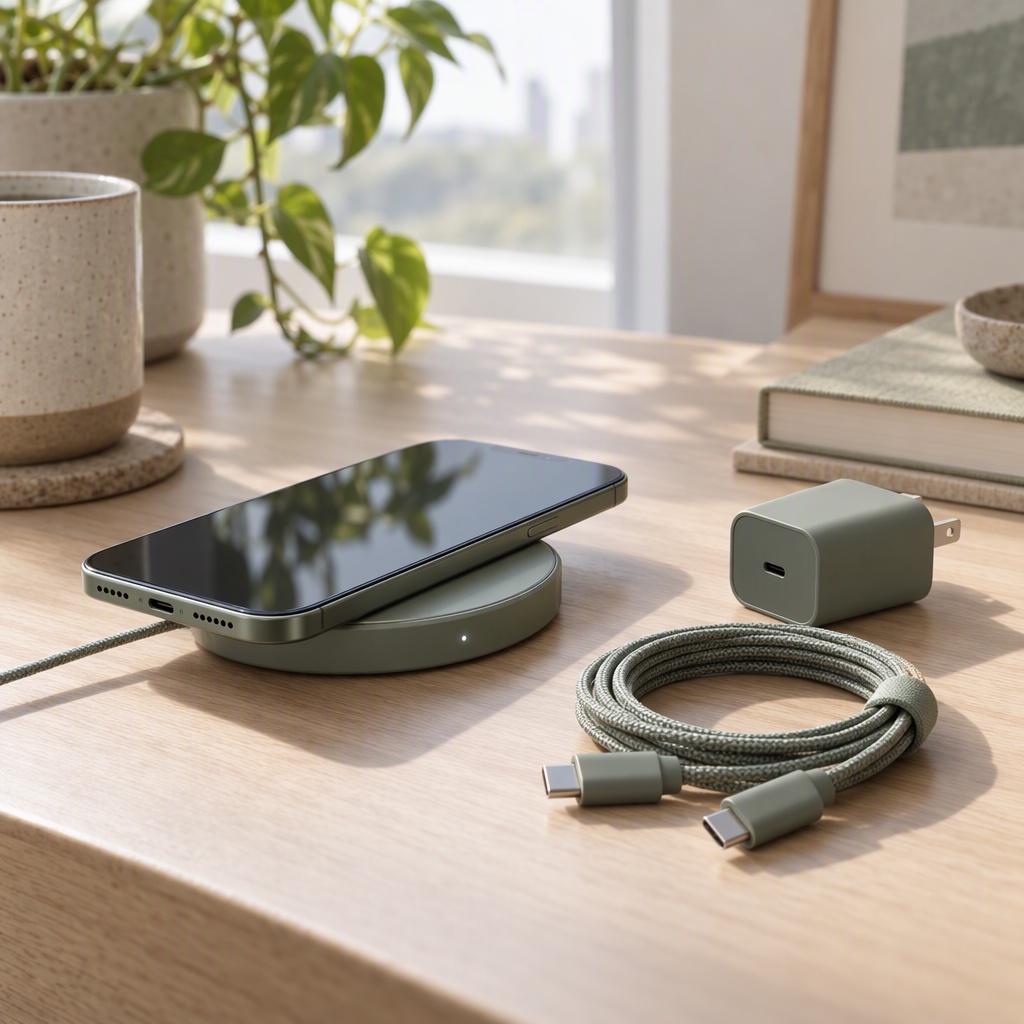
A three-dollar charging cable feels like a bargain right up until the third replacement. The sticker price is only one line in the budget: how often a cable needs replacing, how fast it actually charges, and what it does to the port it plugs into are the other lines, and they are where cheap cables quietly add up. Understanding what fails on a cheap cable — and how to spot a better one — usually saves money over a year or two of daily charging.
- The sticker price is half the story — how often you replace the cable is the other half.
- Thin internal wiring and cheap components can limit how much power actually reaches the phone.
- Fraying at the connector end is the most common failure, and it usually starts within weeks or months of heavy use.
- A cable that charges but will not transfer data is simply missing internal wires — fine for power, useless for files.
Why is a cheap cable rarely cheaper?
Run the math over time rather than at the register. A bargain cable might need replacing every few months under daily use, while a well-made one can last for a year or more before showing wear, so the “expensive” cable can easily be the cheaper option across two years of charging. Factor in the secondary costs too: a slow cable turns a lunchtime top-up into a sit-and-wait, and a loose connection that only works at an angle quietly wears the charging port itself. None of this means paying a premium for a brand name — it means recognizing that the very bottom of the market is competing on price by leaving things out, and those missing things eventually cost you. Treat a cable as a monthly running cost rather than a one-time purchase and the comparison stops favoring the bargain.
Cables & Adapters — cable. Designed for everyday carry and backed by our 30-day happiness guarantee.
What actually fails on a cheap cable?
Look at where cables die and the answer is almost always the same: the connector end. The most common failures are the strain relief splitting, the connector shell separating from the jacket, and the internal solder joint breaking where the wire meets the plug. A second common problem is the cable itself — cheap jackets crack and peel, exposing thin internal wires that kink and eventually snap. The third failure is invisible from outside: thin internal conductors that waste power as heat and limit how fast the phone can charge. A cable that has been coiled tightly for a year will fail sooner than one stored loose, whatever it cost. All three share a root cause, which is that a cable designed to hit a price point saves money exactly where the stress is, and cables are almost all stress at the ends.
Can a bad cable hurt the phone?
A failing cable does not usually damage a phone outright, but it makes two things more likely. A connector that fits loosely — the one that needs a wiggle or only charges at a tilt — wears the charging port over time, and a worn port eventually holds any cable loosely. A cable that gets warm during charging is doing the opposite of its job: instead of delivering power cleanly, it is losing energy to resistance, which slows charging and puts unnecessary heat near the port. Neither risk is dramatic, and neither will ruin a phone this month, but both are reasons to retire a cable at the first sign of trouble rather than taping it and soldiering on.
How do you spot a better cable?
A few tactile checks tell you most of what you need. Weight is the first: a cable with real internal wiring feels heavier than a hollow one of the same length. The connector is the second — a well-made one fits firmly with a solid, precise click, with no wobble between plug and jacket, and metal shells tend to survive more punishment than thin plastic ones. The jacket matters too: a braided or quality rubber sleeve resists tangles and fraying far better than the cheapest smooth plastic. Finally, check that the cable is rated for the speeds you need — a cable made only for basic charging will cap fast charging and data transfer no matter what it is plugged into. Sets that bundle several cables are common; for most people, two good cables in the places they actually charge are worth more than five mediocre ones in a drawer.

Cables & Adapters — cable. Designed for everyday carry and backed by our 30-day happiness guarantee.
What charging habits extend a cable’s life?
Pull the plug, not the cable, because every yank stresses the connection between wire and connector — that single habit prevents most connector failures. Coil cables loosely instead of wrapping them tight around a charger or itself, since tight coils create kinks that eventually crack the internal wires. Keep the ports clean, because grit in the phone or the cable forces connections and generates heat, and keep cables away from chair wheels and pets, which destroy more cables than electronics ever do. Store spare cables somewhere they will not be crushed or bent at a sharp angle, and unplug a cable from the wall before putting it in a bag. None of this is fussy; it is just not treating a cable like a rope.
When is it time to replace a cable?
Retire a cable at the first sign of any of these: fraying or exposed wire anywhere along its length, a jacket that has separated from the connector, a connection that only charges at a certain angle, noticeably slower charging than the cable used to deliver, or a plug that fits loosely in a port you know is clean. None of these fix themselves, and the failure is always progressive — a cable that works at an angle today will not work at all soon. Replacing a cable is cheap, and if you are unsure what to buy next, read how to pick the right USB-C cable and signs a charging cable needs replacing.
Frequently asked questions
- Why does my cable only charge at an angle? The connector’s internal joint has broken or worn unevenly, or the plug itself has loosened. It is a progressive failure — replace the cable rather than adjusting how you hold it.
- Are braided cables always better? Braiding resists tangles and fraying and usually survives longer as a result, but a braided jacket can still hide thin internal wiring. Feel the weight and check the connector quality, not just the sleeve.
- Can a cheap cable charge a phone quickly? Some can, but cheapness usually shows up in the parts that matter for speed: the internal wiring and the quality control on the connector. A cable that charges a different phone slowly is telling you something.
- Is it safe to use any cable with a high-wattage charger? The phone and charger negotiate the actual speed, and the cable simply needs to be rated for that power. Using a cable rated well below the charger’s output is the part that can hold things back.
- How long should a good cable last? With basic care — pulling the plug, not the cable, and coiling it loosely — a well-made cable often lasts a year or more of daily charging. Harsh treatment shortens that to weeks, whatever the price.


