
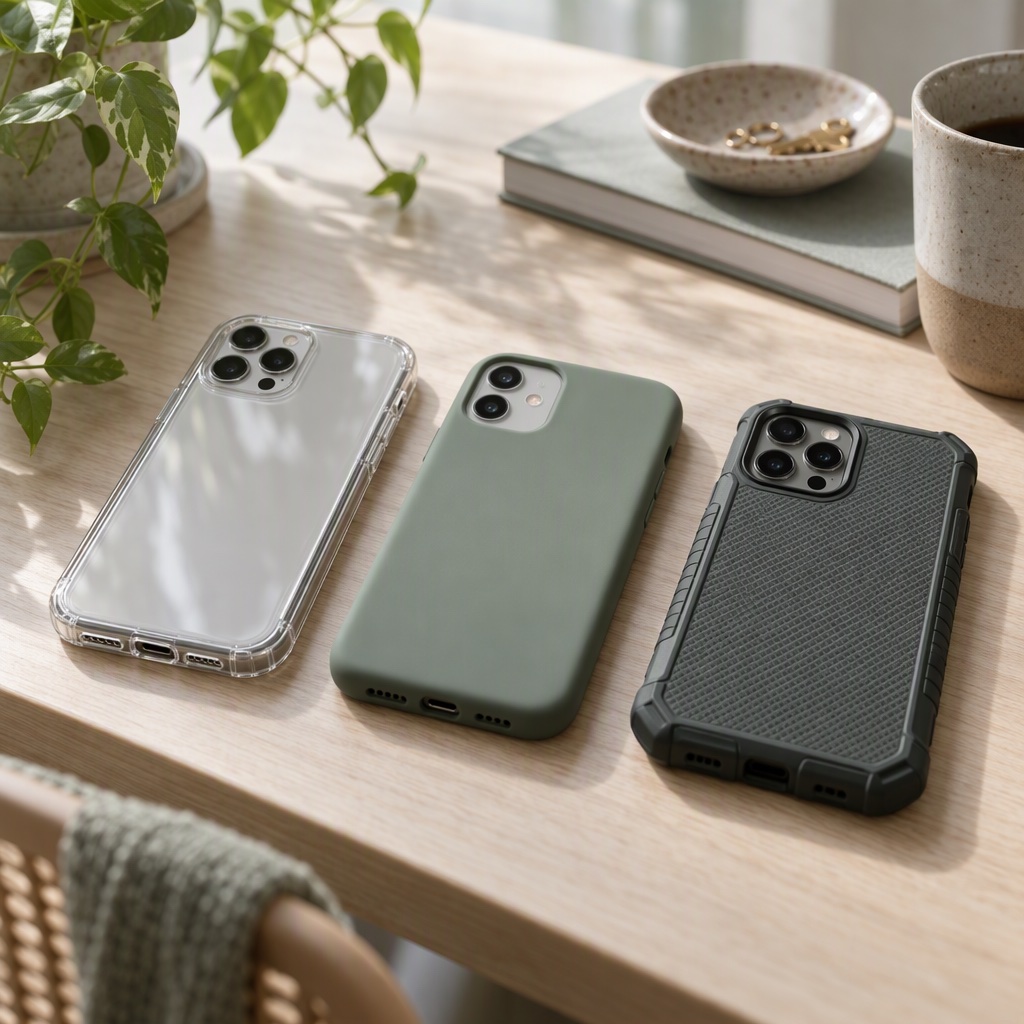
Cold weather is hard on a case in ways summer is not. Rigid plastic gets brittle, soft coatings stiffen, and a case that fit snugly in July can feel loose or crack at the corners by December. The good news is that choosing well is less about hunting for a special winter case and more about matching materials and fit to the temperatures and conditions you actually face.
- Soft, flexible materials handle cold better than hard ones, which can crack when they are dropped.
- A snug, well-fitting case keeps cold air and moisture away from the phone’s edges and buttons.
- Covered buttons and raised lips still work when your fingers are cold and less precise.
- Adhesive mounts and grips hold less well in the cold, so check them often.
Why do some cases fail in cold weather?
Materials behave differently as temperatures drop. Hard polycarbonate stays stiff, and stiff plastic has less give, so a corner that would flex in warm weather can crack on impact instead. Soft coatings can harden and lose their grip, which is why a case that felt secure in summer suddenly slides out of your hand. Cold also shrinks materials slightly, and a case that was already a loose fit will rattle more. Adhesives used on grips and wallet backs stiffen too, so anything stuck to the case may peel. None of this means hard cases are bad, only that winter punishes the wrong fit. If you like a rigid case, choose one with soft bumpers at the corners rather than hard plastic throughout.
iPhone Cases — case. Designed for everyday carry and backed by our 30-day happiness guarantee.
Which materials hold up best below freezing?
Flexible materials generally cope better with cold. Thermoplastic polyurethane, the soft rubbery plastic used in many cases, stays flexible at low temperatures and absorbs shock without cracking. Silicone is even softer and keeps its grip in the cold, though it collects lint and can feel sticky. A hybrid case, which pairs a soft inner layer with a harder outer shell, often gives you the best of both: the soft part absorbs the drop while the hard part protects the back. Leather and faux leather need more care, since cold and damp can dry them out and leave marks. If you want to compare these properly, it helps to read a plain comparison of silicone, TPU, and polycarbonate cases before you buy.
Does a thicker case keep a phone warmer?
Only a little, and it is not the main benefit. A thicker case slows the rate at which the phone loses heat, so it may stay a degree or two warmer in a coat pocket, but it will not keep a phone running normally in serious cold. What thickness really buys you is drop protection, which matters more in winter because cold hands and wet gloves make drops more likely. The trade-off is that a bulky case is harder to grip, harder to fit in a pocket, and can block wireless charging. Look for a case that is thick where it counts, at the corners and around the camera, without turning the phone into a brick. A moderate case with good corner protection is the sensible middle ground.
What features matter when you wear gloves?
Winter use is all about grip and reach. Look for a case with a textured back or slightly rubberized sides, because a smooth, glossy finish is the worst choice for cold hands. Covered buttons matter more than you might expect, since exposed buttons are fiddly when your fingers are numb. A raised lip around the screen and the camera keeps the phone safe when you set it down on a wet bench or a cold car seat. If you use a grip or ring holder, check that it is stuck on firmly, because cold weakens the adhesive. And if you often pull the phone out one-handed, a case that is slightly slimmer will help more than one that is very protective.
iPhone Cases — case. Designed for everyday carry and backed by our 30-day happiness guarantee.
How do you keep a case clean and dry through winter?
Wet, dirty cases are a winter problem because moisture sits between the case and the phone. Once a week, take the case off and wipe the inside with a dry microfiber cloth. Rinse a soft or silicone case with plain water if it needs it, then dry it completely before putting it back, since trapping damp against the phone is exactly what you want to avoid. Skip harsh cleaners, which can break down the coating and make the surface go sticky. If your case has a fabric lining, let it air-dry fully. A case that stays clean also keeps its grip, and grip is what stops most winter drops before they happen. A little care here pairs naturally with the rest of your autumn phone care routine.
When should you replace a winter case?
Replace a case when the fit goes loose, when the corners show cracks or whitening, or when a grip or wallet has started to peel. A loose case is more than an annoyance: it lets grit and moisture get between the case and the phone, and it can slip off during a drop. Cracks at the corners are a warning sign, because that is where the case does most of its work. If the buttons have become mushy or hard to press, the case is interfering with the phone. Finally, if a case has yellowed or its coating has worn smooth, it has lost both the look and the grip you paid for. Replacing a case is far cheaper than replacing a phone.
Frequently asked questions
- Can cold weather crack my phone case? Yes, especially if it is made of hard plastic. Stiff materials have less give, so an impact that would only scuff a flexible case can crack a rigid one. Soft and hybrid cases are more forgiving in low temperatures.
- Should I take my case off in winter? Not usually. A case keeps grit and moisture away and improves grip. The exception is fast charging, when removing a thick case helps the phone stay cooler if it feels warm to the touch.
- Do leather cases work in cold weather? They work, but they need more care. Cold and damp can dry leather out, and road salt and slush can stain it. Wipe it dry when it gets wet and let it air-dry away from direct heat.
- Will a case stop my phone from freezing? No case will keep a phone warm enough to run normally in serious cold. A case slows heat loss slightly, but the real fix is to keep the phone in an inner pocket close to your body.
- How tight should a winter case fit? It should be snug enough that the phone does not move when you shake it, but not so tight that you struggle to take it off. If you can slide the phone out with a light push, the case is too loose.


