
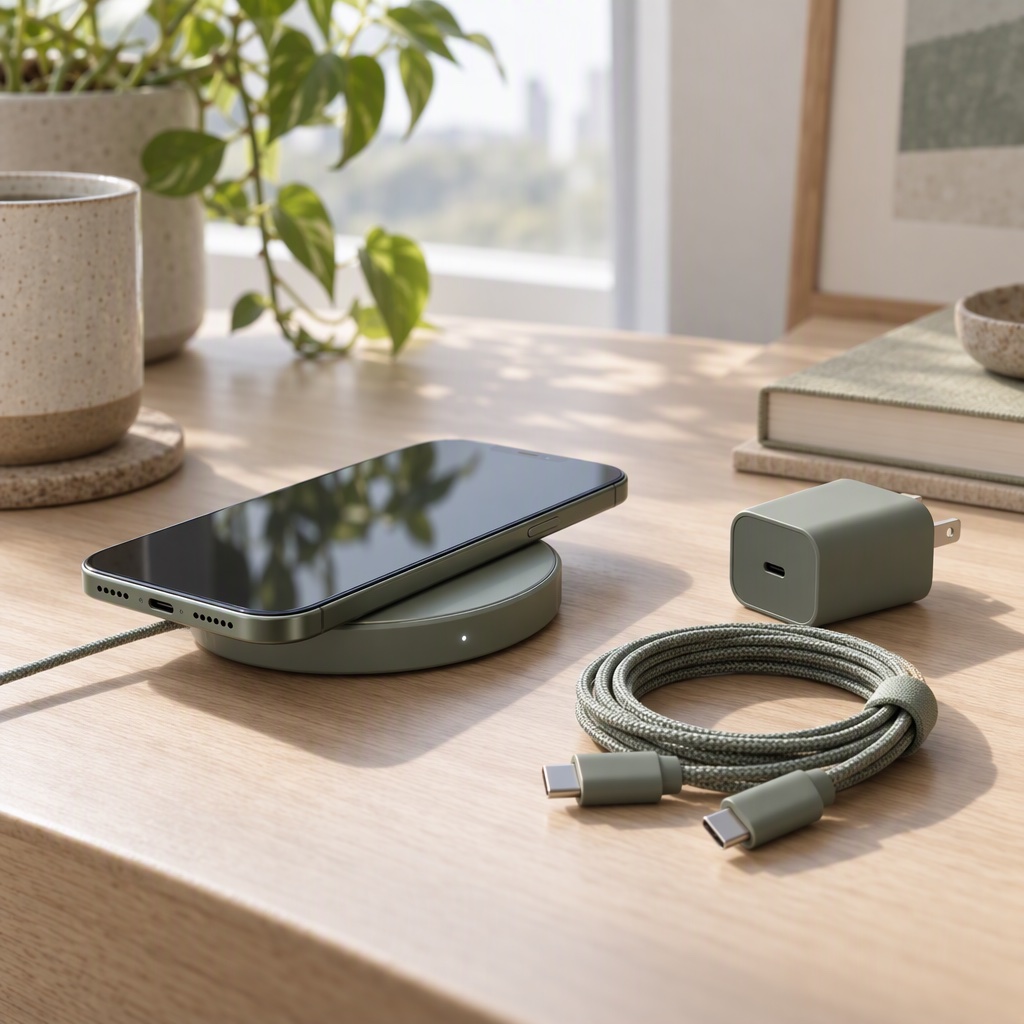
Not everyone needs a fast charger, and buying one will not speed up a phone that cannot accept the extra power. Fast charging helps most when you have a short window to top up — a few minutes before leaving the house, or a quick stop between meetings. If your phone already spends the night on a slow charger and rarely runs low, a standard charger does the same job for less money.
- Fast charging helps most when time is short, not when it is plentiful.
- Your phone, charger and cable all have to support the same speed.
- Slow overnight charging is gentler and perfectly adequate for most people.
- Buy speed only if your daily routine actually creates urgency.
What does fast charging actually mean?
Fast charging is a catch-all term for any method that delivers more power than a basic charger, so a phone refills in less time. It works by raising the amount of power sent to the battery, which the phone and charger negotiate together before charging begins. Different phones support different speeds, and the exact rate depends on the battery’s charge level and temperature. A phone charges fastest when it is nearly empty and slows down as it fills, which is a deliberate safety measure rather than a fault. So fast is never a single number; it is a range that changes as the battery fills up, and it changes again if the phone warms up. That is why a fast charger feels dramatic on a low battery and far less impressive on a nearly full one. It is a tool for a specific moment rather than a constant speed.
MagSafe & Charging — charger. Designed for everyday carry and backed by our 30-day happiness guarantee.
Does your phone support fast charging?
Many phones sold in recent years support some form of fast charging, but the speed varies widely, and it is usually listed in the phone’s specifications. If your phone supports it, a fast charger will make a noticeable difference. If it does not, a fast charger will simply behave like a normal one. There is no harm in using a faster charger than your phone needs, because the phone takes only what it can handle. The only real risk is paying for speed your device cannot use, which is why it is worth checking before you spend. If the specification is unclear, a quick search for your exact phone model usually settles the question. Understanding what actually changes charging speed makes that check quick.
What do you need besides the charger?
Fast charging needs the whole chain to agree: the wall charger, the cable and the phone. A powerful charger paired with a thin cable that cannot carry the current will charge slowly, and a good cable cannot make up for a weak charger. This is why two people can plug the same phone into different setups and see very different results. If you want fast charging, match all three parts, and treat the cable as a component rather than an afterthought. A mismatched link quietly caps the whole chain, so it is worth replacing the weakest part first. If you are unsure which part is limiting you, swap one piece at a time and watch how the charging time changes. Check the cable before you spend money on a new charger.
Does fast charging harm your battery?
Fast charging is safe when it is done by the phone’s own rules, and every mainstream phone manages this automatically. The phone limits the rate as the battery fills and if it gets warm, which protects the cells. What ages a battery more than charging speed is sustained heat and frequent deep discharges. So a phone that fast charges occasionally and stays cool is generally fine. If you want the longest possible battery life, slow overnight charging is a little gentler, but the difference is small next to the effect of keeping the phone out of extreme heat. In short, charge however suits your routine, but keep the phone cool while you do it. Our guide to making a phone battery last longer covers those habits in detail.
MagSafe & Charging — charger. Designed for everyday carry and backed by our 30-day happiness guarantee.
When is a fast charger genuinely useful?
It earns its place when your routine creates real time pressure. Think of a phone at low battery twenty minutes before you leave, a rideshare driver between fares, or a traveler with a short layover. In those moments, a fast charger turns a nearly useless phone into a working one. It is also handy when several people share one socket, because each device spends less time plugged in. If none of that sounds like your day, though, the urgency a fast charger solves may never actually arrive, and a standard charger will quietly do the job just as well. Buy for the life you have, not the one you imagine. If your charger mostly sits by your bed, you have probably already answered this question.
Is a standard charger ever the better buy?
Often, yes. A standard charger is smaller, usually cheaper, and perfectly capable of refilling a phone overnight. Because it charges more slowly, it also runs cooler, which suits a phone left on a bedside table for hours. If you charge while you sleep and rarely need a mid-day top-up, there is little reason to pay for speed. The sensible approach is to buy one fast charger for the moments that matter and keep slower charging for everything else. That way you get the benefit without paying for speed you will seldom use, and your everyday charging stays gentle. Speed is a tool for particular moments, not a permanent upgrade you must have. Most households end up owning one of each.
Frequently asked questions
- Will a fast charger ruin my phone battery? No. Your phone controls how much power it accepts and slows down when it gets warm. Heat and deep discharges age a battery far more than the speed of the charger itself, so a cool phone stays healthier whatever charger you use.
- Can I use a fast charger on an older phone? Yes, safely. The phone will simply charge at its own maximum rate, which may be slower. You will not get the extra speed, but nothing will be damaged by trying, because the charger works at the phone’s pace.
- Why is my phone charging slowly with a fast charger? Usually the cable is the weak link, or the phone has warmed up and limited the rate. Try a higher-rated cable and charge somewhere cooler, since a warm phone deliberately slows itself down.
- Is fast charging worth it for overnight charging? Not especially. Overnight, speed is irrelevant because the phone has hours to fill. A slower charger is cheaper, cooler and just as effective, so save the speed for mornings when you are running late.
- Do I need a different charger for each device? Not necessarily. One good charger with enough ports can handle a phone and a few small devices, as long as each port can deliver a sensible amount of power. Just do not expect full speed on every port at once.


