
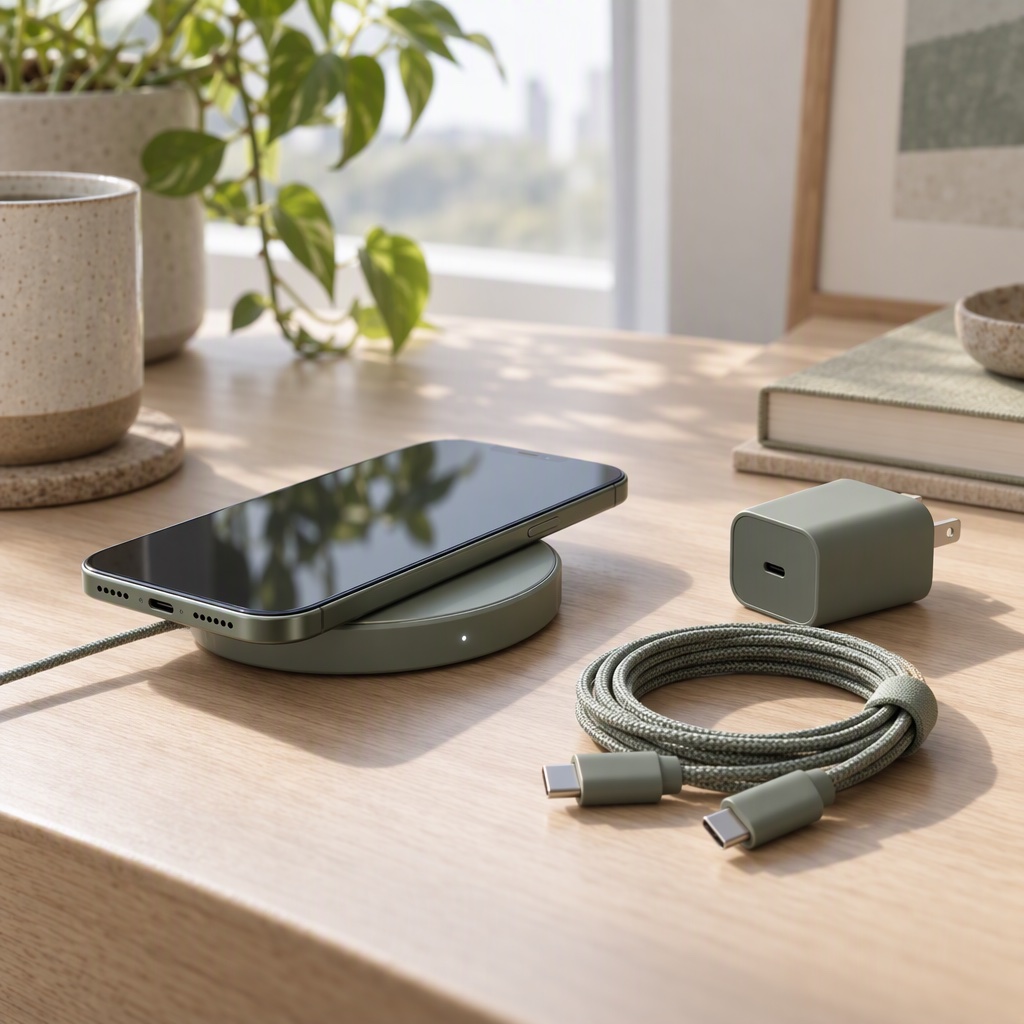
An overnight trip is short, but it is exactly the kind of trip where a phone battery runs out at the worst moment. You are away from your usual charger, often sharing one socket with other people, and using the phone for maps, photos, and messages more than usual. A power bank solves this, but the wrong one is either too small to be useful or too heavy for a single night. Choosing well comes down to how much capacity you need, how you will charge, and how much weight you are willing to carry in a small bag. A little planning before you pack means the phone stays useful from the moment you leave to the moment you get home.
- For one night, you usually need two or three phone charges.
- A magnetic bank is convenient; a cable bank is more efficient.
- Check the ports match the cables you already carry.
- Keep the bank cool and charge it fully before you leave.
How much capacity do you need for one night away?
Capacity is measured in milliamp-hours, and more capacity means more weight. For a single night, you rarely need the largest bank on the shelf. Think in charges rather than numbers: work out how many times you will want to refill the phone between leaving home and getting back, then choose a bank that covers it with a little margin. Two or three full charges is a sensible target for most people on an overnight trip, which leaves room for photos, maps, and a late-night message or two. If you also want to top up earbuds or a watch, allow for that. A smaller bank you carry everywhere is more useful than a large one left in the car, so let your real habits decide the size rather than the headline number. If you usually charge overnight anyway, a smaller bank may be all you need for a single night.
Should you choose a magnetic or a cable power bank?
Magnetic power banks attach to the back of the phone and charge wirelessly, which is tidy and convenient. There is no cable to lose, and you can keep using the phone while it charges, which suits a train seat or a hostel bunk. The trade-off is efficiency: wireless charging loses more energy as heat, so the same capacity gives fewer charges than a cable bank would. A cable bank connects with a short cable and is more efficient, so it goes further for the same weight, and it usually charges faster. If you value convenience and quick top-ups, a magnetic bank suits you. If you want the most charges from the least weight, choose a cable bank. Many people carry a magnetic bank for convenience and a short cable for a full recharge. Either way, check that the bank works with your case, since a thick case can weaken a magnetic hold.
How many charges will you actually get?
A power bank rarely delivers as many full charges as its capacity suggests, because some energy is lost in the transfer. Wireless charging loses more than a cable, and cold or hot conditions reduce the usable capacity further. As a rough guide, a large bank gives several partial charges rather than a neat number of full ones, so plan for less than the label claims. The phone’s own battery size matters too: the same bank gives more charges to a smaller phone and fewer to a large one. If you need three full charges, choose a bank with headroom rather than one that only just covers it. Test the bank at home before your trip, so you know how long a full top-up takes and how many charges you really get. A short test also tells you whether the bank gets warm, which is worth knowing before you rely on it.
How do you charge two devices at once?
If you travel with someone else, or you want to charge your phone and your earbuds together, look at the number of ports. A bank with two outputs lets you top up two devices at the same time, though the power is often split between them, so both charge more slowly. A bank with a high output on one port and a lower one on another is a good balance, since you can fast-charge the phone and trickle-charge the smaller device. Remember that charging two devices at once drains the bank faster. If you are sharing, agree on who charges first to avoid draining it before the night is over. For a wider view, see our guide to choosing a power bank for your phone. Two outputs are useful, but only if you actually need to charge two things at once.
How do you carry and look after a power bank?
Carry the bank in a pocket or bag where it will not get too hot, since heat reduces performance and shortens its life. Avoid leaving it in direct sun, on a radiator, or in a car on a warm day. Keep the ports clean and free of dust, and use a short cable in good condition rather than a frayed one. Charge the bank fully before you leave, and check the level each morning so you are not caught short. If the bank feels unusually hot while charging, unplug it and let it cool. Keep the cable coiled with the bank so you never have one without the other, and store the pair together in your bag so they are ready when you need them. A bank that lives in your bag is one you will actually use, so find a spot for it and keep it there.
What should you check before you buy?
Check the physical size and weight, since a bank you leave behind is no use. Look for a clear battery indicator so you know how much charge is left, and a sturdy casing that can survive a night in a bag. Read the stated capacity and understand that real-world performance will be lower, especially with wireless charging. Confirm the ports match your cables, because a bank with only one type of port is useless if your cable does not fit. Consider whether you need splash resistance or just a tough shell. For travel-specific advice, our guide to using a power bank when traveling covers the essentials. A bank that suits your phone and your habits beats one chosen on capacity alone. Think about how you travel, then buy the bank that fits that picture rather than the biggest one on the shelf.
Frequently asked questions
- How much capacity do I need for one night? Usually enough for two or three phone charges. Think in charges rather than numbers, and allow a little margin.
- Is a magnetic power bank worth it? It is convenient and cable-free, but less efficient. Choose it for short top-ups rather than maximum capacity.
- Why does my bank give fewer charges than promised? Energy is lost in the transfer, and heat or cold reduce usable capacity. Real results are always lower than the label.
- Can I charge two devices at once? Yes, if the bank has two outputs, though power is shared and both charge more slowly.
- How should I store a power bank? Keep it cool, dry, and out of direct sun, and charge it before a trip so it is ready to go.


