
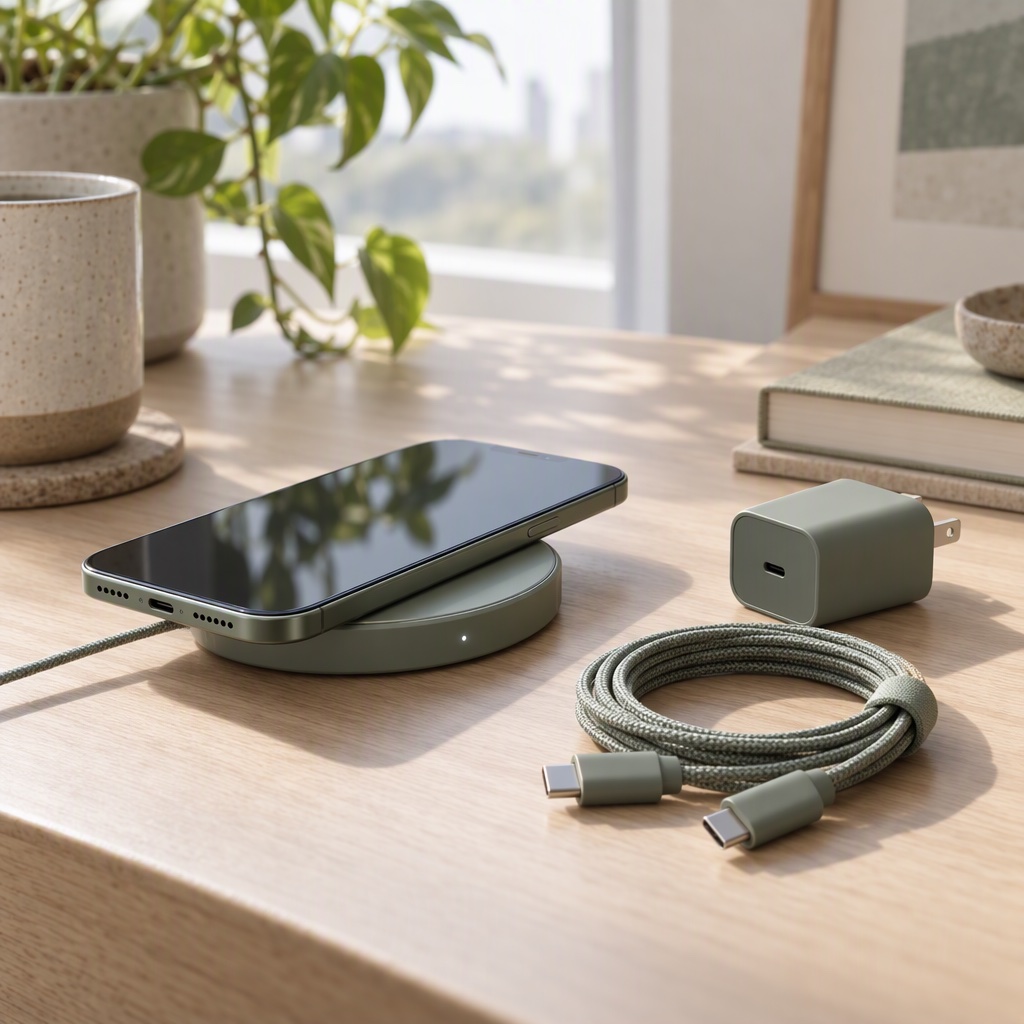
A beach day is hard on a phone battery. The screen runs bright against the glare, the camera works harder in strong light, and a weak signal at the coast makes the phone search for a network it cannot find. That combination can empty a battery well before the afternoon is over. The answer is not a huge power bank, because you will not want to carry it. It is a sensible capacity, a cable, and a few habits that keep the phone from burning through power in the first place.
- Match capacity to the length of the day, not to the biggest number on the box.
- A wired charge is faster and cooler on the sand than a wireless pad.
- Keep the power bank out of direct sun, because it has its own battery.
- Rinse sand and salt off the ports before you store it.
How much power do you actually need for a beach day?
Work backwards from what you will do. If the phone is mostly in a bag and you check it occasionally, it may last the day without help and a small top-up bank is plenty. If you are taking photos and video, streaming music, and navigating, expect the battery to fall much faster. A phone that is used heavily outdoors can be well into its reserve by mid-afternoon, so a bank with enough capacity for roughly one full charge is a sensible baseline. If two people are sharing, or if the day runs into the evening, bring more. The point is to size the bank to the day rather than carrying a heavy one you never use. Our guide to choosing a power bank size walks through the same reasoning.
What size power bank is practical to carry?
Practical beats powerful. A small bank that fits in a pocket will actually be with you when you need it, while a heavy one tends to stay in the car. A slim bank with enough capacity for a single charge is the sweet spot for most beach days, because it is light enough to carry in a pouch and small enough to keep out of the sun. If you are going to be out for a long time, or you are the person everyone asks for a charger, a mid-size bank is worth the extra weight. Check the ports before you buy: two outputs let you help a friend, and a port that matches your cable saves carrying an adapter. Capacity figures can be confusing, so compare them against your own phone’s battery rather than against each other, and see our tips on making a phone battery last longer if you would rather use less power in the first place.
Should you choose wired or wireless on the sand?
Wired is usually the better choice outdoors. A cable transfers power more efficiently, which means less heat and a faster charge, and it does not require the phone to sit in one exact spot on a pad. Wireless charging is convenient at a desk but awkward on a towel, where sand gets between the phone and the pad and the alignment shifts as you move. It also runs warmer, which is the last thing you want on a hot day. If you do prefer wireless, choose a bank with a magnetic ring that holds the phone in place, and charge in the shade rather than in the sun. Either way, charge in short sessions rather than leaving the phone plugged in for hours.
How do you keep a power bank cool and clean at the beach?
Treat the bank like a phone, because it has a battery inside and the same dislike of heat. Keep it in the shade, not on a towel in the sun, and do not leave it in a hot car or a closed beach bag. Sand is the other problem: it works into ports, buttons, and charging contacts, and a gritty port makes a poor connection. Keep the bank inside a pouch or a small bag rather than loose in a tote, and keep the cable ends covered when they are not in use. If the bank feels hot while charging, stop and let it cool. Charging a phone from a hot bank is slow, and it is hard on both batteries. A little shade and a pouch solve most of this.
What about charging other things?
Most people carry more than one device to the beach, and a bank with a second output saves an argument. Headphones, a speaker, and a watch all draw small amounts of power, so topping them up costs little compared with a phone. The thing to watch is heat: three devices charging in the sun will make the bank warm, and a warm bank charges everything more slowly. Charge one device at a time where you can, and keep the bank shaded while it works. If you are charging a speaker for music, do it early in the day when the air is cooler and the bank is still full. And check the cable you brought actually fits each device, because a single mismatched connector can leave you unable to charge anything.
How do you look after a power bank after a sandy day?
Clean it before you store it. Wipe the outside with a soft damp cloth, and use a dry brush or a soft cloth to clear sand from the ports and the seams. Never use water on the ports themselves, and never charge the bank while it is damp. Check the cable as well, since sand in a connector can scratch the contacts on both the cable and the bank. Store the bank at a moderate charge rather than empty or full, and keep it out of direct sun and away from hot cars. If the bank has been in the sea air, a wipe with fresh water on a cloth is enough to remove salt, which is the main cause of corrosion. A minute of care keeps a bank working for years.
Frequently asked questions
- Can I take a power bank on a plane? Most airlines allow power banks in carry-on luggage only, not in checked bags, and there are limits on capacity. Check the rules for your airline and route before you travel, and keep the bank with you in the cabin.
- Will a power bank charge my phone as fast as a wall plug? Usually not. A power bank has to convert its stored power, which is less efficient and slower than mains power. A bank with a higher output rating will charge faster than a basic one, but it will still trail a wall charger.
- How many times can a power bank charge a phone? It depends on the capacity of both. A bank with roughly double the energy of your phone’s battery will usually manage one full charge with some left over, because some energy is lost as heat along the way.
- Is it safe to leave a power bank in a hot car? No. Heat is hard on lithium batteries and can damage a bank permanently. Take it with you or store it in the shade, and let it return to a normal temperature before charging it.
- Do I need a solar power bank for the beach? Only if you will be outdoors for several days. A solar panel charges a bank slowly and needs direct sun, so for a single beach day a normal bank charged at home is simpler and more reliable.


