
The tripod you take traveling is a trade-off between height, stability, and how much space it takes in your bag. A tall, heavy tripod is steady but annoying to carry; a tiny one fits anywhere but may not reach a useful height or hold a larger phone firmly. The right size depends on what you plan to shoot: a table-top stand for food and video calls, a compact tripod for landscapes, or a selfie-stick tripod for group shots and vlogging. Getting the size right means you actually bring it, rather than leaving it in a drawer at home. This guide helps you match the tripod to the trip.
- Match the folded size to your bag, or you will leave it behind.
- Choose a height that reaches your eye level for portraits.
- Balance stability against weight, since lighter is easier to carry.
- Check the phone clamp fits your model securely.
What size travel tripod do you actually need?
Start with the shot you take most. If you mainly shoot food, products, or yourself at a desk, a small table-top stand is enough and takes almost no room. If you want landscapes and full-body shots, you need something that reaches a usable height, which usually means a compact tripod that folds down but extends to around chest or eye level. If you shoot video, vlog, or take group photos, a selfie-stick tripod gives you both reach and a stand in one item. Think about how you will carry it: a tripod that does not fit your day bag will stay in your suitcase. The best tripod is the one you actually have with you when the view appears. Match the tool to your habit rather than to an ideal you will rarely use.
Mounts & Stands — holder. Designed for everyday carry and backed by our 30-day happiness guarantee.
How tall should it extend?
Height determines the kind of shots you can take. A tripod that reaches your eye level lets you shoot portraits and scenes from a natural viewpoint, which looks better than shooting up from a low angle. For group photos, you want the camera at roughly chest or eye height so everyone fits without distortion. For landscape work, a mid height is often fine, and you can use the timer to step away. A tripod that only reaches knee height is fine for table-top and detail work but awkward for standing shots. If you often photograph people, prioritize height; if you mostly shoot objects or yourself sitting down, a lower stand is plenty. Check the maximum height before you buy, and think about how you will actually use the tripod on the trip, not just what looks impressive in the listing.
How much do folded size and weight matter?
They matter more than anything else if you travel with hand luggage. A tripod that folds small enough to slip into a side pocket or a day bag gets used constantly; one that needs its own case often stays behind. Weight adds up over a day of walking, so a lighter tripod is easier on your shoulder, but very light models can feel flimsy. Look for a balance: light enough to carry, sturdy enough not to wobble when you press the shutter. Check the folded length against your bag before you commit, and consider whether it fits in a jacket pocket or needs a strap. If you carry the tripod attached to a bag, make sure the clamp is secure so it does not swing. For more on travel kit, see our guide to travelling with a phone.
What about stability in wind or on uneven ground?
Stability is the reason to choose a slightly heavier tripod over the lightest one. Legs that splay wide and have rubber feet grip better on smooth floors and rock, while pointed feet dig into soil and grass. A center hook or a way to add weight helps on a windy day, because you can hang your bag underneath to steady the whole thing. On uneven ground, adjustable leg lengths let you level the tripod, which keeps the horizon straight. A flimsy tripod may hold a phone still indoors but wobble in a breeze, which shows up as soft photos. If you shoot in wind often, choose a model with a wider base and a firmer clamp. Test the setup by pressing gently on the phone before you walk away. Stability is worth a little extra weight.
Mounts & Stands — holder. Designed for everyday carry and backed by our 30-day happiness guarantee.
Which tripod suits which kind of trip?
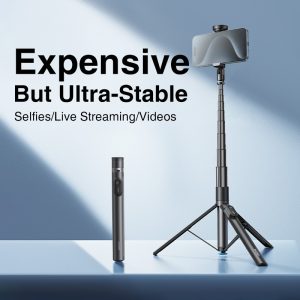
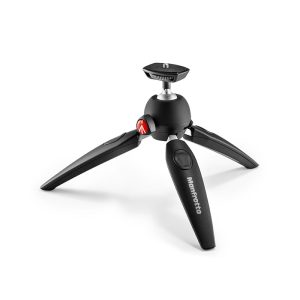
For city breaks and café shooting, a small table-top stand is ideal, since you rarely need height and it disappears into a bag. For hiking and scenic travel, a compact tripod that reaches chest height balances reach and portability. For vlogging, group photos, and solo travel, a selfie-stick tripod is the most versatile, because it works as both a handheld stick and a stand. For a long trip with mixed needs, one versatile tripod beats two specialized ones, since you will carry it more often. If you shoot video, check the tripod holds the phone steady when the screen is tilted, because some mounts sag under weight. Think about the shots you take most on this trip and pick the tripod that serves those, rather than the one that does everything poorly. One good tripod that travels with you beats three that stay at home, so choose for the trip you are actually taking rather than the one you imagine.
What features are worth paying for?
A few features are worth the extra cost. A ball head or a tilting head makes it quick to level the phone, which saves time on every shot. A phone clamp that opens wide fits more models and grips better, so the phone does not slip. Non-slip feet keep the tripod from sliding on smooth surfaces. A locking mechanism that holds the legs firmly is important, since a leg that collapses mid-shot ruins the photo. A removable phone holder lets you use the tripod with a small camera later if you want. Folded size and weight are worth prioritizing over cosmetic details. Skip features you will not use, such as a bubble level on a tiny stand, and put the money toward build quality that will survive a few trips. For the basics, our beginner’s guide to phone tripods explains how each part works.
Frequently asked questions
- What is the best tripod size for travel? A compact tripod that folds small and reaches chest or eye height suits most trips, unless you only shoot table-top shots.
- Do I need a full-size tripod? Rarely for a phone. A compact or selfie-stick tripod covers most travel needs and is easier to carry.
- How heavy is too heavy? If you notice the weight after an hour of walking, it is too heavy. Prioritize a light model that is still stable.
- Will a small tripod hold a large phone? Check the clamp width and weight limit, since some small stands struggle with big models.
- Can I take a tripod in hand luggage? Usually yes if it is compact. Check the airline’s rules, since some restrict anything that could be seen as a weapon.


