
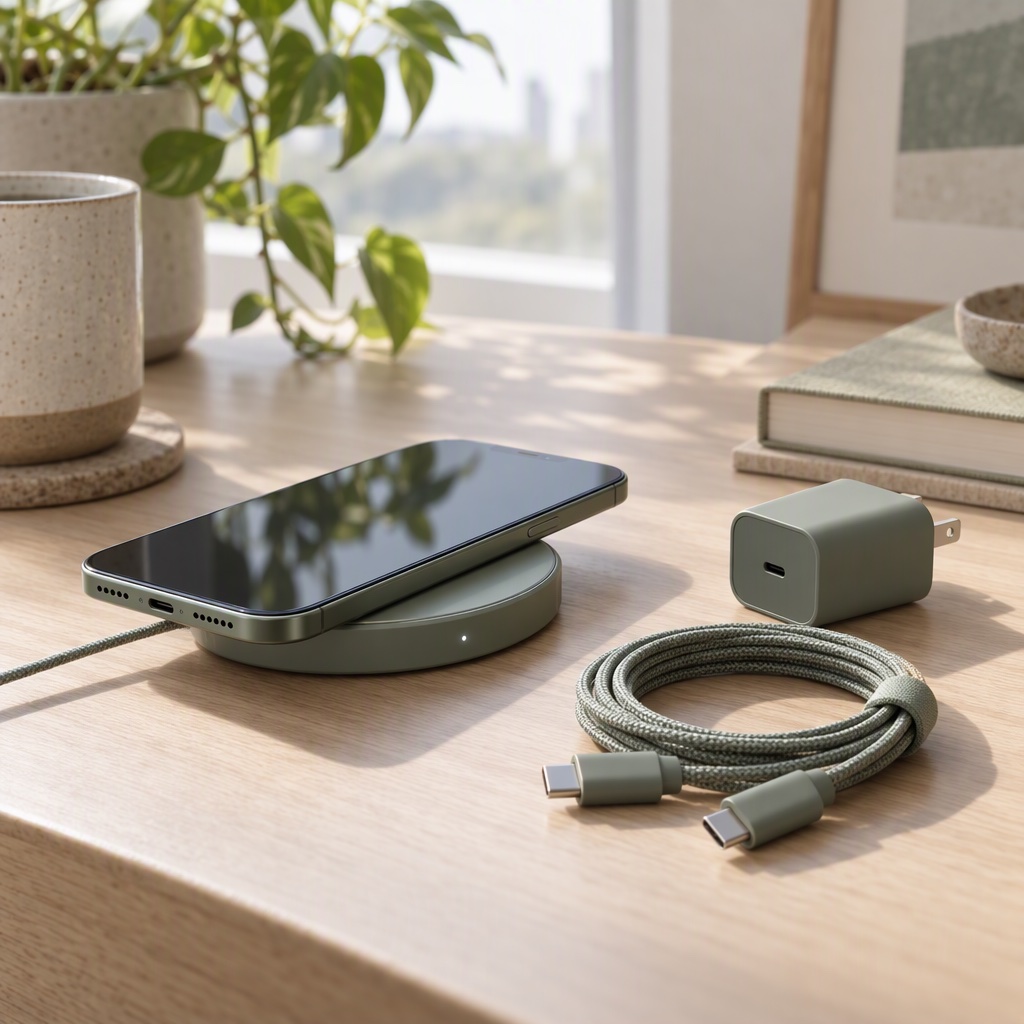
Charging a phone in direct sun is one of the few summer habits worth avoiding outright. Charging already warms the phone, sunlight adds heat from the outside, and the phone has no easy way to shed either. The result is slow charging, a warm case, and sometimes a pause or a warning. The good news is that you rarely need to charge in the sun at all. A little shade, a power bank, and a few minutes of patience will get you a full battery without asking the phone to work against the weather.
- Never leave a phone charging on a table or towel in direct sun.
- Charge in shade with air moving over the phone, not wrapped in fabric.
- Wireless charging runs warmer than a cable, so prefer a cable outdoors.
- If the phone is already hot, let it cool before you plug anything in.
Why is charging in direct sun a problem?
Charging turns electrical energy into stored energy, and a little of it is lost as heat inside the phone. That heat normally escapes through the back and edges, and the phone manages it without complaint. Direct sunlight removes the escape route, because the sun is adding energy at the same time the battery is. The phone then does the sensible thing: it slows the charge, dims the screen, or pauses charging until the temperature drops. That is why a phone that charges quickly indoors can crawl on a picnic table in July. There is a longer-term point as well, since batteries age faster when they spend time warm, and charging in the sun is one of the easiest ways to make a battery warm for a long stretch.

MagSafe & Charging — charger. Designed for everyday carry and backed by our 30-day happiness guarantee.
Can you charge a phone safely at a picnic or campsite?
Yes, as long as you choose the spot deliberately. Move the phone into the shade of a tree, an umbrella, or a tent wall, and set it on something hard rather than on a blanket or a towel, since fabric holds heat against the back. Keep the screen off while it charges, because a bright screen adds heat and slows the process. If you are at a campsite with a power point, charge in the evening when the air is cooler rather than at midday. If you are using a shared outlet, keep an eye on the phone rather than leaving it unattended in the sun for hours. A shaded, ventilated spot and an hour of patience is all it takes to charge safely outdoors. Our piece on whether charging a hot phone is safe explains the same principle in more detail.
Does wireless charging make it worse outdoors?
Generally, yes. Wireless charging is less efficient than a cable, and the energy that is not stored is released as heat around the coil. A thick case pushes the phone further from the pad, which makes the coil work harder and raises the temperature again. Outdoors, where the sun is already adding heat, this stacks up quickly. If you want to charge wirelessly, do it in the shade and take the case off, and expect the phone to charge more slowly than it would on a cable. A short cable and a charger in the shade is the simpler choice for a hot day, and it keeps the phone cooler for the rest of the afternoon.
What should you use to power a phone outdoors?
A power bank is the most practical option, because you can keep it in the shade and hold the phone in your hand while it charges. Choose one with enough capacity for the day and, if you will be out for a long time, one that can charge more than one device. Keep the power bank out of direct sun too, since it has its own battery and gets warm while it works. A short cable is better than a long one for outdoor use, because it tangles less and keeps the phone close to the bank rather than stretched across a table. If you are near a car, a charger plugged into the accessory socket works, but only with the phone somewhere shaded rather than on the dash.
How do you charge from a power bank in the heat?
Keep the pair together in the shade, connect them, and leave them alone. Do not tuck a charging phone and a power bank into the same bag, because the bag traps the heat from both and there is no airflow. If you are walking, put the power bank in a pocket and the phone in your hand, so only one of them is against your body. Check the phone after twenty minutes or so, and if it feels hot, stop and let it cool. It is also worth charging in short sessions rather than one long stretch, since a phone that is only slightly warm throughout is happier than one that gets hot and then pauses. A little planning keeps a power bank useful all day. For more on getting the most from a bank away from home, see our tips on using a power bank when travelling.
What are the warning signs you should stop charging?
The phone will usually tell you first. A temperature warning, a charge that refuses to start, or a battery percentage that stays put are all signs that the phone has paused charging to protect itself. The back of the phone becoming uncomfortable to hold is another. When any of these happen, unplug the cable, move the phone into shade, take the case off, and leave it alone for ten minutes. Do not put it in a cooler or in front of an air-conditioning vent, since a sudden temperature change can cause condensation inside. Once the phone is back to a normal temperature, you can charge it again in the shade. If the same thing happens repeatedly, charge somewhere cooler and at a quieter time of day.
Frequently asked questions
- Is it safe to charge a phone in a hot car? Only if the car is cool and the phone is out of direct sun. A parked car in summer is far hotter than the air outside, so charge before you set off or take the phone with you rather than leaving it plugged in.
- Will a solar charger help outdoors? It can top up a phone slowly if it is in full sun, but the panel itself works best in direct light while the phone works best in shade. Use the panel to charge a power bank in the sun, then charge the phone from the bank in the shade.
- Why does my phone charge so slowly outdoors? Heat is usually the reason. The phone limits the charging rate to avoid getting hotter, so a phone in shade on a hot day still charges more slowly than one in a cool room.
- Should I take the case off to charge outdoors? Yes, if the case is thick or made of silicone. Removing it lets the back of the phone release heat, which speeds up the charge and keeps the battery cooler.
- Can I charge a phone in a beach bag? A closed bag traps heat, so it is a poor choice. If you must, keep the bag in the shade and open, and check the phone regularly rather than leaving it to charge unattended.


