
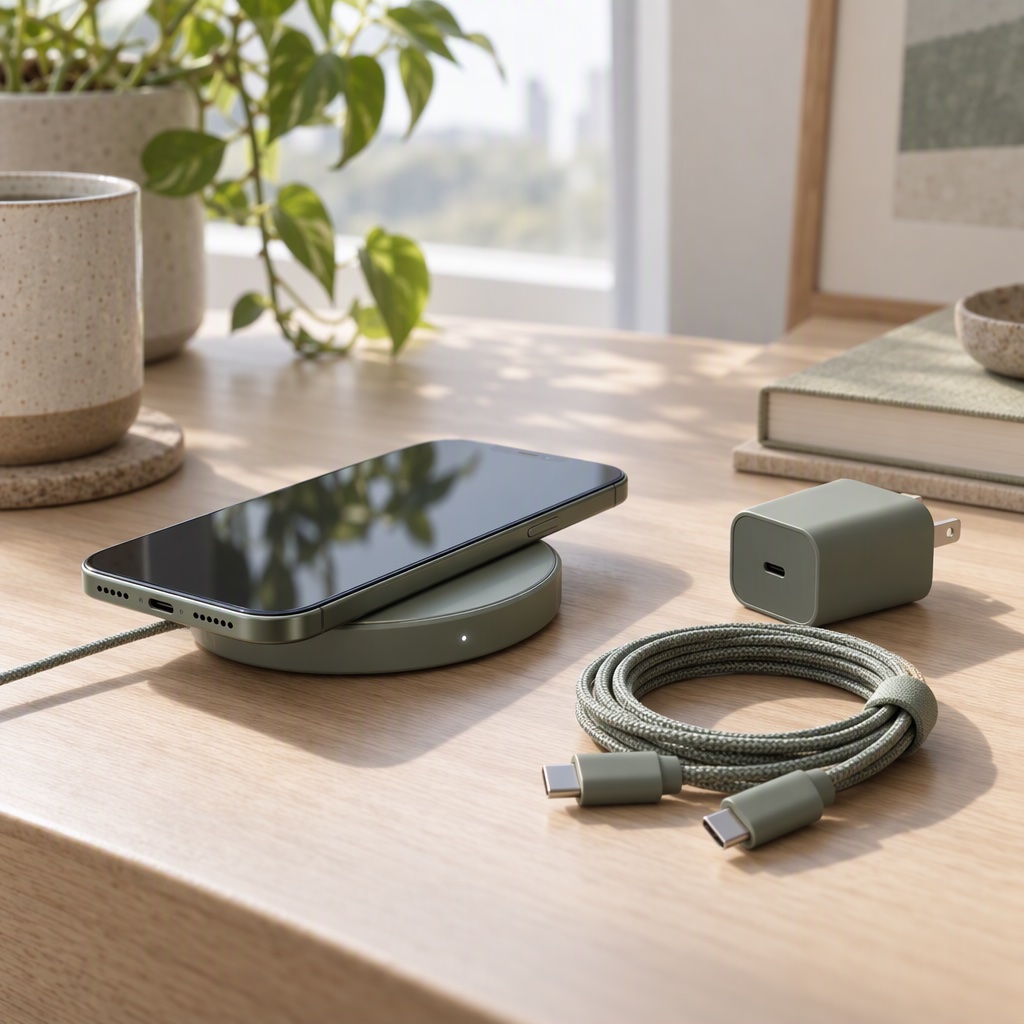
Almost every dead cable you own has died in the same place: the point where the cord meets the plug. That is not a coincidence or a manufacturing flaw. The connector is a rigid block and the cable is flexible, so the junction between them absorbs every bend, pull, and twist you apply. Inside that short section, fine copper strands are soldered to the connector and wrapped in a jacket, and each bend flexes them a little. Bend it enough times and the strands crack one by one, which is why a failing cable usually still works — but only when you hold it at a particular angle. Understanding that process tells you exactly how to make the next one last.
- Cables fray at the connector because that junction takes all the bending, pulling, and twisting you apply.
- Yanking by the cord, coiling tightly, and letting the phone hang off a table edge all speed up the damage.
- Broken strands raise resistance, which causes heat at the port — the expensive part of the phone to repair.
- A split jacket or a connector that moves means replace it; tape hides the damage without fixing it.
Why does a cable always fray at the connector?
Because that is where every force on the cable concentrates. The connector is a rigid block and the cable is flexible, so the point where they meet takes all the bending, pulling, and twisting you apply. Inside that junction, thin conductors are soldered to the connector and wrapped in a sheath, and every time you bend the cable at that spot the metal flexes a little. Bend it enough times and the strands work-harden, crack, and break one by one. The outer jacket splits for the same reason. It is not so much a manufacturing flaw as the physics of joining something stiff to something soft. That is why a cable rarely fails in the middle, and why almost every dead cable has died at the same place.

Cables & Adapters — cable. Designed for everyday carry and backed by our 30-day happiness guarantee.
What are you doing that makes it worse?
Several small habits, all of which feel harmless. Yanking the cable out by the cord rather than gripping the plug, which pulls directly on the junction. Winding the cable tightly around a charger or a phone for storage, which puts a permanent bend at the connector. Coiling it around your hand and stuffing it into a pocket or bag, where it gets crushed and pulled. Letting the cable hang off a table edge with the phone’s weight pulling down on the plug. Plugging in at an angle, which levers the connector sideways inside the port. None of these is dramatic on its own, but each adds flex cycles to the same short section of cable. The connector becomes a hinge you never intended to build, and you use it thousands of times. Charging while using the phone adds to it, because the cable is under tension and being moved at the same time — a hard combination for the junction.
What does the damage look like from the inside?
Inside the cable, the power conductors are usually bundles of fine copper strands, and the data lines are thinner still. At the connector, those strands are soldered to small pads. Repeated bending fatigues the strands until some break, which reduces the cross-section carrying current. Fewer strands means more resistance, and more resistance means more heat at exactly the point that is already stressed. That is the stage where a cable starts charging slowly, or only works when you hold it at an angle. Meanwhile the shield and the outer jacket split, exposing the inner wires to moisture and to more flexing. The failure is progressive rather than sudden: the cable does not stop working one day, it gets worse over weeks.
Can a frayed cable be repaired or should it be replaced?
Replace it. A cable is one of the cheapest accessories you own, and a repair at the connector is difficult to do well — you would need to open the molded housing, resolder fine strands, and rebuild the strain relief so it holds. Tape wrapped around a split jacket looks like a fix but does nothing about the broken strands inside, and it hides the damage from view. The only situation where a temporary fix makes sense is an emergency, where a cable that works when held at an angle gets you through until you can replace it. Even then, treat it as a stopgap. Given what a phone costs, saving money on a failing cable is a poor trade. If you are unsure whether a cable is failing, compare it against a known-good one on the same phone and charger — the difference in charging time and warmth is usually obvious.
Cables & Adapters — cable. Designed for everyday carry and backed by our 30-day happiness guarantee.
Is a frayed cable dangerous?
A damaged cable is not automatically dangerous, but it is not something to keep using indefinitely. The real risks are heat and shorting. A cable with broken strands has higher resistance, so it warms up more than it should, and heat at the connector can damage the charging port on the phone — far more expensive to fix than a cable. If the jacket is split badly enough that the conductors touch, you can get a short, and a short in a power cable can damage the charger or the phone’s charging circuit. A damaged data line can also cause unreliable connections. The sensible approach is not to panic over a slightly worn cable, but to replace any cable whose jacket has split or whose connector moves.
How do you make a cable last longer?
Three habits cover most of it. Pull the plug by the connector rather than the cord, every time. Store cables coiled loosely, held with a soft tie, rather than wrapped tightly around a charger or bunched into a pocket. And avoid leaving a cable hanging with weight on the plug, which is easy to do at a bedside table where the phone dangles off the edge. Beyond that, choose a cable with proper strain relief — the ribbed section where the cable meets the plug — because that part is designed to absorb flexing. If you use one cable in the same spot every day, leave it plugged in rather than coiling and uncoiling it constantly. For the wider topic, read signs a charging cable needs replacing and how to pick the right USB-C cable.
Frequently asked questions
- Why does my cable only work at an angle? Broken strands inside the connector mean the remaining ones only touch when the cable is bent a certain way. Replace it rather than relying on it.
- Can I tape a frayed cable? Tape hides the damage and does nothing for the broken strands inside. It is an emergency measure at best, not a repair.
- Does a frayed cable damage my phone? It can. Higher resistance means more heat at the port, and a short can damage the charger or the charging circuit. Replace it.
- Do braided cables fray less? The braid protects the jacket better, but the failure point is the connector junction, so a braided cable still needs good strain relief to last.
- Should I unplug my cable after charging? Not necessarily. Leaving a cable plugged in causes less wear than coiling and uncoiling it every day.


