
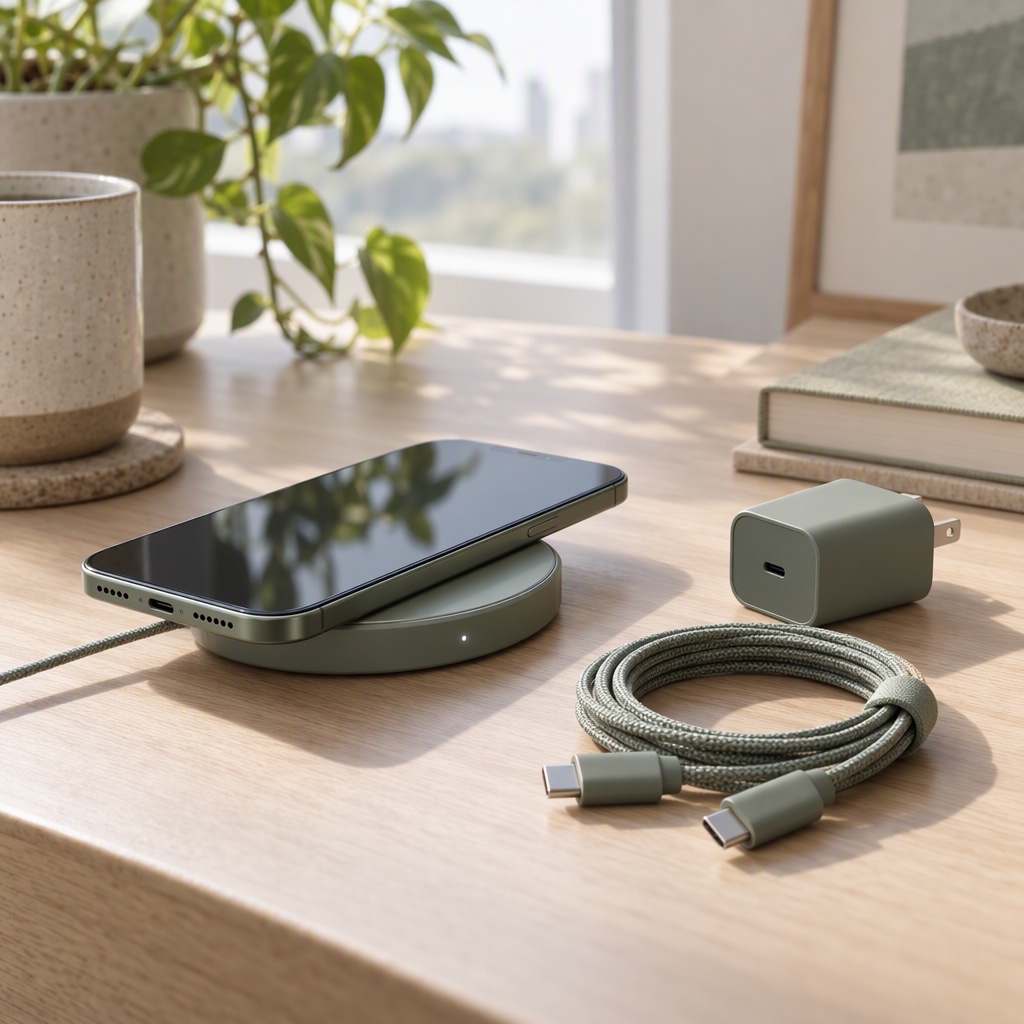
The honest answer to “what wattage does my phone need” is: whatever your phone supports, and no more. Your phone, the charger, and the cable negotiate a charging speed between them, and the slowest of the three sets the ceiling. A bigger charger is not a faster charger unless the phone asks for the extra power, which is why a modest charger and a good cable often beat an expensive monster plug. Here is how to read the numbers without overpaying.
- Your phone’s own charging spec is the ceiling — a bigger charger cannot push more power than the phone accepts.
- Many mid-range phones charge comfortably in the tens of watts; flagship models often accept more.
- The cable must support the speed too — a weak cable caps fast charging whatever the plug.
- If you mostly charge overnight, a modest charger is genuinely enough and gentler on the battery.
How does the phone decide the charging speed?
Charging speed is a negotiation, not a command. When you plug in, the charger, the cable, and the phone exchange signals and settle on the highest speed all three support — so the least capable part sets the pace for everything. This is why a fast charger paired with a basic cable can crawl, and why the same charger charges one phone quickly and another slowly: both phones are taking exactly what they support and no more. It also explains a comforting fact — a high-wattage charger cannot force unwanted power into a device that does not want it. It is worth checking the output printed on your current charger and comparing it with your phone’s spec sheet; the smaller of the two numbers is the speed you are actually getting today. The phone always gets the final say, which takes most of the risk out of buying a charger that is bigger than you currently need.
MagSafe & Charging — charger. Designed for everyday carry and backed by our 30-day happiness guarantee.
What wattage does a typical phone want?
The answer lives in your phone’s spec sheet, not in a general rule, but a little context helps. Basic and older chargers deliver only a handful of watts and refill a modern phone slowly — fine overnight, tedious during a lunch break. Mid-range phones typically charge happily in the tens of watts, which is where most people find the sweet spot between speed, price, and heat. Flagship models often support higher figures, and that is when an expensive high-wattage charger starts to make sense. If you do not know what your phone supports, the original charger that came with it is the clearest hint, and its label will list the output.
What about wireless charging speeds?
Wireless charging is the art of the trade-off, and speed is what you trade for convenience. A magnetic wireless pad charges more slowly than an equivalent wired connection, and it generates a little more heat, which is the real limit on how fast it can go before the system throttles itself back. For overnight charging on a bedside stand, that difference is irrelevant — the phone is full by morning either way, and you never fumble with a cable in the dark. The wireless-versus-wired choice is more about when you charge than how fast, which is why many people keep both: a cable at the desk for a quick top-up, a pad by the bed for the long haul. A thick case can also slow wireless charging slightly, since the pad works across a small gap, so a slim case helps if wireless speed matters to you.
When does a high-wattage charger make sense?
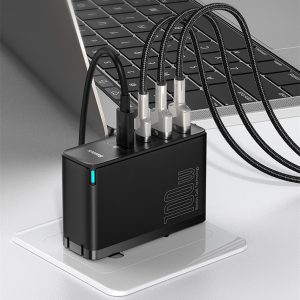
A high-wattage charger earns its place when it has more than one job. A multi-port charger with a generous total output can refill a phone, a tablet, and a pair of earbuds from a single plug, which is worth more desk space than any single-device speed record. Frequent travelers benefit too: one high-output charger replaces a brick per device, which lightens a bag noticeably. And if you plan to keep the charger through your next phone or two, buying a little headroom now can be cheaper than upgrading again later. If none of that describes you, the cheapest charger your phone supports fully is the honest recommendation — and it will charge your phone exactly as fast as an expensive one that your phone cannot fully use.
MagSafe & Charging — charger. Designed for everyday carry and backed by our 30-day happiness guarantee.
Does fast charging hurt the battery?
Heat is what ages batteries, and fast charging generates more heat than slow charging — that much is true. What is also true is that your phone manages the process actively, slowing the charge as the battery fills and easing off when things get warm, and batteries are consumable parts that are designed to be used. The practical advice is gentle: if you charge overnight, a modest charger is the natural choice, because the phone has hours to fill and does not need the speed. If you work at a desk all day and the phone never leaves its cable, wattage barely matters at all. If you need a fast top-up before leaving the house, use the fastest charger you own without guilt. Avoid hot places — a phone charging on a sunny dashboard is the scenario actually worth avoiding.
Which charger should you buy?
Match the charger to how you actually charge. If your phone supports fast wired charging and you top up during the day, a compact GaN charger in the right wattage will refill it in the time you have, and GaN designs run cooler and smaller than older bricks of the same output. Add a car charger if you drive often, since a phone doing navigation duties all day needs more power than a basic car socket delivers. Choose a wireless pad only if convenience appeals more than speed. To dig into the limits that decide all of this, read charging speed: what actually changes it and do you really need a fast charger.
Frequently asked questions
- Will a high-wattage charger damage a small phone? No. The phone negotiates the speed and draws only what it supports, so extra capacity sits unused. The charger is sized for the device, not the other way around.
- Can I charge a laptop with a phone charger? A low-output phone charger can refill a laptop eventually, but slowly, and only while the laptop is asleep or idle. Laptops generally want a higher-wattage supply and their own dedicated charger.
- Does the brand of cable matter for speed? What matters is the cable’s rating and build quality — internal wiring and connector construction. A brand is only a rough proxy for those things, not a guarantee either way.
- Is slow charging better for battery health? It generates less heat, which is the factor that matters most for long-term battery aging. Overnight with a modest charger is the gentler routine; fast charging is fine when you need it.
- How do I find out what my phone accepts? Check the phone’s spec sheet or the label on its original charger, which lists the output. That figure is the practical ceiling for how fast any replacement setup will charge it.


