
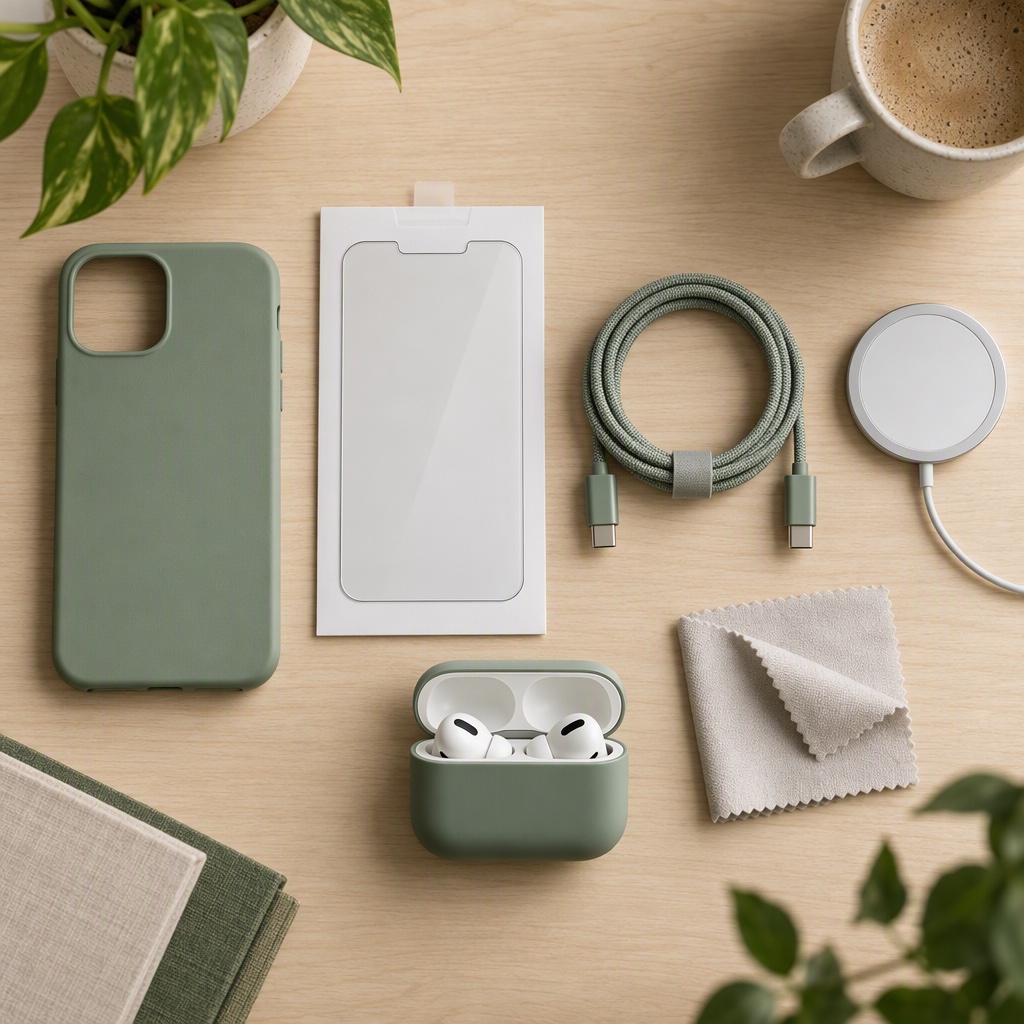
Gardening puts a phone in one of the worst places it can end up: wet hands, splashing hoses, gritty soil, and long stretches outdoors in the sun. You do not have to stop carrying it — you just have to give it somewhere safe to live. A full-cover case and a strap that keeps the phone on your body will survive far more than a bare phone in a loose pocket. The rest is habit: dry your hands before you touch the screen, and dry the phone before it goes back into your pocket.
- Keep the phone out of the wet zone — hang it on a hook or carry it in a strap case rather than leaving it on the potting bench.
- A full-cover case with port covers is the first line of defense against splashes and airborne moisture.
- Wipe the phone and your hands dry before touching the screen, because wet skin mistracks and smears.
- If rain arrives, move the phone to a zipped pocket — and let it dry fully before you charge it.
Where should the phone live while you garden?
The safest place for a phone in the garden is on your body, not on a surface. Bench tops collect water, soil, and the odd trowel; a pocket collects both soil and moisture. A strap case or a short lanyard keeps the phone hanging around your neck or clipped to a belt loop, so it never sits in a puddle and never gets left behind on a wall. If you prefer to leave the phone indoors, pick one consistent spot away from sinks and hoses — a shelf or a hook near a door works better than a windowsill in direct sun. The goal is simply to keep soil, water, and the phone in three different places until you actually need the phone. It sounds obvious, but most garden damage happens in the seconds when a wet hand reaches for a phone lying on a wet bench, and a habit that removes that moment removes the risk.
Which case features help against splashes and soil?
For gardening, a clamshell or full-cover case is the strongest option: it wraps the front and back of the phone, so a splash that lands flat cannot reach the screen edge or the charging port. Look for raised lips around the screen and camera, which keep the glass off wet soil when you set the phone down, and check whether the case covers or grips the charging port, since that opening is the easiest way for moisture and grit to get inside. A smooth outer surface is easier to wipe clean than a deeply textured one, which traps fine soil in its grooves. None of this makes a case waterproof on its own, but it turns most garden splashes into a non-event.
Why do wet hands and soil cause so much trouble?
A touchscreen works by sensing the electrical change caused by your skin, and a layer of water confuses that signal, so taps land in the wrong place and swipes stutter. Soil is the other half of the problem: dry grit is abrasive, so wiping a dusty screen grinds fine scratches into the glass, and a few specks worked into the charging port can stop a cable making a clean connection. Moisture sitting in that same port is worse, because charging a damp port can corrode the contacts over time. The practical answer is simple: dry your hands before you handle the phone, brush soil off the case rather than rubbing the screen, and keep the port covered when you can. A dry cloth in your back pocket turns all of this into a ten-second routine between jobs, and it is the cheapest habit in this whole article.
What should you do if the phone gets splashed or rained on?
Dry it as soon as you notice, and dry it before you do anything else. Shake water gently away from the charging port and speaker openings, wipe the whole phone with a soft cloth, and pay attention to the seams around buttons and the camera surround, where droplets hide. Then leave it in a warm, dry room with the ports facing down for a while — a few hours is cautious — and do not charge it until you are sure it is dry. Resist shortcuts like hair dryers or radiators, because concentrated heat stresses the battery and can push moisture further inside. A damp phone in a pocket is also bad news, so take it out and let it breathe.

iPhone Cases — case. Designed for everyday carry and backed by our 30-day happiness guarantee.
How do heat and sun fit into the picture?
Phones left in direct sun on a warm day get hot fast, and sustained heat strains the battery over time. A dark case on a sunny windowsill will heat up more quickly than a light one, and a phone left on a metal bench or a greenhouse shelf can become uncomfortable to hold. Screen glare is the other problem: a bright, dark screen outdoors is hard to read, which tempts you into cranking the brightness and draining the battery. Keep the phone in the shade when you are not using it, take it indoors during the hottest part of the afternoon, and treat a hot phone as a signal to let it cool before charging.
Which accessories make gardening easier?
Two accessories do most of the work in a garden: a full-cover case that shrugs off splashes, and a strap case or lanyard that keeps the phone off benches and out of puddles. A small cleaning cloth in your pocket means you can actually wipe the screen after handling compost, and a case with a raised camera lip saves the lens if the phone ever goes down onto soil. A screen protector is worth having too, because grit on the glass is what turns a wiped screen into a scratched one, and protectors are cheaper to replace than a screen. For the rainy side of gardening, read waterproof vs water-resistant phone cases, and for cleaning technique afterwards, see how to clean a phone without damaging it.
Frequently asked questions
- Can a phone survive a drop into garden soil? Usually yes, but check the camera glass and ports first. Brush soil off the case, never rub a gritty screen, and leave the phone to dry if the soil was damp before charging.
- Is water resistance enough on its own? Water resistance fades as seals wear and cases loosen, and it says nothing about soil or drops. A full-cover case still earns its place in a garden.
- Can I charge a damp phone? It is better to wait until the port and the whole phone are dry. Charging a damp phone risks corroding the contacts inside the port over time.
- Do garden gloves work with a touchscreen? Most do not. If you need to use the phone while gloved, look for gloves with capacitive fingertips, or take one glove off for the task.
- How often should I clean my phone after gardening? A quick wipe after every session is enough — focus on the screen, the case surface, and the charging port opening, and do a deeper clean weekly.


