
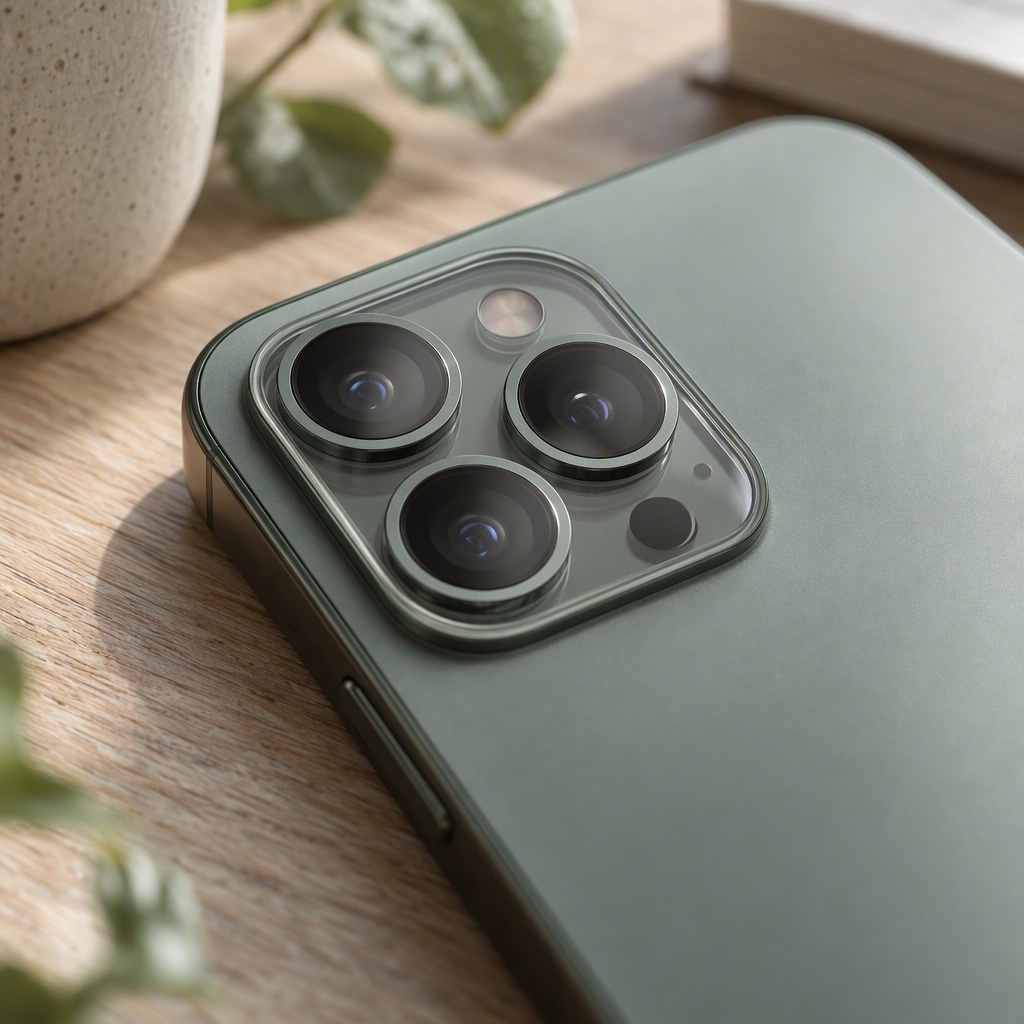
Photography changes what you need from a phone case. Every extra millimeter of material around the cameras is material between your lens and the subject — and with wide-angle shots, that material shows up as a dark corner or a clipped edge across your photo. The trick is to find a case that protects the glass without intruding into the frame, and to make sure any attachable lens you use can still sit flat against the camera. Slim, flat, and lens-friendly is the brief.
- Any raised lip or magnetic plate near the camera can intrude into an ultra-wide frame as a dark corner.
- Slim, flat-backed cases let a clip-on lens sit parallel to the cameras, which keeps distortion even.
- A lens-friendly case — flat camera surround or magnetic ring — makes mounting an add-on lens quick and square.
- Grip still matters: wide shots exaggerate tilt, so a case you can hold level beats a slippery one.
Why do some cases ruin wide-angle shots?
The ultra-wide camera on a phone sees a much wider field of view than the main camera, and that extra width is exactly what a bulky case eats. The raised lip that protects the lens on a portrait can clip into the corner of a wide frame as a dark crescent. Thick cases and camera covers with pronounced bumpers can do the same, and a magnetic plate positioned near the camera array sometimes interferes as well. You usually only notice this when you buy the case, shoot a wide photo of a bright wall or sky, and find a soft shadow in the corner that was not there when you looked through the viewfinder. It is one of the few cases where more case is genuinely less photo. The safest approach is to check a case against a wide-angle shot at home rather than trusting the product photos, which are almost always taken with the phone held out at arm’s length on the main camera.
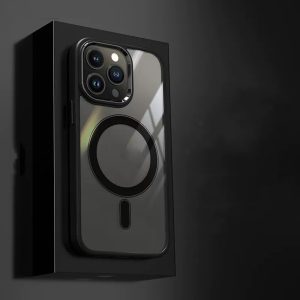
iPhone Cases in Transparent. Designed for everyday carry and backed by our 30-day happiness guarantee.
What case features suit attachable lenses?
Clip-on and magnetic lenses need two things from a case: a flat back and a clear area around the cameras. A case with a raised camera plateau pushes a clip lens away from the glass and tilts it, which produces uneven sharpness across the frame and visible dark corners at the edges. A flat camera surround, or a case built around a small magnetic ring, lets the lens sit flush and square — and magnetic attachments are far quicker to align than a clip you fight onto a slippery case. Whatever the mounting style, the lens should sit parallel to the phone’s back, because even a small tilt bends the field of view and makes a wide interior look like it is leaning. Weight matters too: a heavy magnetic plate shifts the phone’s balance and makes one-handed framing harder.
How do you test a case before you commit?
Two minutes of testing beats a week of disappointment. Fit the case, then take a photo at full zoom-out of a plain, evenly lit wall — a white or light gray surface shows edge problems instantly. Look for shadows in the corners, softness at the extremes of the frame, and any sign of the case edge creeping in. If you use a clip-on lens, repeat the test with the lens attached, which is the only way to know whether the fit is truly square. Shoot indoors the same way, since dark corners are most obvious against a bright subject. If the corners are clean and the horizon stays level, the case will not get in the way of wide photography — and you know which combinations to avoid before you are standing in a room you wanted to photograph.
How does the case affect stability for wide shots?
Wide-angle photography is unusually unforgiving of a shaky hand, because the wider frame bends lines and level errors into obvious distortions, and the subject often moves. A slim case with a grippy finish — or a ring holder that gives your finger somewhere to lock — makes it much easier to hold the phone level and steady while you frame. Cases with a matte or textured finish hold better in a warm hand than glossy ones, and anything that lets you shoot one-handed keeps your other hand free for doors, leashes, or steadying yourself. The best case for wide-angle work is one you forget you are holding, which is another way of saying thin and grippy beats heavy and protective. For anything you plan to print or post, the few seconds spent leveling the phone pay off more than any case upgrade.
iPhone Cases — case. Designed for everyday carry and backed by our 30-day happiness guarantee.
What protection do you give up for lens compatibility?
Something, and it is worth being honest about it. The chunkiest cases protect best; slim lens-friendly cases trade some drop protection for a clean, unblocked frame around the cameras. The good news is that the trade is smaller than it looks. A well-designed slim case still has raised lips at the front and back, cushioned corners, and a solid lip around the camera itself — it just does not intrude into the ultra-wide field of view. You can close much of the remaining gap with a camera protective film over the lens glass, which is cheaper to replace than a lens and keeps scratches out of your photos.
Which accessories pair with a lens-friendly case?
Keep the kit small and targeted. A lens-friendly case with a flat back or magnetic ring is the foundation, because everything else depends on that fit. A camera protective film keeps the phone’s own lens glass clean and scratch-free, and a small lens cloth stops fingerprints from softening your shots. A ring holder adds hold stability for one-handed wide shots, and if you shoot wide interiors often, a compact stand gets the phone level at chest height without a tripod’s bulk. For matching an add-on lens to your setup, read how to choose a lens that fits a case, and for wide-interior technique see phone lenses for wide interior shots.
Frequently asked questions
- Will any case work with a clip lens? No. The clip must clear the case’s camera surround and hold the lens flush and parallel to the glass. Thick cases usually need a magnetic mount or a lens-friendly case instead.
- Does a case cause vignetting on the ultra-wide camera? A thick or raised camera surround can, and it shows as dark corners in bright scenes. Even a few tenths of a millimeter of lip can intrude when the subject fills the frame edge to edge. Test with a photo of a plain wall at full zoom-out before you rely on the fit.
- Is a magnetic lens mount universal? It works with a case that has a built-in magnetic ring, or a magnetic ring applied to the back of your phone. Otherwise the lens has no flat magnetic surface to grip.
- Do lens films reduce photo quality? A clean, well-fitted film is barely noticeable, while a scratched or smudged lens is very noticeable. Films are cheap to replace and keep the glass — and your photos — clear.
- Can you use a ring grip with a clip-on lens? Yes, as long as the grip is placed low on the back where it does not reach the lens mount or block the attachment’s edge. Test the combination at home first.


