
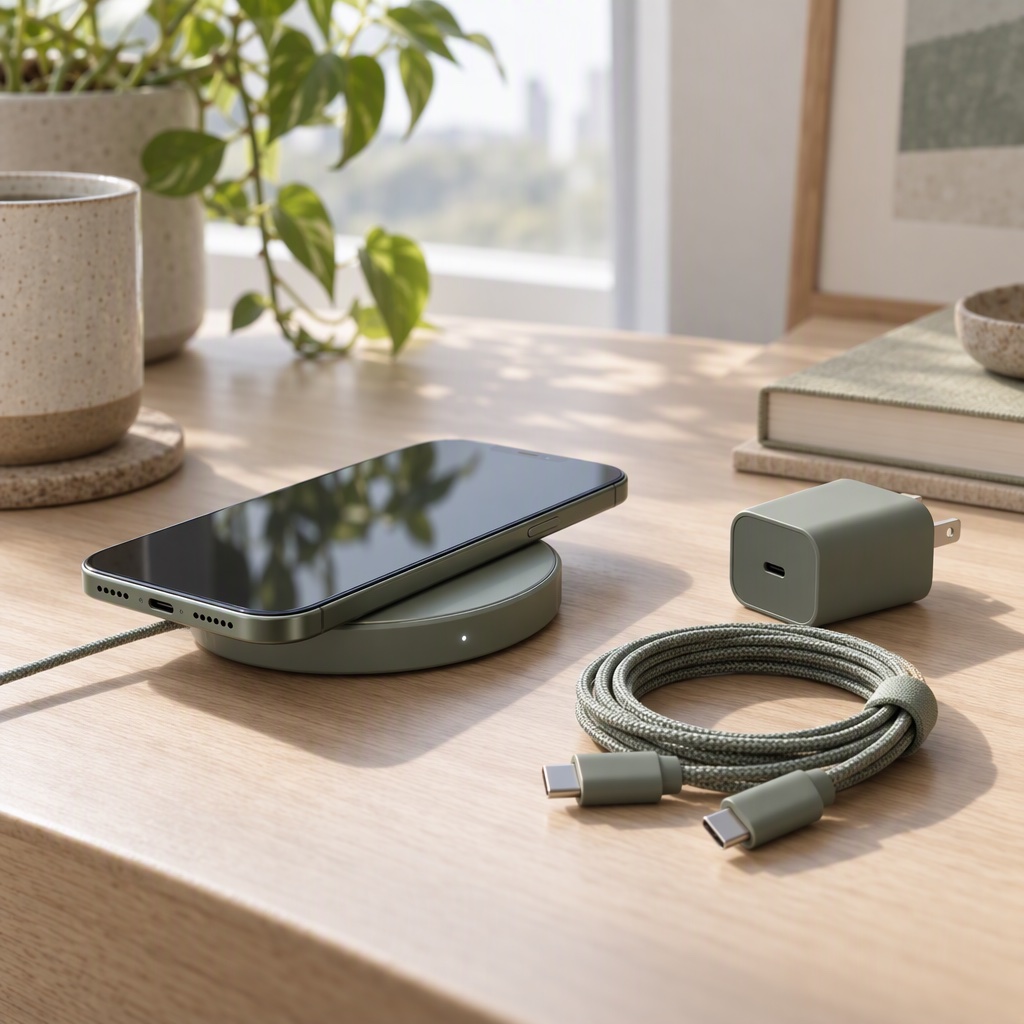
When a cable only charges at a certain angle, the connection inside the cable or the port has physically broken. It is not a software problem and it will not get better. The good news is that a new cable fixes it most of the time, and checking the port takes about ten seconds.
- An angle-sensitive charge means a broken internal connection, usually in the cable.
- Try a different cable first — that pins the fault to the cable, not the phone.
- Then inspect the phone’s port for lint, which is the second most common cause.
- A bent or wobbly port needs a repair shop, not another cable.
Why does the angle matter at all?
A charging connector makes contact through small pins held against matching pads. If the connector has been bent, or the internal wires have separated, contact only happens when gravity or pressure forces the pieces together at one specific angle. Every other position leaves a gap and the current stops flowing. The fault is physical, and no amount of wiggling will reverse it. The same mechanism makes a cable stop working entirely a few days or weeks later. The failure is almost always inside the connector, because that is the part that takes the stress of being unplugged. A braided jacket will not stop the internal wires failing, but it does protect against the abrasion that causes it. A connector that fits loosely from the start is the clearest early warning you will ever get. Bending a cable sharply at the connector, as happens in a tight pocket, is the exact motion that breaks it.

Cables & Adapters — cable. Designed for everyday carry and backed by our 30-day happiness guarantee.
How do I know whether it is the cable or the phone?
Try a second cable first. If the new one works in every orientation, the old cable was faulty and you can throw it away. If the new cable behaves the same way, the fault is in the phone. This one test takes thirty seconds and saves buying a cable you do not need, and it also tells you whether the phone needs a repair. It also matters for the next step, because a port repair is far more expensive than a cable, and it usually means being without the phone for a day. If the connector has any sideways play at all when plugged in, the cable has already failed internally and will go further. The connector that rubs against a pocket or a bag is the one that fails first, so rotate which way you coil. Look for a strain relief boot at the connector, because that is where the failure begins almost every time. A port that has been cleaned recently behaves like new, so always rule out lint before buying anything.
What is wrong with the port itself?
The commonest issue is lint. Pocket fluff compacts in the bottom of the port and presses against the connector, and once enough builds up the cable cannot seat fully. That gives exactly the angle-sensitive behaviour people report, and it often builds up slowly over months. Inspect it with a torch: if you see grey or white fuzz, clean it out with a soft, dry brush rather than anything metal. A bent port tab is the other possibility and needs a repair shop. A cable that works in one orientation but charges slowly in the other is in the early stages of exactly the same problem. A cable that has been under a foot all night will almost always show an angle fault within a few weeks afterwards. A cable that charges in one direction but not the other is already half failed and will stop soon. A cable that works on another phone but not this one points at the port rather than the cable.
Cables & Adapters — cable. Designed for everyday carry and backed by our 30-day happiness guarantee.
How do I clean the port safely?
Power the phone off first, then use a soft, dry brush such as a clean toothbrush, brushing in one direction so the lint comes out rather than going further in. A wooden cocktail stick works better than a metal pin, because metal can snap the tab inside. Never use compressed air with force, and never a liquid. If the port is packed hard with compacted lint, a phone repair shop can clear it properly in minutes. Check that the port is not the source by looking for a bent pin with a torch, since a damaged pin usually means a repair shop. Magnetic connectors avoid the problem almost entirely, because there is no repeated insertion to bend the contacts. A short cable keeps the connector straighter than a long one, which reduces the bending that causes the fault. The connector end is always the failure point, so inspect that first with a torch before anything else.
Can a worn cable be dangerous?
It can, and this is the part people underestimate. A broken connection creates resistance, and resistance turns into heat at the weakest point. If the connector ever feels hot during a charge, or you can see copper or fraying, stop using it immediately. A cable that has been crushed by a chair or caught in a door is usually broken internally even when the outside looks fine. Keep a spare cable in your bag, because this failure always happens at the least convenient moment. Keep the coil loose rather than tight, since a cable wound hard around itself is already stressed before you use it. Always unplug from the wall rather than yanking the cable, because the force goes straight into the connector. Carrying one spare cable removes the stress of this failure entirely, and it weighs almost nothing.
What should I look for in a replacement?
Buy a cable with a reinforced stress point at the connector, because that is where the failure almost always starts. Braided jackets survive bending better than plain rubber. Length is worth thinking about too, since a very short cable strains the connector if you use the phone while charging. For more on choosing, our guide to picking the right charging cable covers the details, and the signs a cable needs replacing lists the other warning signs.
Frequently asked questions
- Is it safe to keep using the cable in the one position that works?
No. The broken connection is generating heat, and it will fail completely — possibly at a worse moment.
- Why does my phone charge fine with my car charger?
A different cable usually holds the connector more firmly, or it seats deeper into the port. It usually confirms the cable is the problem.
- Can I fix the cable myself?
Cutting and resoldering is possible in principle but rarely worth the time; a replacement is cheap and safer.
- Is the phone port covered by warranty?
Usually not, because lint and physical damage are generally classed as wear. Check your terms before booking a repair.
- How often should I clean the port?
Once every few months is plenty for most people, and sooner if you keep the phone in a pocket with receipts or tissues.


