
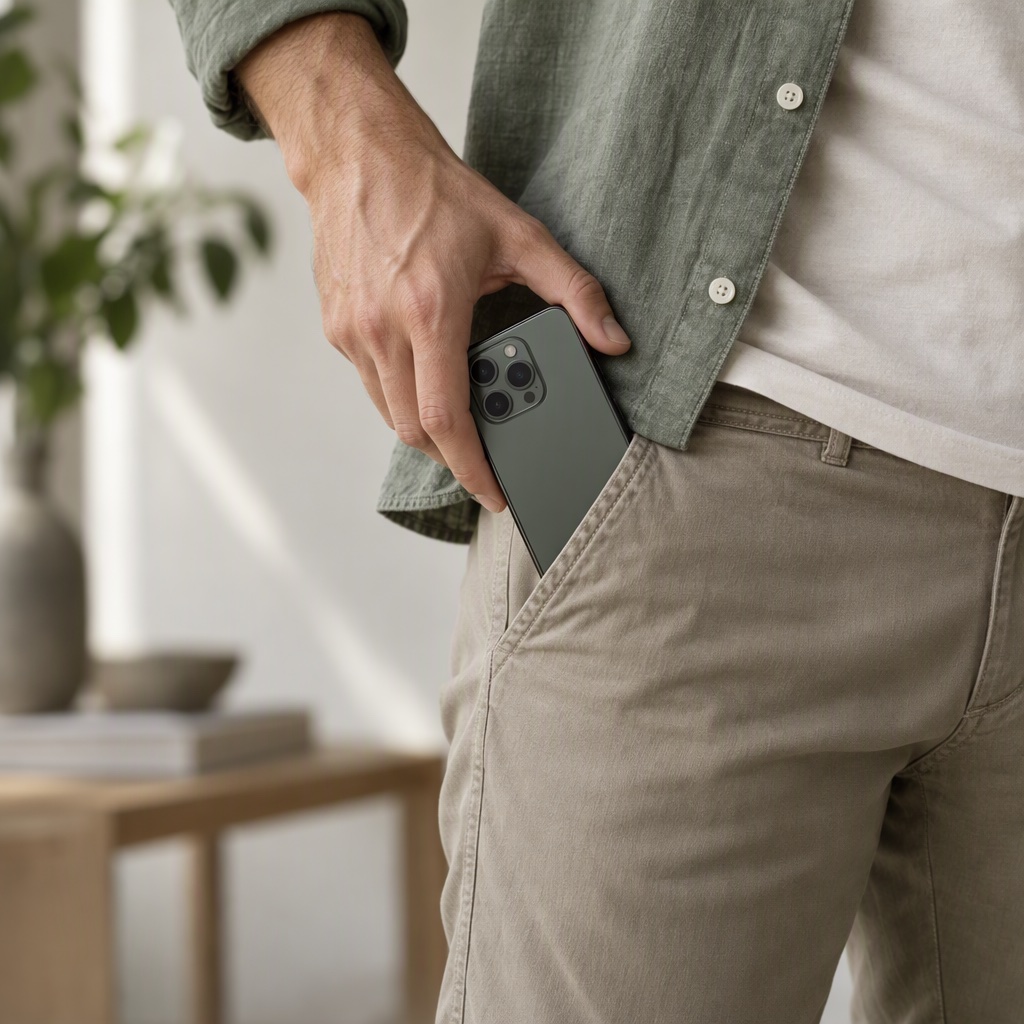
An RFID-blocking phone wallet is a case or pouch with a layer of conductive material built in between your cards and the outside world. It is designed to stop contactless card readers from picking up a signal when you do not want them to. In practice, it is simply a way of carrying your cards and your phone together without your card being readable at a distance.
- It is a wallet case or pouch with a shielding layer between cards and the outside.
- The layer works by blocking the radio signal a contactless card needs to answer.
- It stops unwanted scans, not physical theft or a lost card.
- Some designs thin the case or affect wireless charging, so check the layout.
What does RFID-blocking actually mean?
Contactless cards carry a small chip that answers when a reader powers it up over a very short distance. The card never broadcasts on its own — it replies when asked. A blocking wallet adds a conducting layer that stops that exchange happening, so a reader pointed at the closed wallet cannot get an answer from the card inside. The same idea is used in passport sleeves and shielded card holders. It is worth being clear about the scope: this is a privacy feature that stops casual, opportunistic scanning. It is not a substitute for keeping an eye on your belongings, and it does nothing at all if a card is taken out of the wallet. Think of it the way you think about a lock on a door: it removes the easy option, not every possible one.
How does the blocking layer work?
The shield is usually a thin mesh or foil of conducting material sewn between the card pocket and the outer fabric. When a reader’s signal reaches the case, the conducting layer reflects and absorbs it, so the energy never gets strong enough inside the pocket for a card to reply. Because the range involved is very short to begin with, a thin layer is enough to defeat it. Some cheaper wallets use a coating that looks the part but performs poorly, so a wallet with a full lining around the card pocket is a better bet than one with a strip of shielded fabric on one side only. If a listing does not say how the pocket is shielded, treat that as a reason to look elsewhere.
What can a blocking wallet not do?
It cannot stop a card being used if it is physically taken, and it does nothing about the card you have already pulled out to pay. It also does not protect against ordinary fraud that starts with a stolen card number, and it will not help if someone photographs the front of your card. Some cards need to be removed from a wallet to be read at a terminal anyway, which is a minor inconvenience rather than a problem. The honest way to think about it is as one sensible layer among several: keep your cards close, check your statements, and treat the blocking wallet as a tidy habit that removes one particular worry from your day without adding any real effort.
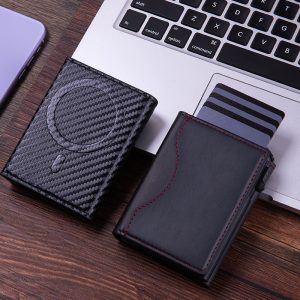
iPhone Cases — case. Designed for everyday carry and backed by our 30-day happiness guarantee.
Will it interfere with charging or phone signal?
A conducting layer placed in the wrong spot can cause problems. If the shield sits behind the phone’s charging coil, wireless charging may stop working or become unreliable, which is the single most common complaint about wallet cases. Metal in the back can also weaken a magnetic mount or charger. The usual fix is a design that keeps the card pocket in the lower half of the case, away from the coil area, or a separate magnetic card holder that sticks to the back of the phone or case instead of sitting inside it. Phone signal and calls are unaffected in normal use, because the shield is small and sits against the phone rather than wrapping the antennas.
Which design suits you — wallet case, card holder, or pouch?
A full wallet case keeps everything in one place and turns the phone into a clutch, which some people love and others find bulky. A magnetic card holder keeps the phone slim and lets you change cases freely, but it usually holds fewer cards and can interfere with magnetic charging depending on where you place it. A pouch with a card slot is a middle option that carries a card and a little cash without the bulk of a full wallet, and if you carry a badge for work, measure it against the slot before you buy. Our comparison of a wallet case versus a phone pouch goes into the trade-offs in more detail. If you already carry a pouch, what belongs in a phone pouch is worth a read before you add cards to it.
How can you test whether one actually works?
Try it at a terminal you already use. Put a contactless card inside the closed wallet, hold it against the reader, and see whether it registers — a properly shielded wallet should not. Card readers at transit gates and shop checkouts are a convenient test because they give clear feedback. If the transaction goes through, the wallet is not doing its job and should not be trusted with cards. Also check the fit: a card slot that is too loose lets a card slide out when you open the case, and a slot that is too tight will fray the card’s edges over months of use. Repeat the test with every card you plan to keep inside, because cards differ in how strongly they respond.
Frequently asked questions
- Do I actually need an RFID-blocking wallet? It depends on how much the idea bothers you. Unwanted scanning requires someone standing close to you with a reader, and the risk is small, but a blocking wallet removes the worry for very little money and adds no daily effort once it is on the phone.
- Will it block my bus pass or work badge? Usually yes, which is the point. If you tap a badge through a closed wallet, either the shield is weak or the badge reads at a longer range than most cards. Keep frequently tapped cards in an easy-to-reach slot or carry them separately.
- Does the shield wear out? The conducting layer does not wear out under normal use, but the fabric around it can tear or the stitching can open. Inspect the lining occasionally, especially around the card pocket, and replace the wallet if it is split.
- Can I use a blocking wallet with wireless charging? Only if the design keeps the shield away from the charging coil. Look for a case that states it is compatible with wireless charging, or choose a magnetic card holder that sits outside the coil area instead. This is the detail most worth checking before you order.
- Is a metal card case the same thing? A metal case can shield as well, but metal between the phone and a wireless charger causes the same interference problems. A fabric or thin foil lining is the safer choice if you charge on a pad.


