
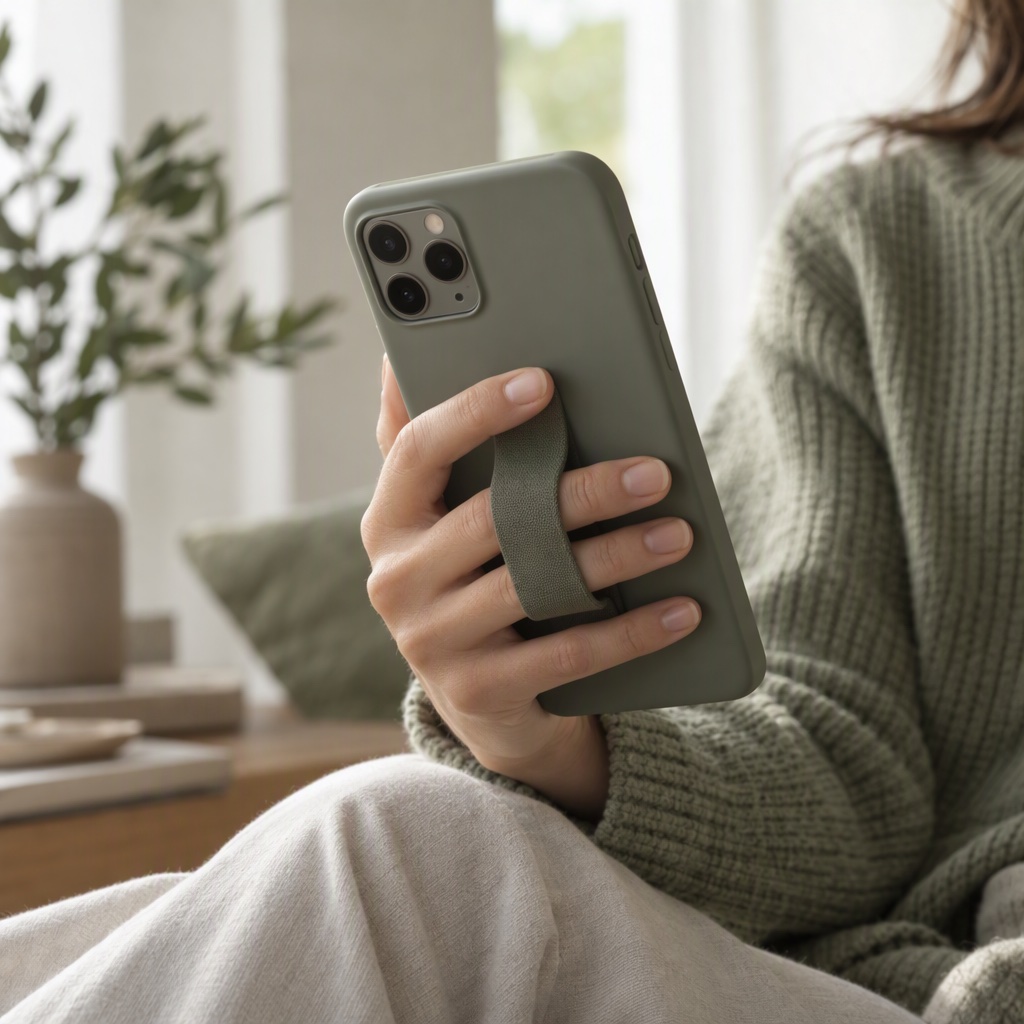
A cast or splint changes how you hold a phone, but it does not have to stop you using one. The general approach is to take the weight off the injured hand, prop the phone where you can see it, and lean on voice controls and simple gestures for the rest. Nothing here is medical advice — if any movement or position hurts, stop and check with the provider who fitted your cast.
- Prop the phone on a stand or against cushions so you do not have to hold it.
- Use voice input and one-handed gestures to reduce gripping.
- A ring grip can give a positive hold, but only if your provider says the finger can move.
- Keep the cast dry, away from lotions, and do not rest the phone on the cast itself.
What is the easiest way to type and message?
Speak instead of typing. Dictation handles messages, reminders, and searches well, and it works with any messaging app your phone already has. For the times you need to type, use the one-handed keyboard mode built into most phones, which shrinks the keys toward one thumb, and keep replies short — a thumbs-up or a quick voice note answers most things. Swipe-style typing, where you drag your thumb from letter to letter, is easier than tapping one key at a time for a lot of people in a cast. Set up these options before you need them, so you are not fighting a keyboard on day one with one hand tied up. A phone set up one-handed is a phone you will actually use for the six weeks a cast typically means.
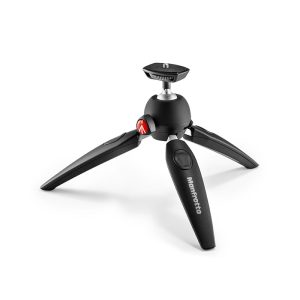
Mounts & Stands — holder. Designed for everyday carry and backed by our 30-day happiness guarantee.
How do I hold the phone without using the injured hand?
Do not hold it at all — prop it. A small folding stand on a desk or table puts the screen at a comfortable angle with your arms free, which is the single biggest improvement you can make while a hand is out of action. In bed, wedge the phone against cushions or a pillow slope instead of hovering it, and on a sofa, rest it on the arm or a stacked cushion. The goal is a setup where the good hand does the tapping and nothing does the holding. If you have to carry the phone from room to room, a pouch or a shoulder strap keeps it off the injured hand entirely.
Can I still take calls hands-free?
Yes, and you should. Speakerphone is the obvious answer, and it works fine in a quiet room. For anything more private, earbuds with a microphone turn calls into a completely hands-free activity, which also means you can walk around while you talk. A headset or a single earbud is better than holding a phone to your ear anyway, because holding anything steady for a long call is tiring with one good hand. Just remember to clean your earbuds regularly — our guide to how to keep your earbuds clean covers it — because they spend the whole cast period in daily use.
What accessory helps if I can only move one or two fingers?
A ring grip or finger holder is the usual answer, because it turns a pinch grip into a hook: one finger slides through the ring and the phone hangs from it instead of being squeezed. That matters most when you are standing or walking and cannot put the phone down. The catch is that a ring only works if you can bend a finger comfortably, and some casts do not allow that — if in doubt, ask the provider who fitted it rather than testing it yourself. When a ring is not an option, a strap attached to a case anchor, or a pouch you can hook over a wrist, gives the same security without needing finger movement.
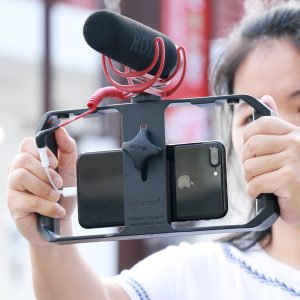
Grips & Ring Holders — holder. Designed for everyday carry and backed by our 30-day happiness guarantee.
How do I keep the cast safe while using the phone?
Keep the cast dry and clean. Do not rest the phone on the cast, because the edge presses on the padding and the phone’s heat builds up against it, and never lean over a sink or a bath with the cast while you are watching something on the screen. Hand lotion is the other trap: grease on a cast attracts grime, and a greasy cast plus a phone screen is a bad combination for both. Wipe your phone more often than usual while you are using it one-handed, since the same hand tends to touch everything, and our guide to grip options for arthritis has more ideas if holding anything is difficult.
When should I stop and get help?
Stop when something hurts. Pain, a cast that feels tight, skin that itches intensely under the cast, numbness, or any change in skin colour or temperature are all signs worth raising with your provider rather than working around. None of the tips in this article are worth pushing through discomfort, and no accessory should ever be used in a way the provider who fitted your cast has told you to avoid. Once the cast comes off, expect the hand to feel weak and clumsy for a while, and go back to the basics: prop the phone, use voice input, and let strength return before you go back to one-handed everything.
Frequently asked questions
- Can a touchscreen sense a finger through a bandage? Touchscreens respond to skin contact, and fabric usually blocks the signal, so typing with a bandaged finger is unreliable. A thin adhesive plaster is often enough to block it entirely. Voice input and a propped-up phone are the dependable route until the covering comes off.
- Is it OK to hold the phone in the injured hand if it does not hurt? Follow the guidance from whoever fitted your cast — they know what the injury can take. If it hurts, or you are unsure, treat that as a no and prop the phone instead. When in doubt, the safe answer is always no.
- What phone features help most day to day? Dictation for messages and reminders, reading messages aloud, and voice search cover most needs. Set them up before the cast goes on if you have any warning, because configuring them one-handed is harder than using them, and voice control handles calls too.
- Does a cast change how I should charge the phone? Charging itself is unaffected. The practical issue is handling, so a wireless charger removes the cable fiddling entirely, and a stand keeps the phone at a comfortable angle for a one-handed plug-in. Give the phone space so a clumsy swing does not knock it off the table.
- Will my hand feel strange using the phone afterwards? Often, yes — a hand that has been still for weeks feels weak and clumsy at first. Start with light tasks and build back up; that awkwardness is normal and usually fades with ordinary use, not with exercises.


