
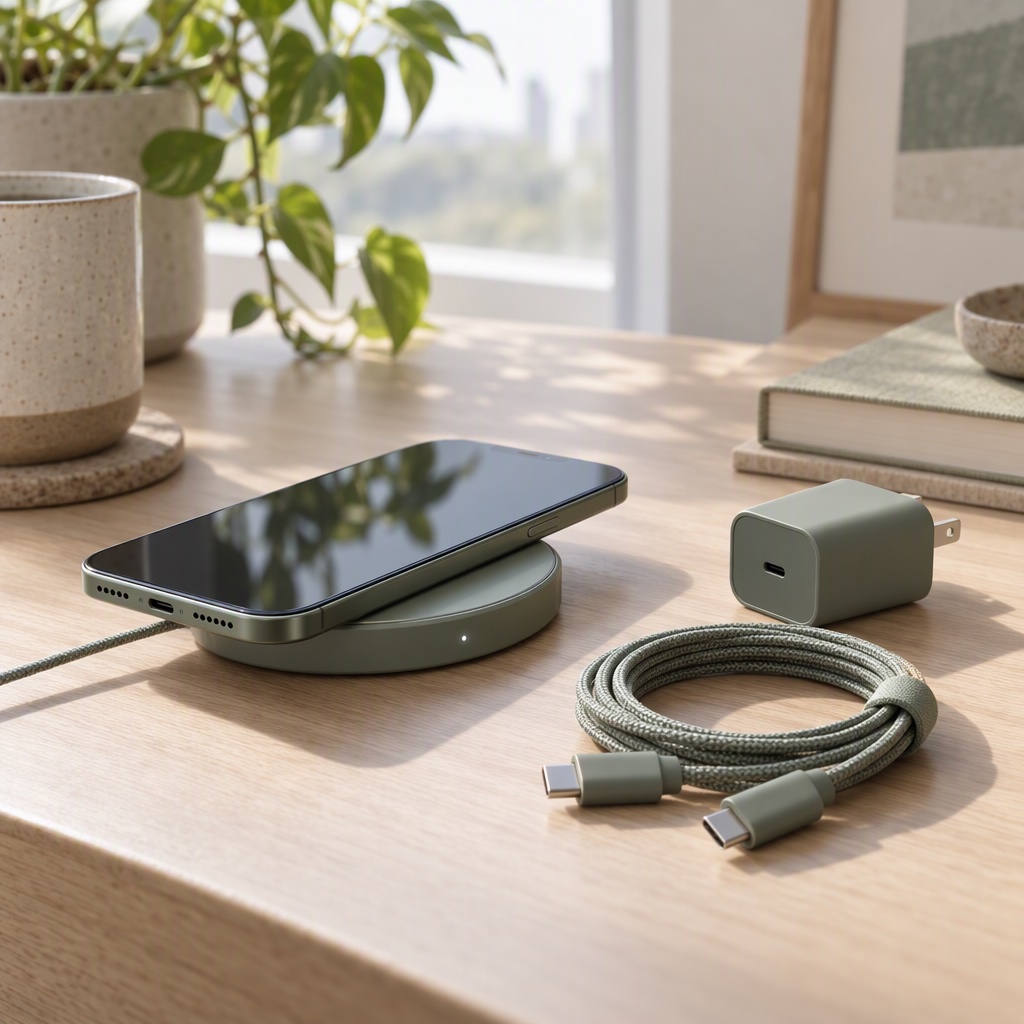
Most modern phones do not have a removable battery, so for most people a “spare phone battery” means a power bank kept in a bag or drawer for the day the phone runs low. Either way, the storage rules are similar: keep it at a moderate charge, keep it cool and dry, and check on it every few weeks. Done properly, a stored battery will still hold a useful charge when you finally need it.
- Store a spare battery around half charge, not full and not empty.
- Keep it somewhere cool, dry, and out of direct sun.
- Check it every month or two and top it back up if it has drained.
- Remove it from a charger once charged, and never store it in a hot car.
What counts as a spare phone battery these days?
There are two kinds. The first is a genuinely removable battery from an older phone, which is easy to store and swap but only relevant if your device still takes one. The second, far more common today, is a power bank — a sealed battery with its own charging circuit that you carry alongside the phone. Most people mean the second when they talk about a spare battery. The advice below applies to both, with the obvious difference that a power bank also has a body, ports, and indicator lights that need a quick look-over now and then. If you are not sure which capacity suits your phone, our guide to choosing a power bank for your phone walks through the sizes and what each one can realistically do.
What charge level should a spare battery be stored at?
Half full is the sensible default. A battery stored completely full for months sits under continuous stress, and a battery stored completely empty can drop below the level at which its protection circuit will let it charge again. Somewhere in the middle avoids both problems. In practice this means: when you decide to put a power bank away, either charge it to roughly halfway or use it until the indicator shows a couple of lights left. Then leave it. You do not need to be precise about the percentage, and you do not need to cycle it deliberately every week unless you are storing it for a very long period. Why not simply leave it at full? Our piece on wired versus wireless charging touches on the same principle of not leaving a battery sitting at its limits for no reason.
Where should you keep it?
Cool, dry, and out of the sun. Heat is the enemy of any stored battery, so avoid windowsills, cars, and the top of a radiator. A cupboard or a drawer at normal room temperature is ideal. Moisture is the other problem, because damp gets into ports and corrodes contacts, so a bathroom cabinet is a poor choice and a sealed box or pouch in a dry room is better. Keep it away from metal objects that could bridge the contacts, and store it in something that will not crush it if it is buried under other things in a drawer. A power bank that has been through a hot summer in a car should be checked carefully before you trust it again.
How do you store a battery for months at a time?
Set it to a half charge, put it somewhere cool and dry, and put a reminder in your calendar to check it every month or two. When you check, see whether the indicator still shows charge; if it has drained to nothing, charge it back to about halfway and store it again. Do not leave it permanently connected to a charger, because that keeps the battery at full and warm for no benefit at all. If the battery is removable, store it in a small case or bag rather than loose in a drawer where keys and coins can scratch the contacts. Keep it away from anything flammable, and check that the casing has not swollen or cracked while it sat unused.
How do you know a stored battery has degraded?
Compare what it does now with what it did when new. A power bank that used to fill your phone twice and now barely manages once has lost capacity, which happens slowly to every battery whether it is used or stored. Warning signs that need more than a shrug are a case that feels warm when it should not, a body that has swollen or warped, or a unit that gets hot during a normal charge. Any of those three means the battery should stop being used and be recycled properly rather than thrown in the trash. Gradual loss of capacity, on the other hand, is normal and simply means the spare has less to give than it used to. It is also a good reminder that a spare battery is a consumable, not a permanent fixture you buy once.
What should you check before relying on it again?
Look at the ports for dust, fluff, or corrosion, and check the casing for swelling or cracks. Charge it once to see how it behaves — it should charge without becoming uncomfortably warm, and the indicators should behave sensibly rather than jumping around. Give it a full cycle at home before you take it somewhere it matters, like a long trip or a day out. If it gets hot, stops early, or shows odd behaviour, retire it rather than hoping it improves. For everyday carrying, a smaller bank that you actually remember to charge beats a large one that has been sitting flat in a drawer since last summer.
Frequently asked questions
- Is it safe to store a power bank fully charged? It is better not to for long periods. A battery held at full for months is under more stress than one held around half, and it is also warmer, which speeds up ageing. Half charge is the simpler and safer default.
- Can a battery stored empty be revived? Sometimes, by leaving it on a charger for a while so the protection circuit re-engages. If nothing happens after a reasonable attempt, or the unit gets warm, stop and recycle it rather than persisting.
- How often should I top up a stored power bank? Every one to two months is a comfortable rhythm. Check the indicator, bring it back to roughly half if it has drained, and put it away again. Ten minutes of attention every few weeks keeps a spare healthy for years.
- Should I store the cable with the battery? Yes, and it is a good habit. A spare bank without a cable is much less useful in an emergency. Keep them together in the same pouch so the pair is always ready to go, and you are not hunting for a cable at the moment you need one most.
- Does storing a battery in the fridge help? No. Cold does slow some chemical ageing, but condensation from repeated temperature changes is a real risk to the contacts and circuitry. A cool, dry cupboard is the sensible compromise.


