You need a camera lens protector if your phone’s lenses sit flush with the back and you set it down on rough surfaces, or if you work somewhere with grit and dust. If your case already has a raised lip around the camera island, a lens protector adds little. The trade-off is real: extra glass or film over the lens can soften photos slightly and collects smudges, so it is worth deciding rather than adding one by default. Your answer depends on where the phone goes and how the camera sits on the back of it.
- Fit one if the lenses sit flush and you often put the phone down on rough surfaces.
- Skip it if your case has a raised lip that already lifts the lenses clear of the table.
- Choose a protector with an anti-reflective coating and a precise cutout for each lens.
- Clean it as often as you clean the lens, because a smeared cover blurs every photo.
What does a camera lens protector actually protect against?
The lens cover glass on a phone is tough, but it is not scratch-proof, and it is the one part of the phone that touches the table every time you set it down. A lens protector takes the abrasions instead: grit on a desk, keys in a pocket, the rough surface of a stone bench. It also spreads the load if the phone lands on its back, so a knock goes into the protector rather than into the lens ring. What it cannot do is stop a direct hit on a protruding lens or protect the camera module if the phone is crushed. It is a wear item, not armour, and it should be treated the same way as a screen protector. Replace it when it is worn rather than waiting for a crack.
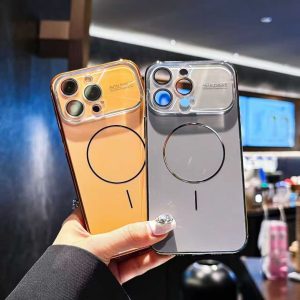
Does a lens protector affect photo quality?
Any extra layer of glass or film in front of a lens changes what the sensor sees, and the honest answer is that an inexpensive protector can soften detail, reduce contrast and add flare when a light source is in frame. A well-made one with an anti-reflective coating and a cutout matched to each lens is much harder to notice, and in normal daylight you are unlikely to see a difference. The bigger everyday problem is smudging: a protector adds another surface for fingerprints and pocket grease, and a smeared cover blurs photos far more than the glass itself does. If you shoot a lot in low light or against bright lights, test with and without before you commit. If you cannot tell the difference, keep it and stop worrying about it.
When is a lens protector genuinely worth it?
It is worth fitting one when the lenses sit flush with the back of the phone, because then the cover glass touches whatever surface you rest the phone on. It is also worth it if you work outdoors, on building sites, in workshops or anywhere with grit and metal dust. If you keep the phone in a pocket with keys, or set it down on concrete and stone regularly, the lens cover will pick up fine scratches over time. If your phone lives in a case with a deep camera cutout and you rarely put it down face-up, you can reasonably skip it and keep the lens clean instead. Our advice on holding a large phone comfortably also reduces how often the camera side ends up on a hard surface.
Does a raised case lip already protect the camera?
A raised lip is genuinely effective, and for many people it is enough. If the case sits proud of the lens ring by a visible margin, the phone rests on the case and the lens never touches the table. That is the same principle as a raised lip around the screen. The limit is that a lip only protects against flat surfaces. It does nothing for a pocket full of grit, and it does nothing if the phone lands on a stone edge or a kerb. Lips also vary: a slim case may clear the lens by less than a millimetre, which is not much protection on a rough surface. Measure it rather than assuming, and check it again after the case has been on for a while.
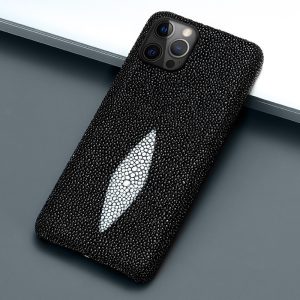
How do you fit a lens protector without trapping dust?
Work the same way you would fit a screen protector. Clean the lens ring and the cover glass with the supplied cloth, then use a dust sticker until nothing glints under a bright light. Fit the protector with the phone lying face-down on a soft, clean cloth so the camera faces up and you can see what you are doing. Peel only part of the backing, align the first lens precisely, then press and peel the rest as you go. Press around each lens ring rather than across the middle, so you do not trap air over the glass. If a speck appears, lift the protector with tape and start again rather than leaving it in place. A speck left under the glass will blur every photo you take.
What should you look for when buying one?
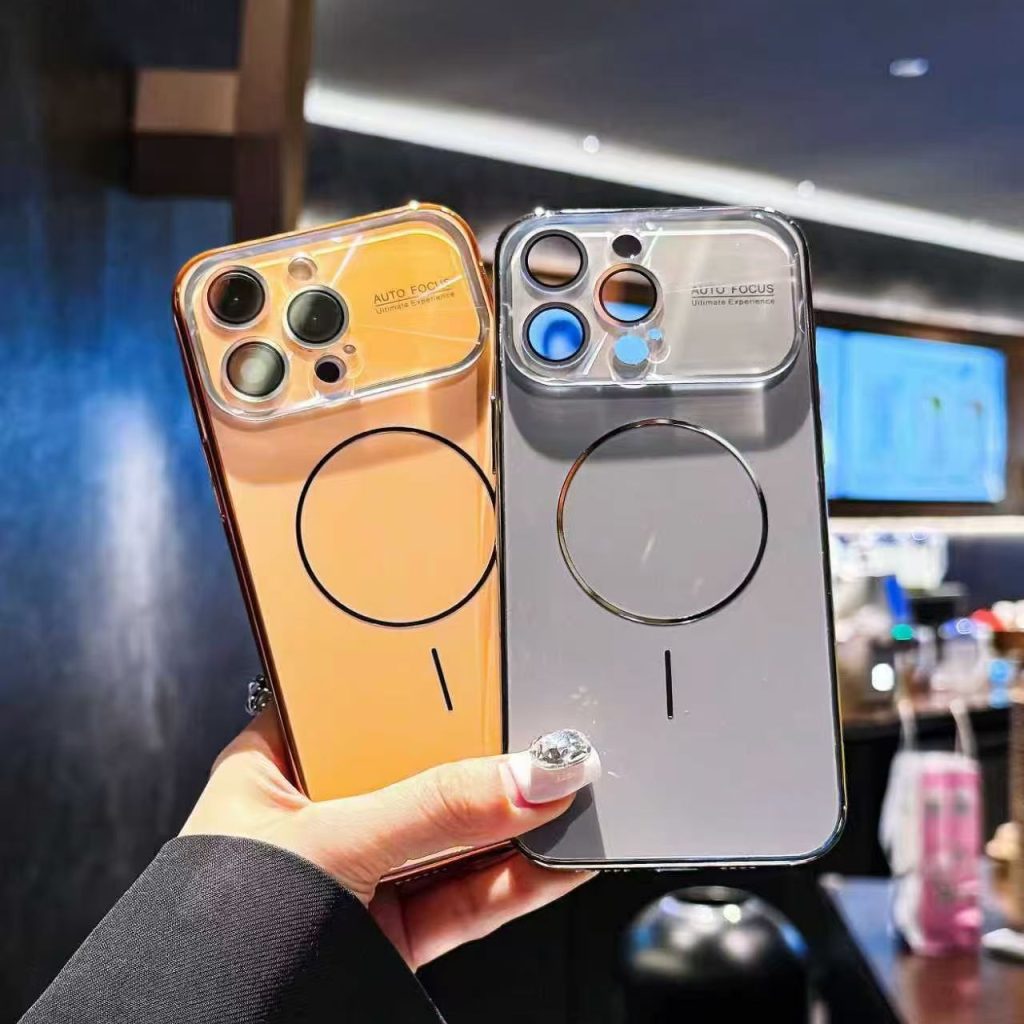
Look for individual cutouts per lens rather than one large window, because a single sheet of glass across the whole camera island can cause reflections between lenses. Check that the protector has an anti-reflective coating and that it does not sit proud enough to snag on a pocket. Confirm it fits your exact model, since camera islands differ even between similar phones. A metal or hard frame around the glass adds bulk and can interfere with a case, so check the case still fits before you buy. Finally, make sure you can remove it cleanly. If you use a clear case, our guide to stopping a case from yellowing covers keeping the whole back looking sharp. A lens protector on a yellowing case still looks better than a scratched lens.
Frequently asked questions
- Does a lens protector reduce photo quality? An inexpensive one can soften detail and add flare. A coated protector with per-lens cutouts is hard to notice in normal daylight. Test it with a bright light in frame before you decide.
- Can I use a lens protector with any case? Only if the case’s camera opening is wide enough. Check the fit before you stick the protector down, because it cannot be trimmed. Measure the camera opening if you are unsure.
- How often should I replace a lens protector? Replace it when it is scratched, cracked or smeared and cleaning no longer helps. That is usually a matter of condition, not time. Inspect it whenever you clean the lens.
- Will a lens protector stop the camera from focusing? No. It sits outside the lens and does not touch the focusing mechanism or the image sensor behind it. Focus is handled inside the camera module.
- Should I remove it for important photos? If you are shooting in low light or into bright light, taking it off can only help the result you get. Store it somewhere clean if you plan to refit it.