
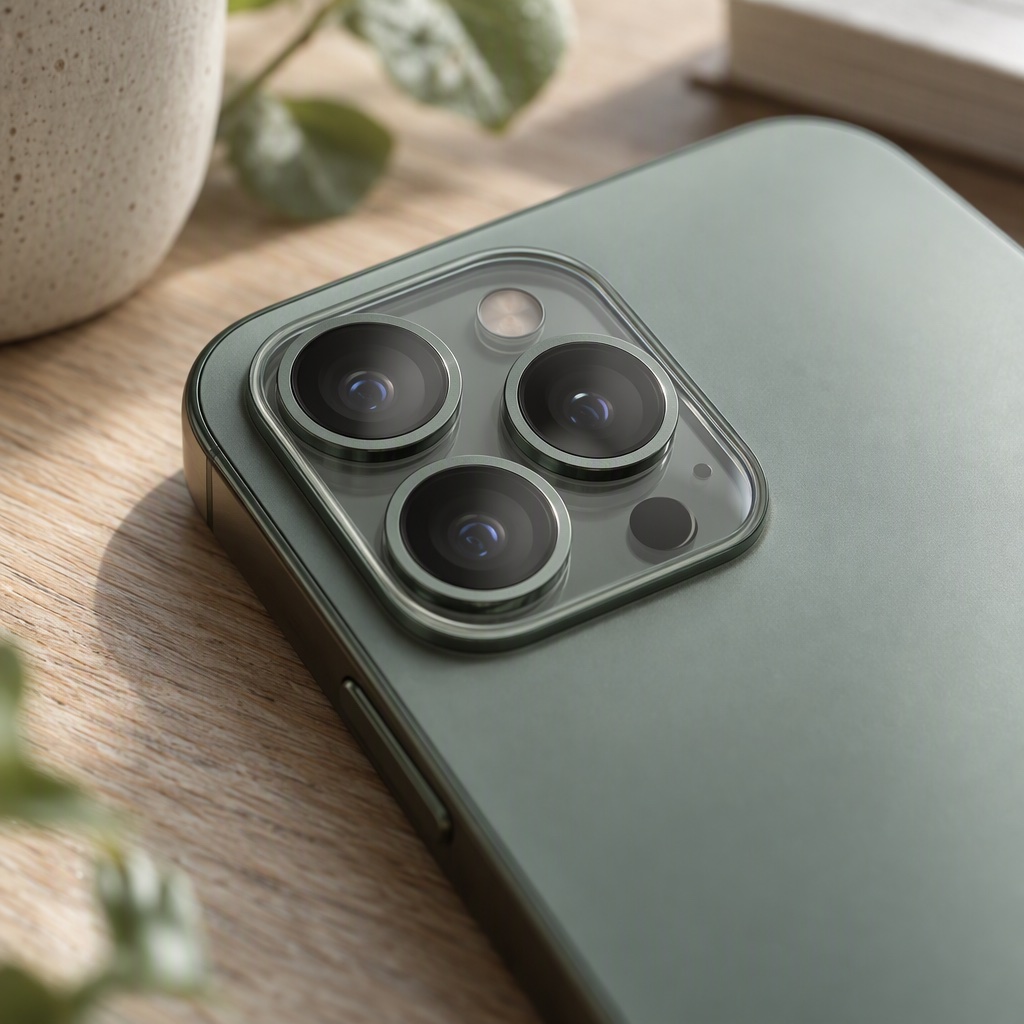
A media course asks a lot of your phone camera. You will shoot interviews, b-roll, and stills for assignments, often outdoors and often in a hurry, and the lens is the part most exposed to knocks, fingerprints, and dust. A sensible lens kit for a media course is not a bag of gadgets; it is a small set of protection and support that keeps your camera working and your footage steady. Think about how you will carry it, what you actually shoot, and what your course expects you to deliver before you spend anything.
- Protect the lens before you add anything else.
- Choose protection that does not blur or darken the picture.
- Add a tripod or stand for steady shots and interviews.
- Keep the kit small enough to carry every day.
What should a lens kit for a media course actually include?
Start with the lens itself. On a phone, the camera lenses sit proud of the body, which makes them the first thing to touch a table, a pocket, or the ground. A lens protector is the simplest and most useful piece of a media-course kit, because a scratched lens blurs every shot you take afterward. Choose a protector that covers the whole camera bump and sits flush, so it does not catch on pockets or wobble on a desk. Beyond protection, the rest of the kit depends on what you shoot. If your course involves interviews, a tripod matters more than anything else. If it involves stills for print, cleaning tools matter more. Build the kit around your assignments rather than buying a fixed bundle, and add pieces only as a real need appears. A small, well-chosen kit beats a large one you leave at home.
How do you protect a lens without hurting image quality?
Protection should be invisible in the final picture. A clear, thin protector made for camera lenses lets light through without adding a color cast or a soft haze, so your footage looks the same as it would without it. Avoid thick, tinted, or heavily textured covers, since these can dull contrast and create flare when you point the phone toward a light source. Fit matters as much as material: a protector that is slightly too small leaves the edge of the lens exposed, while one that is too large can trap dust underneath and lift at the corners. Clean the lens carefully before you apply anything, and press the protector down evenly so no air is trapped. If you shoot in bright sun, check for flare by filming a bright window and looking at the result. A good protector is one you forget is there.
Do you need a tripod as part of a lens kit?
Not always, but for a media course it is often the piece that lifts your work. Handheld footage looks unsteady the moment you zoom or walk, and interviews are far easier when the phone stays still on a stand. A compact tripod that folds small enough for a backpack is the practical choice; a full-size one is steadier but heavier to carry to class. If you mostly shoot desk-based work, a small stand may be enough, while outdoor filming benefits from a taller tripod you can raise to eye level. Look for a head that lets you tilt and pan smoothly, and a clamp that holds the phone firmly without pressing the buttons. Test the tripod with your phone attached before you rely on it, and check that it does not tip when the phone is tilted or when a cable is plugged in. A tripod you trust is one you will actually carry, so choose one that folds flat and fits the side pocket of your bag. Steady footage reads as more professional and saves you time in the edit. For the basics, see our guide to phone tripods.
How do you choose lens protection that fits your case?
Your case and your lens protection have to work together. A case with a raised lip around the camera can clash with a protector that adds its own thickness, so the two may not sit flat. Measure the camera bump and choose protection that matches it, or pick a case designed with the camera area in mind. If you swap cases often, choose a protector that is low-profile so it fits under a range of them. Some students prefer a case that covers the lenses with a sliding or folding panel, which protects them without any film at all. Whichever route you take, make sure the protector does not block the flash or the microphone, since a blocked flash washes out close-up shots and a covered microphone muffles your interview audio. Check both before your first assignment.
How do you keep a lens kit clean and ready?
Camera lenses collect fingerprints and dust faster than any other part of a phone, and a smeared lens ruins more shots than a cracked one. Keep a small cleaning cloth in your kit and wipe the lens before every shoot, using a gentle circular motion rather than a scrub. A soft brush or a puff of air removes grit first, so you do not drag it across the glass. Store the cloth in a small pouch so it stays clean, and wash it now and then. Keep the kit in one place in your bag so you are never hunting for it. Replace protection once it is scratched or cloudy, since a marked protector is worse than none at all. A minute of cleaning before you shoot saves an hour of regret in the edit. Pack the cloth with the phone so the two always travel together.
What should you check before you buy?
Check the fit for your specific phone before anything else, since camera bumps differ in size and position between models. Look at how the protection attaches: some use adhesive, others clip on, and some cases include a built-in cover. Consider how easy it is to remove and replace, because you will want to change it if it gets damaged. Think about weight and bulk if you carry the kit all day, and about whether the pieces fit the pouch or pocket you use. Read the return policy so you can send something back if it does not fit. For a wider look at the subject, our guide to protecting a phone camera lens covers the basics. Buy for the work you actually do, not for the course you might take next year.
Frequently asked questions
- What should I buy first for a media course? Start with clear lens protection. It is cheap, it prevents the most common damage, and it keeps every later shot sharp.
- Can I use a lens protector with any case? Usually, as long as it is low-profile. Check that the case lip and the protector do not fight for the same space.
- Is a tripod really necessary? Not for every assignment, but steady footage is expected on most media courses. A compact tripod covers most needs.
- How often should I replace lens protection? Replace it when it is scratched, cloudy, or lifting at the edges. A marked protector is worse than none.
- Will protection affect photo quality? A good clear protector does not. Avoid tinted or thick covers, which can dull contrast and add flare.


