
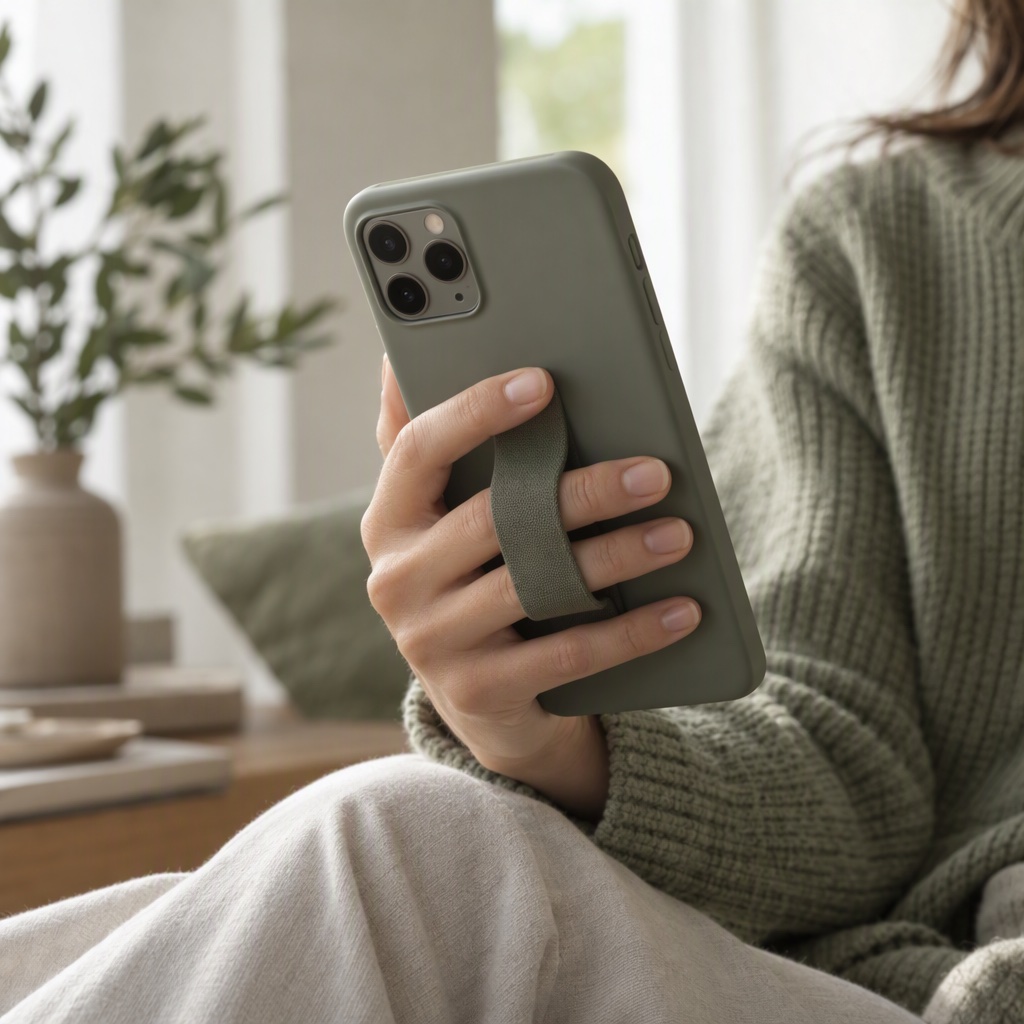
A school ID lanyard does two jobs at once: it keeps your card visible and reachable, and it gives you somewhere to hang a phone so your hands stay free. Because it is worn every day, it takes more wear than most accessories, and a cheap one will fray, stretch, or break by the middle of the year. Choosing well comes down to how you wear it, how much weight it carries, and whether the clip and the cord can survive a full school year of daily use.
- Choose the wear style first: a neck strap for quick access, a crossbody strap for comfort with a phone.
- Check the clip and the cord, since those are the parts that fail first.
- Match the width to the weight — a heavier phone needs a wider, stronger strap.
- Pick a material you can wipe clean, because a lanyard is worn all day.
What should a school ID lanyard do?
A school ID lanyard should keep your card visible and easy to show, while also giving you a safe place to hang a phone. That means the cord has to be comfortable against the neck or across the body, the clip has to hold securely, and the whole thing has to survive being worn from morning to afternoon. It should also be simple to put on and take off, because you may need to remove it for sports or workshops. A lanyard that holds a card but cannot manage the weight of a phone will stretch and break; one built for both stays useful. Think of it as the accessory you touch most often, and choose accordingly. A breakaway clasp is the safe choice in a school, because it releases if the lanyard catches on something.
Neck strap or crossbody — which suits a school day?
A neck strap is quick to put on and keeps the card and phone right in front of you, which suits short trips and constant use. The downside is weight: a phone hanging from the neck all day pulls on the shoulders and can be uncomfortable by the afternoon. A crossbody strap spreads that weight across the chest and shoulder, so it carries a phone far more comfortably over a full day. The trade-off is that it takes slightly longer to remove and can catch on a bag strap. For a school day with a phone attached, crossbody is usually the more comfortable choice, while a neck strap suits those who mainly carry a card and want it visible at a glance. A wide, soft strap sits more comfortably around the neck than a thin cord during a long day.
What width and material last a school year?
Width and material decide how long a lanyard lasts. A narrow cord is fine for a light card, but it digs in and frays faster once a phone is added, so a wider strap is worth the small extra bulk. Look for a woven or webbing strap with stitched edges rather than a thin cord, since the stitching stops the material from unraveling. Metal clips should feel solid and close firmly, while plastic clips should not flex under load. A soft material is more comfortable against the neck, and a smooth one is easier to wipe clean. Check the stitching and the clip when the lanyard is new, so you know what a healthy one looks like before it wears. Pick a length that keeps the phone at chest height, so it is readable without lowering bags or books.
How does a lanyard carry the phone too?
To carry a phone as well as a card, the lanyard needs a secure attachment to the phone or its case, not just a loop around a corner. A phone lanyard usually connects through a small patch or a tether that threads into the case’s charging opening, or through a dedicated strap point on the case itself. Check that the connection is firm and that the phone hangs flat rather than swinging, since a phone that twists on the strap is annoying and more likely to be knocked. A crossbody strap distributes the weight better for a full day of carrying. If you often go without a bag, a strap that carries the phone hands-free is genuinely useful. For more, see how to carry a phone without a bag. A clip that detaches from the case lets you swap the lanyard between phones if needed.
What safety points matter for a school lanyard?
A lanyard worn around the neck should release if it is pulled hard, so look for a breakaway clasp or a clip that opens under load. This matters in busy corridors, on stairs, and anywhere the strap could catch on a door or a bag. Check the clip regularly, since a worn or bent clip can let the phone slip. Keep the strap out of the way when using machinery, in workshops, or during sports, and take it off rather than letting it hang loose. If the lanyard carries a phone, make sure the attachment point is not fraying, because a phone that falls from neck height can land badly. A few seconds of checking each week prevents most of these problems. A plain colour avoids drawing attention to the phone in a crowded corridor.
How do you keep a lanyard clean and untangled?
A lanyard is worn against skin and clothing all day, so it picks up oils and dirt quickly. Wipe it weekly with a damp cloth and mild soap, and let it dry fully before wearing it again. Check the stitching at the card holder and the clip for fraying, and reinforce or replace the part before it fails. If the strap twists easily, a small clip or a wider strap reduces tangling. Hang the lanyard on a hook at the end of the day rather than dropping it in a pocket, so the strap keeps its shape and does not knot. A lanyard is cheap to replace, but a phone dropped because a worn clip let go is not. For the wider topic, read phone straps and lanyards: do you need one.
Frequently asked questions
- Is a neck strap or a crossbody strap better for school? Crossbody is more comfortable if you carry a phone all day. A neck strap is quicker and suits a card you show often.
- What is the most important part to check? The clip and the attachment point. Those are the parts that fail first and the ones that let a phone fall.
- Do lanyards need a breakaway clasp? A release clasp is a good safety feature, especially in busy corridors where a strap can catch on something.
- How wide should the strap be? Wide enough for the weight. A light card is fine on a narrow cord, but a phone needs a wider woven strap.
- How do I stop it fraying? Choose a woven strap with stitched edges, wipe it clean weekly, and check the stitching for wear.


