
Sea water leaves more than a wet phone. When it dries, it leaves salt behind, and salt is the part that causes trouble. It creeps into seams, coats charging contacts, and can turn into a gritty film that scratches glass and blocks speakers. A phone that got splashed at the beach and then dried in the sun may look fine and still behave oddly days later. The good news is that salt is easy to remove if you deal with it soon after the swim, using fresh water and gentle tools rather than anything abrasive. A little care on the day saves a lot of frustration later.
- Rinse salt off with fresh water soon after the swim; do not let it dry on.
- Take the phone out of its case and clean both separately.
- Dry everything fully before charging, and never plug in a wet port.
- Avoid heat, rice, and abrasive cloths, which do more harm than good.
Why is salt worse than plain water?
Fresh water can be wiped away and evaporates cleanly. Salt water leaves a residue behind, and that residue is corrosive to the small metal contacts inside a charging port and along the edges of a case. It is also abrasive: dried salt crystals act like fine sand and can scratch a screen or a camera lens if you wipe across them. Salt attracts moisture from the air, so a phone that has been in the sea can stay slightly damp long after it looks dry, which is unhelpful for electronics. On top of that, salt water is a better conductor than fresh water, so any that reaches live circuitry does more damage. Rinsing the salt away quickly removes most of these problems, and it takes far less effort than repairing the damage later.
What should you do immediately after a swim?
The first hour matters most. Take the phone out of its case as soon as you are somewhere dry, because salt water trapped between the case and the phone keeps working on both. If the phone is water resistant, you can rinse the outside gently under a trickle of fresh water to wash the salt off, then pat it dry with a soft cloth. Do not press water into the openings; let it run across the surface. If the phone is not water resistant, do not rinse it at all; instead wipe it carefully with a barely damp cloth and keep it away from any openings. Either way, switch it off if you can, and let it air dry in a cool, well-ventilated spot. If you are still at the beach, keep the phone out of the sun while it dries, because heat and salt together are worse than either on its own.
How do you clean the case and the phone?
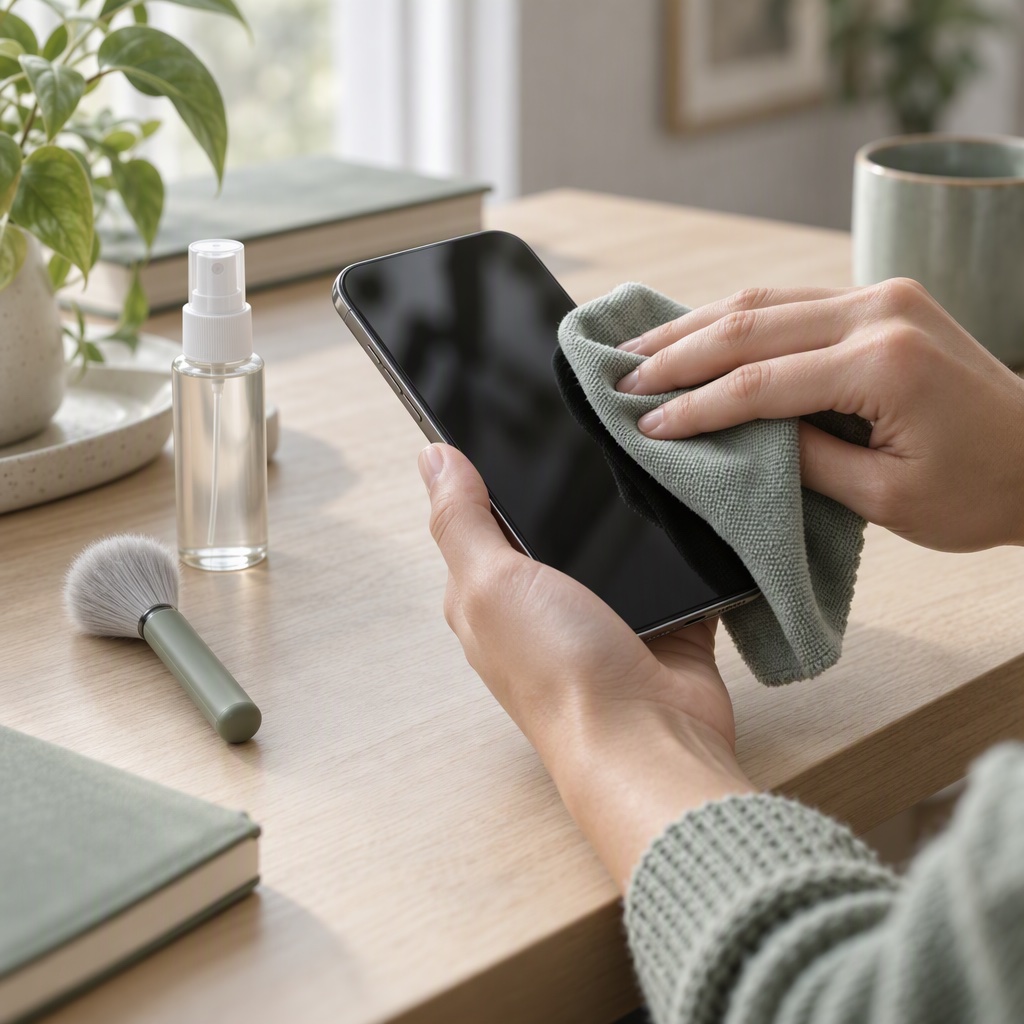
Clean the case and the phone separately, since the case often holds more salt than the phone does. Rinse the case in fresh water, work a soft cloth or a gentle brush into the corners, and let it dry completely before it goes back on. For the phone, wipe the screen and the back with a soft, slightly damp cloth, then dry it with a clean, dry one. A dedicated cleaning cloth lifts smears without leaving lint, and a screen cleaner made for electronics is safe for the coating on the glass. Be gentle around the camera lens, and avoid getting liquid into the speaker slots or the charging port. Patience here prevents scratches and keeps the seals working, and a case that has been cleaned properly will protect the phone far better on the next trip.
What should you never do?
A few popular fixes cause real damage. Do not put the phone in rice; the grains do not pull moisture out of the inside, and the dust they create can clog ports. Do not use a hair dryer or any heat source, which can push moisture deeper and harm the battery or the screen. Do not use abrasive pads, scouring cream, or strong solvents, all of which scratch coatings and damage seals. Do not shake the phone hard to flick water out, since that spreads it around. And do not plug in a charger while the port is still damp, because the combination of water and current is the fastest way to damage the contacts. If in doubt, leave it to dry longer rather than rushing, and remember that a phone that is merely slow to dry is far better than one that is damaged.
How do you clean the ports and speakers?
Once the phone is dry, deal with the small openings carefully. A soft, dry brush or a dry, clean toothbrush can lift loose salt and grit from the charging port and the speaker grilles. Hold the phone with the port facing down so anything you loosen falls out rather than in. Never push a pin, a paper clip, or anything metal into the port, because the contacts inside are delicate and easily bent. If you can see salt crusted on the contacts, a very slightly damp cloth wrapped over a soft edge can wipe the rim, but keep liquid away from the inside. Let the port dry completely before you charge, and test the speaker and microphone once everything is clean. If the sound still seems muffled after cleaning, give it another day to dry rather than poking at the grille, because most muffled speakers recover once the last of the moisture has gone.
How do you stop it happening again?
The simplest protection is a sealed case or a pouch for beach days, plus a habit of rinsing and drying as soon as you leave the water. Keep the phone out of a wet swim bag where salt water pools, and use a small dry bag if you want to carry it to the water’s edge. A screen protector shields the glass from the abrasive side of salt, and a case with covered ports keeps the worst of it away from the openings. If you swim often, keep a cleaning cloth and a fresh-water rinse in your routine, and check the case seals now and then for wear. For the wider picture, read how to clean a phone without damaging it and how to clean a phone case properly.
Frequently asked questions
- Should I rinse my phone after the sea? Only if it is water resistant, and only with a gentle trickle of fresh water. Otherwise wipe it with a barely damp cloth.
- Is rice a good way to dry a phone? No. Rice does not remove moisture from inside and adds dust that can clog the ports.
- Why does my phone act oddly after the beach? Salt residue on the contacts or in the ports can interfere with charging and audio. Clean and dry the openings carefully.
- Can I charge a phone that got wet? Not until every port is completely dry. Water and current together damage the contacts quickly.
- How long does delivery take? Standard tracked delivery takes ten to twenty business days, orders over thirty-five dollars ship free, and there is a thirty-day returns window.


