
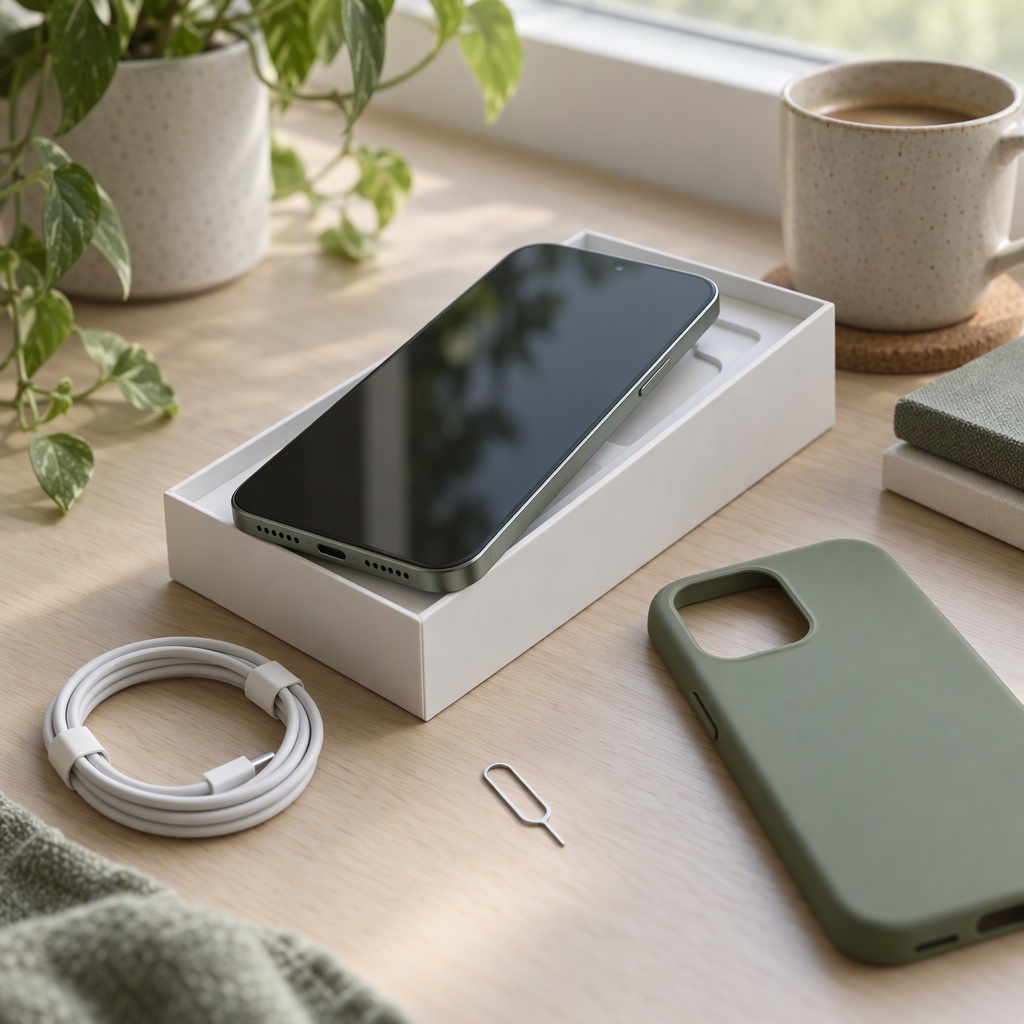
A first job changes how a phone gets used. Instead of sitting in a bag between lectures, it is now on a desk, in a meeting room, on a train at eight in the morning, and in a pocket during a lunch break. The accessories that help are not the cleverest ones — they are the ones that keep the phone charged, protected, and quiet at the right moments. If you are setting up a phone for a first office job, think about the whole day: the commute, the desk, the meetings, and the trip home.
- A case that looks tidy and wipes clean suits most office settings.
- One reliable charger and cable cover both desk and bag.
- A stand keeps the phone visible for calls and notifications without holding it.
- Earbuds and a power bank handle commutes and long days away from a socket.
What does a first-job phone setup actually need?
A first-job setup needs four things: protection, power, a way to keep the phone visible during calls, and something to carry it when your hands are full. Start with the case, because a phone that gets dropped on a commute is the most expensive problem to fix. Add a charger that lives at the desk and a cable that lives in the bag, so you are never caught without either. A stand makes hands-free calls and video meetings easier, and a lanyard or pouch solves the bag problem. Beyond those four, most extras can wait. If you are starting with nothing, the case and the charger are the two that matter most in the first week, and both are easy to get right without spending much.
iPhone Cases — case. Designed for everyday carry and backed by our 30-day happiness guarantee.
Which case suits a first office job?
Office cases are judged on two things: whether they look tidy on a desk and whether they survive a commute. A plain leather-look or matte finish reads as professional in most workplaces, while a very bright or heavily patterned case can feel out of place in a formal setting. Practical details matter just as much as looks. A raised lip around the screen protects the glass when the phone is set face-down during a meeting, and a firm grip stops the phone sliding across a polished desk. If you carry a transit pass or a work badge, a slim card-holding case saves you from juggling two items at the door. Our guide to choosing a case for a work phone goes deeper into what lasts, including how to tell a case that will hold up from one that will look tired within months.
How do you keep a phone charged through a long workday?
A workday can easily run from a full morning commute to a late finish, and that is a lot of screen time. The simplest fix is a compact wall charger that stays at your desk, so the phone tops up while you work rather than draining all day. A multi-port charger is worth considering if you also charge earbuds or a laptop at the same desk, because it saves fighting over a single socket. Keep a spare cable in your bag for the days you are away from your desk, and consider a slim power bank for longer journeys or off-site meetings. Charging little and often keeps the battery healthier than letting it run flat and then rushing a full charge, and it is easier to top up at a desk than to hunt for a socket at the end of the day.
What helps if you commute by train or bus?
Commutes are where phones get dropped, stolen, or drained. A grippy case and a secure carry option are the two things that help most. If you do not carry a bag, a crossbody lanyard or a wrist strap keeps the phone in your hand or against your body rather than loose in a pocket where it can be lifted or fall out. Headphones that stay in place make the trip easier, and a compact power bank covers the mornings when you forgot to charge overnight. If you read or watch on the move, a small stand lets you prop the phone up on a tray table. For more ideas, see how to carry a phone without a bag.
MagSafe & Charging — charger. Designed for everyday carry and backed by our 30-day happiness guarantee.
Do you need anything for meetings and calls?
Meetings are where a phone can quietly cause problems. A stand lifts the phone off the desk so the camera points at you during a video call, and it keeps the screen visible for a quick glance at messages without picking the phone up. Earbuds with a microphone help on calls taken in a shared space, and they keep your hands free for notes. If your workplace is quiet, check that notifications are set to vibrate so a buzzing desk does not disturb the room. A cleaning cloth is a small addition that pays off before a video call, since a smudged front camera or screen is easy to miss until you are on camera. None of this is expensive, but together it makes a phone behave in a professional setting, and a tidy desk setup tends to leave a better impression in a shared office.
What is worth skipping at this stage?
It is easy to buy a first-job accessory kit and end up with things you never touch. Skip the heaviest protective case if your phone mostly sits on a desk, because the bulk gets annoying fast. Skip a second charger unless you genuinely work from two places, and skip decorative grips that make the phone awkward to pocket. Very large power banks are usually overkill for a commute, and a slim one is far more likely to come with you. The one thing not to skip is a screen protector, since a cracked screen is the single most disruptive thing that can happen to a work phone. Buy the essentials first, live with them for a month, and only then add the extras you actually missed. That way your kit grows to fit your job instead of sitting unused in a drawer.
Frequently asked questions
- Do I need a special case for work? Not special, just tidy and grippy. A plain, easy-wipe case with a raised screen lip suits most offices and survives a commute.
- Is a power bank necessary for a first job? Only if you are often away from a socket. Many people do fine with a desk charger and a spare cable, and add a power bank later if they need one for longer days.
- How much should a first-job phone kit cost? You can cover the essentials — a case, a screen protector, a charger, and a cable — for a modest amount, and orders over thirty-five dollars ship free with tracking.
- Can I use personal accessories at work? Usually yes, but check any workplace rules about cameras and phones in secure areas before bringing extra kit onto the floor.
- How long does shipping take? Standard tracked delivery takes ten to twenty business days, and there is a thirty-day returns window if something does not suit.


