
A small handbag is unforgiving about phone cases. There is not much room, the lining catches on rough surfaces, and a bulky case can turn a phone into the one item that will not fit. The best case for a small bag is slim, smooth, and easy to pull out one-handed, while still protecting the phone when you set the bag down. Choosing with the bag in mind rather than the phone alone makes the whole thing work, and it rarely means giving up much protection at all.
- Slim cases slide in and out of a small bag far more easily.
- A smooth back avoids catching on the bag’s lining.
- Skip bulky wallet cases unless the bag has a dedicated pocket.
- Measure your bag opening before buying a thick case.
Why does a small handbag change what case you need?
In a large bag, a phone is one item among many and a thick case does not matter. In a small bag, every millimeter counts. A bulky case makes the phone harder to slide past a zip, a clasp, or the bag’s internal pocket, and it takes up room that could hold keys or a wallet. Small bags also tend to have snug, fabric-lined compartments where a grippy or rough case catches and drags. And because the phone often sits against other items, a case that is too thick can press on the bag’s shape or make it hard to close. The right case for a small bag is therefore slim, smooth, and slightly rounded at the edges, so it slips in and out without a fight. Those three qualities matter more than any feature the case advertises.
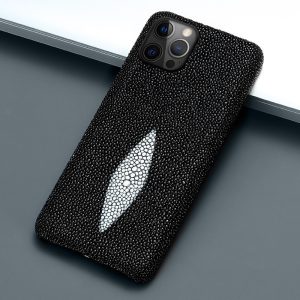
iPhone Cases — case. Designed for everyday carry and backed by our 30-day happiness guarantee.
How thin does a case need to be for a small bag?
Thin enough that the phone still fits the bag comfortably with room to spare. A slim case adds very little bulk and is usually the best choice, because it protects against scratches and small knocks without turning the phone into a brick. As a rule, if the phone with the case on slides into the bag’s main compartment without forcing, the case is thin enough. If you have to angle it or push, it is too thick. You do not need to go to a paper-thin shell, which offers little protection, but a moderate slim case is the sweet spot. A leather cover is a good example: it is slim, smooth, and adds a little structure without much thickness. A hard-shell case in a matte finish is another option that slides easily.
What about a case with card storage in a small bag?
Card storage is tempting in a small bag, because it means one less thing to carry. A case with a card slot or a magnetic card holder can replace a wallet for a quick trip out. The trade-off is thickness and weight: cards add bulk, and a wallet-style case with a front flap is often the thickest option available. In a small bag that already has little room, that extra bulk can be the difference between fitting and not fitting, so weigh up whether you really need it. A magnetic card holder that detaches is a useful middle ground, because you can leave it at home when you do not need it. If the bag has a dedicated card pocket, you may not need card storage on the case at all, which saves both space and weight.
How do you stop a case catching on the bag lining?
A smooth back is the answer. Textured, grippy, and soft-touch cases feel nice in the hand but drag against fabric, which makes them awkward to pull out of a snug compartment. A smooth leather or hard-shell case slides easily. If you love a grippy case, a thin fabric sleeve around the phone can help it slip in and out, though that adds a small amount of bulk. Also check the case edges: sharp or squared-off corners catch more than rounded ones, so a case with soft, rounded edges is easier to handle in a tight bag. It also feels better in the hand when you take it out. Keeping the bag tidy, with the phone in its own compartment, also reduces the chance of it snagging on keys or a zip pull, and it makes the phone easier to find when you need it quickly.
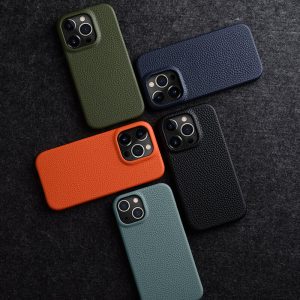
iPhone Cases — case. Designed for everyday carry and backed by our 30-day happiness guarantee.
Does a small bag mean less protection?
Not necessarily, but it does change what protection looks like. A slim case guards against scratches, scuffs, and small drops, which covers most of what happens to a phone in a bag. What it does not do is absorb a hard fall onto concrete, so if you are clumsy or often on the move, consider a slightly thicker case and check that it still fits the bag. Many slim cases now include raised edges around the screen and camera, which adds useful protection without much bulk. The key is to balance the two: a case that protects the phone but still lets it slide in and out of the bag without a struggle. In a small bag, a case that you actually use is better than a heavy one you leave at home because it does not fit.
What should you check before buying a case for a small bag?
Measure the bag’s opening and its main compartment, then compare with the case’s dimensions rather than guessing. Check that the phone with the case on still fits alongside whatever else you carry, since a case that fits alone may not fit with a wallet and keys. Look for a smooth back and rounded edges to make sliding easy, since these two details decide whether the phone comes out cleanly or catches every time. Confirm that the case leaves the charging port clear, because a small bag is often where a phone charges on the go. If you prefer to go bag-free on some days, a strap or lanyard is a useful alternative, and our guide to carrying a phone without a bag covers those options. Our piece on what belongs in a phone pouch helps you pack light.
Frequently asked questions
- What is the best case for a small handbag? A slim, smooth-backed case with rounded edges. It protects the phone, slides in and out easily, and takes up the least room.
- Will a wallet case fit in a small bag? Often not. Wallet cases with a front flap are the thickest option, so measure the bag first or choose a detachable card holder instead.
- Do I lose protection with a slim case? You lose some impact protection but keep scratch and small-drop protection. If the bag is snug, a slim case you actually use is the better trade.
- Can I fit a phone with a case and a power bank in a small bag? Sometimes, if both are slim. Check the combined thickness, and consider a magnetic pack that sits flat against the phone.
- Should I use a lanyard instead of a bag? A lanyard is a good option for quick trips when you do not want to carry a bag at all. It keeps the phone on you and your hands free.


