
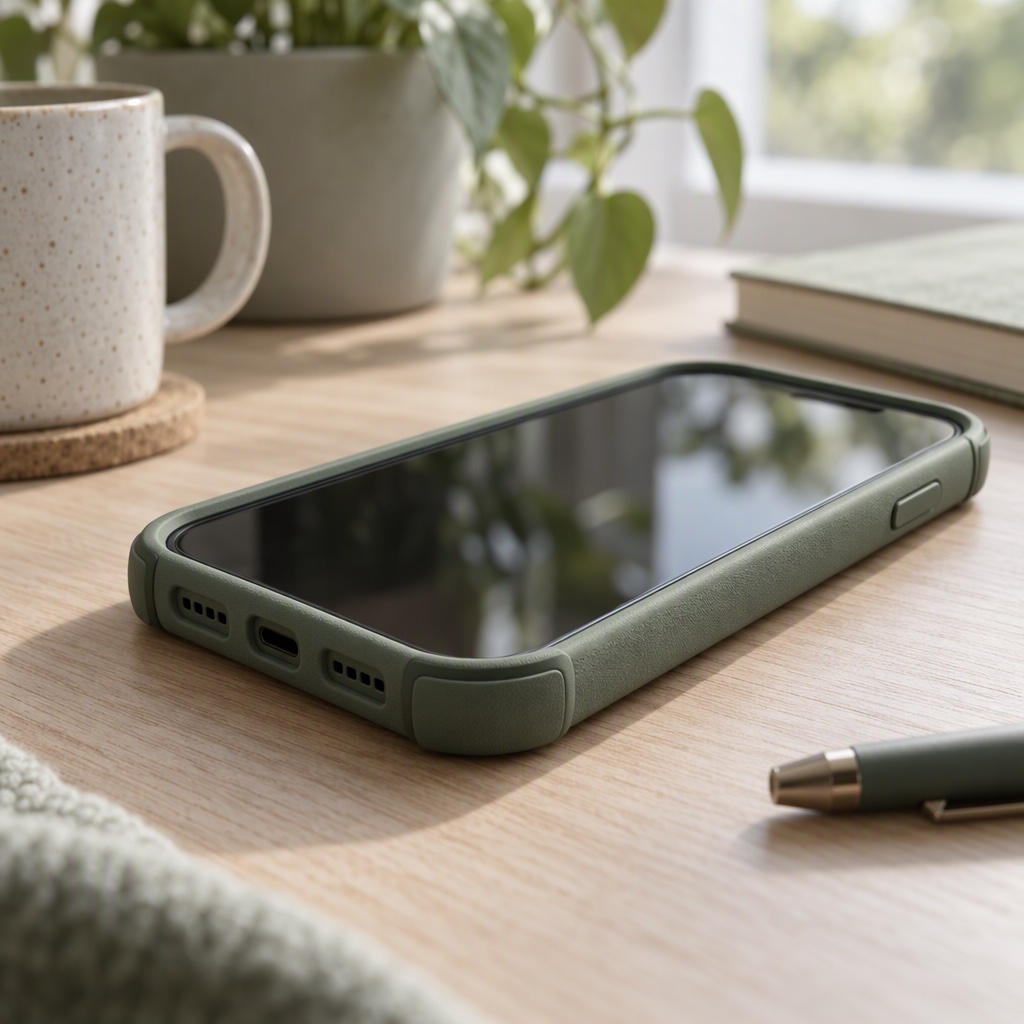
A toddler’s first phone — whether it is a family hand-me-down or a dummy device for pretend play — does not need a clever case, it needs a fortress. Toddlers drop things on purpose to see what happens, share phones with lunch, and carry them into the bathroom. That means full coverage, real drop protection, and a surface you can wipe clean matter far more than color or slimness. Choose for survival, keep anything detachable away from the case, and the hand-me-down will still work when the toddler phase is over.
- Full coverage beats everything: screen, back, camera, and ports should all sit behind raised lips or covers.
- Drop protection matters more than slimness — raised corners and a shock-absorbing frame survive a toddler’s day.
- Pick a case you can wipe clean, because toddlers share phones with food, mud, and the floor.
- Avoid loose charms, small buttons, and anything detachable that can come off in a mouth.
What does “toddler-proof” mean in a case?
Toddler-proof means the phone survives being dropped, thrown, dunked in a sippy cup, and wiped across a high-chair tray — and usually all four in one afternoon. In practice that means a full-cover case: the front edge rises above the screen glass, the back and corners are thick enough to absorb impact, and the camera lens sits behind its own raised lip. Ports that are covered or narrow do not collect food as easily as wide open slots. A clamshell case, which snaps shut over both the screen and back, is the strongest style of all because the phone is sealed inside it. Slim and minimal is the opposite of what a toddler needs; the case is the phone’s armor, not its fashion statement.
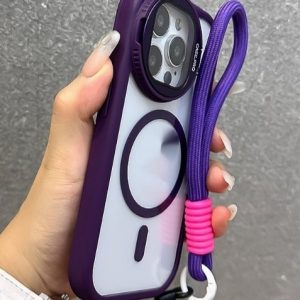
iPhone Cases — case. Designed for everyday carry and backed by our 30-day happiness guarantee.
Which case materials clean up best?
Whatever the case is made of, it will be cleaned weekly, so choose a material that survives it. Smooth silicone and firm TPU wipe down quickly with a damp cloth and do not absorb stains, which makes them the practical choice for a toddler’s phone. Deeply textured or fabric-backed cases look nice but trap food in their grooves, and once a textured case has been through a jar of yogurt it never fully comes clean. Leather can be wiped but not soaked, and it shows every smear of jam. Whatever the material, clean the case with the phone removed, a barely damp cloth, and dry it straight away — and check the maker’s guidance before using anything stronger than water. A case that cannot be cleaned in under a minute will simply not get cleaned, and sticky is a toddler’s natural state.
How much drop protection is enough?
Test it against reality rather than marketing words. A good toddler case should survive a drop from adult waist height onto a hard floor — roughly the height a buggy or a standing toddler holds a phone — without the screen or camera taking the hit. Look for raised lips around the screen and lens, cushioned corners that take the first impact, and a snug fit that does not let the phone shift inside the case. It is worth doing a careful drop test at home from a low height before handing the phone over, just to see where the case lands and whether the edges or the flat face take the impact. Remember that a screen protector adds another layer on top, though any protector should be replaced once it cracks. No case makes a phone indestructible, and the honest goal is simply surviving the toddler years.
Why do straps matter for a toddler’s phone?
Most toddler phone damage happens during the drop between hand and floor, and a strap removes that moment entirely. A case with a short hand loop or wrist strap keeps the phone attached to the toddler — or to the buggy handle, the car-seat hook, or your own wrist when you are holding a bag of groceries. Anti-drop strap cases are especially useful for toddlers because they make the phone harder to fling across a room and easier to find when it is set down. Choose a strap that clips firmly rather than one held with a simple loop, and check the attachment point can take a tug from a determined two-year-old. The strap turns the phone into something you carry rather than something you balance.
Which accessories are safe and useful?
Keep the accessory list short and safe. A screen protector is cheap insurance against scratches and can be replaced if it cracks. A stand can hold the phone for video calls with family or for a cartoon in the car, and it keeps the phone off the table at mealtimes. A cleaning cloth in the kitchen drawer makes the weekly wipe-down routine actually happen. Card wallets are best avoided — toddlers treat cards as snacks — and heavy magnetic accessories add weight that makes a drop more damaging. If the phone is a hand-me-down that will eventually return to adult duty, choose accessories that swap off easily, because everything about the toddler phase is temporary except the mess. A simple rule: if an accessory cannot survive a washing machine, it does not belong on a toddler’s phone.
What should you avoid entirely?
Skip anything with parts that can detach: pop charms, dangling beads, loose straps with metal clips, and small decorative sticks that screw into the charging port. Anything that fits in a toddler’s mouth does not belong on a toddler’s phone case. Also skip expensive limited-edition cases, because a toddler’s phone case is a consumable with a short and dramatic life, and skip bulky metal attachments that add weight and turn a knock into a heavier knock. For the wider picture on picking protection that actually works, read how to choose a phone case that actually protects, and for managing screen time with the right setup, see phone accessories for a toddler’s screen time.
Frequently asked questions
- At what age does a phone need a toddler case? From the first day of use. Toddlers drop things deliberately to test gravity, so a protective case is needed long before a child is careful enough to go without one.
- Is a glass screen protector safe with toddlers? It is good protection against scratches, and it is designed to crack instead of the screen. Replace it as soon as it cracks, and vacuum up the glass shards carefully.
- Can a toddler use a ring grip or pop socket? A firmly attached ring is fine as a stand, but avoid anything that pops off in one piece. Loose parts are the real hazard, not the concept of a grip.
- How do you clean a toddler’s phone case? Remove the phone, wipe the case with a barely damp cloth and a little mild soap if needed, rinse the cloth, and dry the case completely before putting the phone back in.
- Should the phone have a lanyard indoors? A short wrist or buggy strap is genuinely useful with toddlers, because it prevents most drops and makes the phone much harder to lose behind the sofa.


