
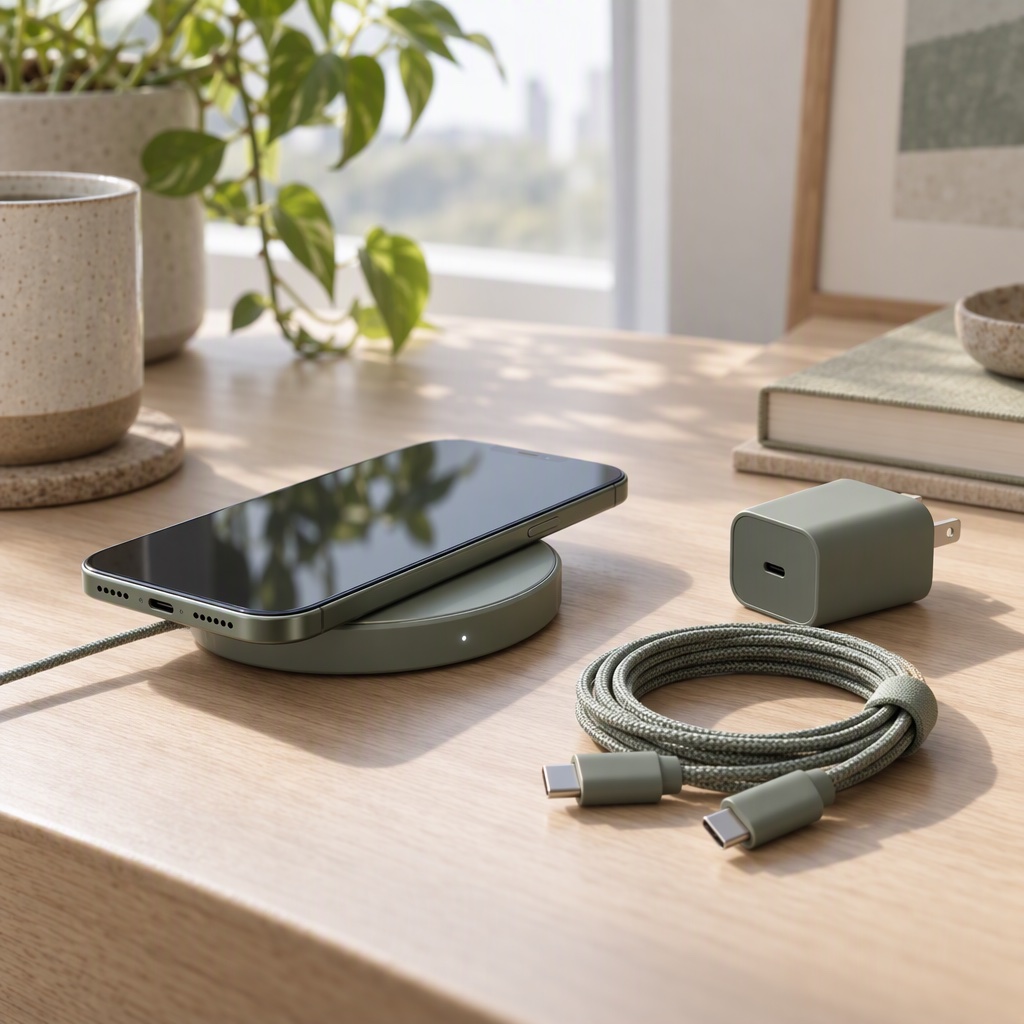
Leaving a phone on the charger overnight is generally fine, because modern phones stop drawing current once they reach full charge. The real risks are not the battery but heat, a worn cable and the position of the phone on the charger. A few small habits remove almost all of the practical danger.
- Phones stop charging at 100% and trickle only to stay topped up — they do not overcharge.
- Heat is the actual enemy, so remove the case on a wireless pad and keep the phone off a duvet.
- A certified cable and a charging brick you trust matter more than the charger itself.
- Charge on a hard, cool surface rather than under a pillow or in a drawer.
Why does a phone not overcharge overnight?
The charging circuit inside a phone has two jobs: push current in fast until the battery reaches a set voltage, then hold it there. Once full, the phone disconnects the battery from the charger and runs directly from the cable. A small top-up flows in occasionally to replace what the phone uses on standby. So the battery is never held at a voltage it cannot handle, and the phrase “overcharging” does not really apply to a modern phone. A phone that charges slowly overnight is usually fine, since there is no rush and the lower current produces less heat. A humidity or temperature warning on the phone is another sign that the charging surface is the wrong choice. A phone left on a charger in a closed bag overnight is a hotter situation than most people imagine.
MagSafe & Charging — charger. Designed for everyday carry and backed by our 30-day happiness guarantee.
What about the battery worn out by constant charging?
Every battery loses a little capacity per charge cycle, and a cycle is counted from empty to full rather than each time you plug in. Charging overnight usually means one full cycle a day with a few partial ones, which is the same total as charging during the day. What does cause measurable wear is spending long periods at exactly one hundred percent, and at high temperature. A short top-up during the day is gentler than a single long session, but the difference is smaller than the marketing suggests. If you wake to a phone that is still below full, check that the cable is seated properly rather than assuming the battery is failing. Nothing about overnight charging requires special accessories beyond a certified cable and a sensible surface to rest it on. The connector will hold up for years if you unplug by the body of the plug rather than pulling on the cable.
Is heat a problem while charging overnight?
Yes, and it is the single most important thing to control. A charging phone gets warm from the energy conversion, and a battery that sits hot for hours ages faster. Wireless charging produces more heat than wired, and a case traps it, so take the case off on a pad. Never charge under a pillow or a blanket, because soft surfaces block airflow entirely. A hard, cool surface such as a bedside table or a desk is the right answer every time. A smart plug with a schedule can cut power at a set time, which removes the temptation to leave the phone at full for hours. If you travel a lot, a charging surface that holds the phone upright is more useful than a flat pad. Some chargers draw a small standby current even with nothing attached, so unplugging the brick saves a tiny amount.
Do I need a special charger or cable?
Any certified cable will work, and a cheap one is the most common real-world hazard. A cable with frayed insulation, a connector that only charges at an angle, or an adapter with no safety certification can overheat. Look for recognised safety marks and buy from a retailer that stands behind the product. A charging brick rated for the job matters more than the raw wattage, because a phone only draws what it can take. Some people prefer to charge during the day in short bursts, which is slightly gentler and also leaves the phone clean overnight. Two chargers, one at the bedside and one at a desk, removes the temptation to move a charging phone around. A case with a raised lip also stops the phone sliding off a flat pad during the night.
What is optimised battery charging?
Most phones now include a setting that pauses charging at around eighty percent and finishes the last stretch closer to your usual wake time. The idea is to avoid holding the battery at full for hours. If your phone offers it, switch it on; it costs nothing and reduces the time spent at the highest state of charge. A related habit is unplugging when you get up rather than leaving it connected until you leave the house. Whichever you choose, consistency matters more than perfection, because a routine is what you will actually keep up. The habit that costs the least and helps the most is simply taking the case off for the night on a wireless pad. Keep the cable long enough that the phone can rest flat without tension at the connector.
What if I charge overnight every night for years?
You will lose some capacity, and that is normal for any lithium battery. Realistically you will notice a drop in how long the phone lasts after a couple of years, which is about the same as any other charging pattern. If you want to slow it, keep the phone cool, avoid leaving it at full when you can, and use a case that does not trap heat. When capacity does drop enough to matter, a battery replacement is cheaper than most people expect. For general top-ups during the day, our look at making a phone battery last longer covers the habits that help. For more on the cable side of the problem, our guide to the signs a charging cable needs replacing covers the warnings to watch for.
Frequently asked questions
- Can a phone catch fire charging overnight?
Yes, but almost always because of a damaged cable, a counterfeit charger or a soft surface blocking heat — not the battery holding a charge.
- Should I let the battery run to zero before charging?
No. Lithium batteries prefer partial cycles, and running to zero is more stressful than topping up from a middle state.
- Is it better to charge little and often?
Slightly. Short top-ups produce less heat per unit of charge than one long session, which is the gentler option.
- Does a case slow charging down?
Not on a cable, but on a wireless pad a thick case adds heat and slows the transfer, so remove it.
- Can I use my phone while it charges overnight?
Yes. Using the phone while it charges is normal, though heavy use adds heat and slows the charge.


