
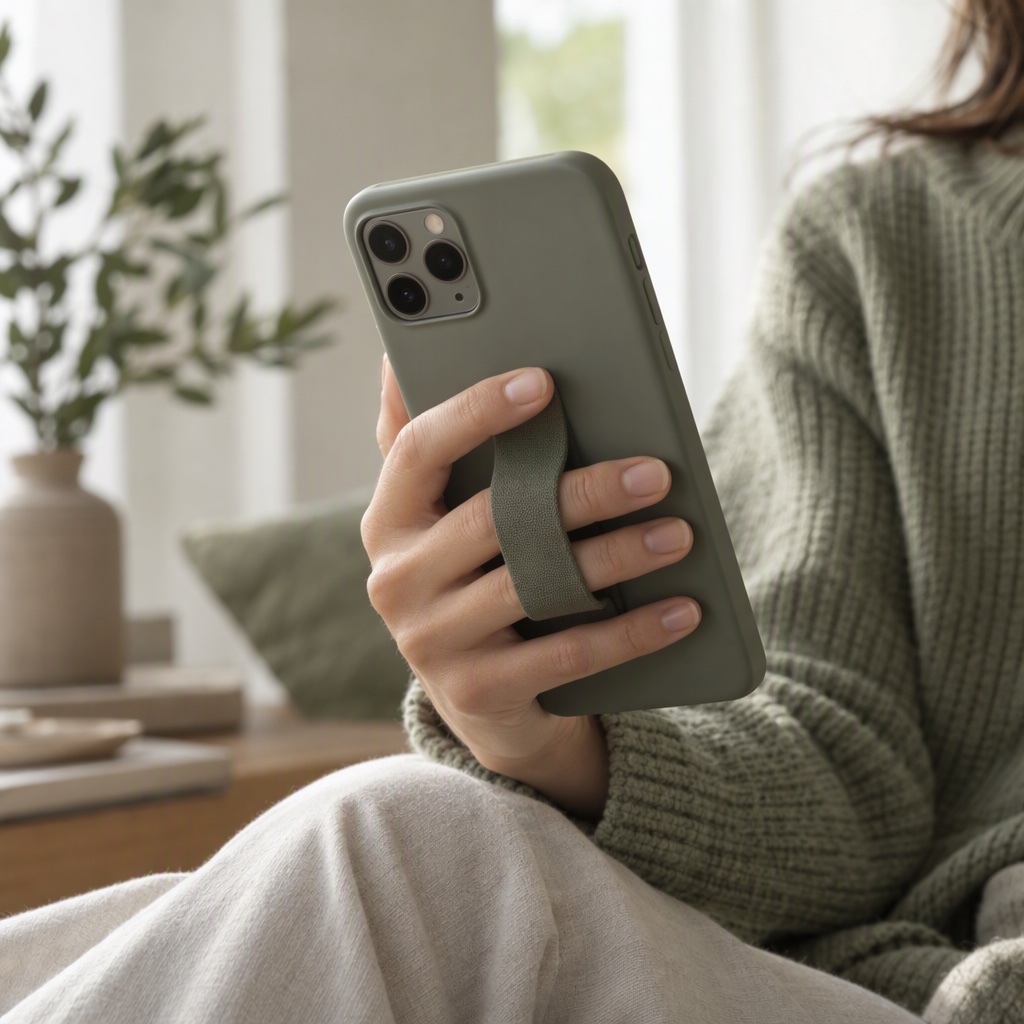
Small hands do not need a smaller phone so much as a case that respects the shape of the phone you already own. Width, thickness, and weight are what decide whether you can reach across the screen comfortably, and a bulky case adds all three. The best cases for small hands stay close to the phone’s own dimensions, add grip where fingers actually sit, and keep the corners rounded so holding the phone does not dig into your palm. Everything else is secondary.
- Width and thickness matter more than any advertised protection rating.
- Slim, rounded corners are easier to hold one-handed than boxy ones.
- Textured or slightly rubbery sides help more than any molded grip pattern.
- A thin ring or grip can rescue an otherwise slippery case.
Why does case size matter more for small hands?
Reach is mostly about width. Every millimetre a case adds to the sides makes it harder for your thumb to travel across the display, which is why a slim phone with a chunky case can feel worse to use than a physically larger phone in a thin one. Thickness matters too, because a thick case pushes the phone away from your palm and changes where your fingers wrap. Weight is the third factor: a heavy case makes one-handed holding tiring, especially near the top of the screen. None of this means buying a weak case. It means judging cases on how they sit in your hand rather than on how protective they claim to be. Our guide to how much you should spend on a phone case is a useful companion if you are weighing thin cases against more protective ones.
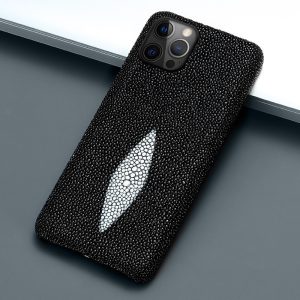
iPhone Cases — case. Designed for everyday carry and backed by our 30-day happiness guarantee.
What should you look for in case dimensions?
Measure the phone you own, width and thickness, then compare it with the listed case dimensions rather than guessing from photos. As a rough guide, a case that adds only a couple of millimetres to the width is comfortable for most people with smaller hands, while anything that pushes the phone past a comfortable wrap is worth avoiding. Look for cases that describe themselves as slim or low-profile and that keep the side walls thin. Check the corner shape too: rounded corners distribute pressure across your palm, while sharp corners create pressure points. A case that tapers towards the edges is easier to hold than one that is uniformly thick.
Do materials and textures change how easy it is to hold?
Yes, and often more than shape alone. A smooth, glossy back is the hardest to hold, because it slips gradually and you only notice when the phone is already moving. Slightly rubbery or matte finishes give fingers something to catch on, and textured side panels help when your hands are dry. Leather cases tend to grip well and warm up in the hand, which many people find comfortable for long periods. Plastic cases are thin and light but are the most slippery, so they benefit from a texture or a grip accessory. If you often use your phone one-handed while standing on a train, favour grip over the thinnest possible profile, because a case that slides is the one that ends up on the floor.
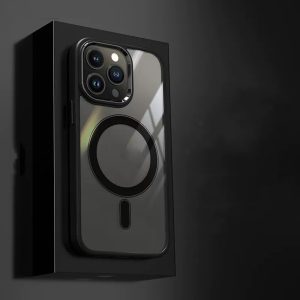
iPhone Cases in Transparent. Designed for everyday carry and backed by our 30-day happiness guarantee.
Are there downsides to full-cover cases for small hands?
Full-cover and clamshell cases protect the screen, but they make a phone noticeably bigger and heavier, and the front flap can get in the way when you hold the phone up to your ear. For smaller hands, that extra bulk is the difference between comfortable and awkward. The raised lip and the hinge also catch on pockets and bag linings when you pull the phone out in a hurry. If you like the protection but not the bulk, consider a case that covers only the back and sides with a strong raised lip around the display, paired with a tempered glass screen protector. That combination keeps the phone close to its original size while still protecting the part that actually breaks.
How do you test a case fit before buying?
Hold the phone in your normal grip and reach your thumb to the far corner of the screen. If you have to shuffle the phone in your hand or use your other hand, the case is too wide for you. Try the same test while sitting and while standing, because a stable posture makes a wide case feel easier than it really is. Check that a case does not cover the buttons you press most, and that the button covers are firm enough to find without looking. Pay attention to the volume buttons especially, since a loose or oversized cover makes them hard to press with one thumb. If you order online, note the returns policy before you buy, so a case that turns out to be too wide can be exchanged for a thinner one without fuss.
Should you add a grip, ring, or strap?
A slim ring or finger holder can make a large phone usable one-handed by giving your finger something to hook behind, and it doubles as a stand for the desk. The trade-off is that it adds a small amount of bulk and can catch on pockets. A wrist strap is a safer option for people who drop their phone often, because it keeps the phone attached even if your grip fails. Most straps loop through the case rather than relying on adhesive, which means they can be moved when you change cases. If you are unsure whether these are worth it, our guide to whether phone grips and rings are worth it covers the arguments on both sides. Whichever you choose, keep it thin, since a bulky grip defeats the purpose of a case chosen for small hands.
Frequently asked questions
- Are smaller cases available for large phones? Not really. Cases are cut for the phone they fit, so the only way to keep a large phone comfortable is a thin profile, rounded sides, and a grippy material. Accessories like rings and straps help more than a differently shaped case.
- Is a leather case a good choice for small hands? Often yes. Leather is thin for its strength, grips better than glossy plastic, and softens over time. It does mark more readily than rubber, so it needs a wipe now and then.
- Will a screen protector make the phone harder to use? A glass protector adds a fraction of a millimetre and a very slightly raised edge. Most people stop noticing it within a day, and the protection is worth far more than the tiny change in feel.
- Can a case be too thin? Yes. A very thin case offers almost no drop protection and usually has thin, sharp edges that dig into the hand. The aim is a case that is slim but still has cushioning at the corners.
- Should I spend more for a slim case?Not necessarily. Price does not track thinness. It is better to check the listed dimensions and material than to assume the most expensive case will be the most comfortable one in your hand, and a mid-priced case with good reviews is often the safer bet.


