
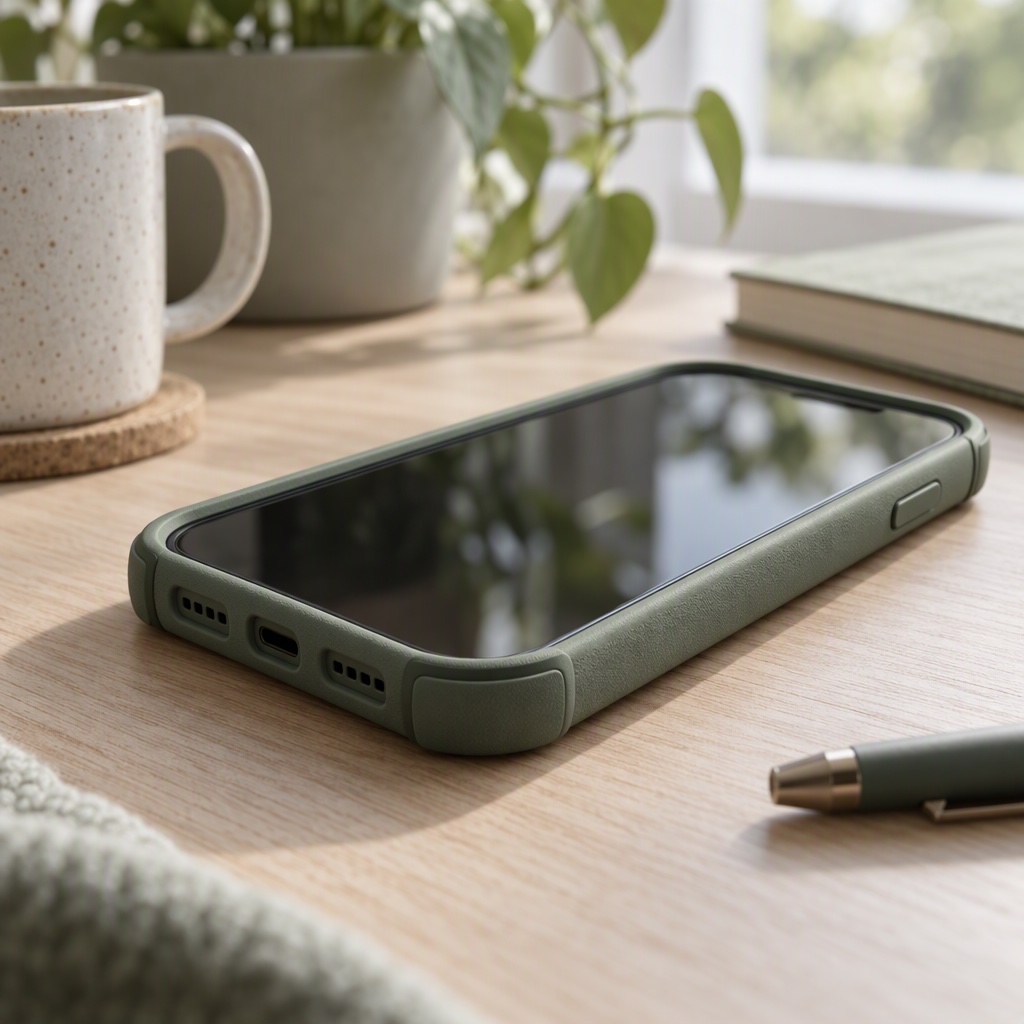
It comes down to how you live with your phone. Thin cases keep a phone pocketable and easy to hold one-handed, but they trade away shock absorption; thick cases survive rough treatment but turn a slim phone into something closer to a brick. Neither is wrong. The right choice is the amount of bulk you will genuinely tolerate every single day, matched to the risks your phone actually faces.
- Thin cases add grip and scratch protection but little drop protection.
- Thick cases absorb impacts better, mostly through cushioning at the corners.
- A case that feels too bulky is the one you will leave at home.
- Match the case to where the phone goes, not to worst-case imagination.
What does a thin case actually protect against?
A thin case is mainly a scratch and scuff shield. It keeps keys and coins off the back glass, stops the frame picking up nicks in a bag, and adds a little grip so the phone is less likely to slide out of a pocket in the first place. Most of its protection comes from a raised lip around the screen and camera, which is what saves the glass when the phone lands flat. What it cannot do is absorb a serious impact. A thin case spread over a hard floor barely slows the phone down, so a corner-first drop onto concrete is exactly where it runs out of ability. The honest question is not which case is stronger, but which one you will still have on the phone six months from now.
iPhone Cases in Transparent. Designed for everyday carry and backed by our 30-day happiness guarantee.
How does a thick case absorb a drop?
Thick cases work by giving the impact somewhere to go. The extra material at the corners compresses on impact, spreading the force over a fraction of a second instead of letting it travel straight into the phone. Many use two layers: a rigid outer shell that resists crushing and a softer inner layer that cushions. Raised lips around the screen and camera keep the flat surfaces clear of the ground. The trade-off is straightforward — more material means more bulk, more weight, and a phone that no longer slides into a tight pocket. Some full-cover designs add a hinged front that protects the screen in a bag, which is genuinely useful if the phone travels with tools, keys, or a packed lunch.
Where is the sweet spot between thin and thick?
For most people the sweet spot is a midweight case with real cushioning at the corners and a raised lip around the display. That gives you meaningful drop protection without the phone growing noticeably wider in the hand. Look for cases that describe reinforced corners, air pockets, or a dual-layer back rather than simply picking the thickest one you can find. Material matters too: a flexible case bends on impact, while a rigid shell resists crushing, and a combination of the two usually performs best. If you want more background on how these materials behave, our comparison of silicone, TPU and polycarbonate cases covers the differences in detail.

iPhone Cases — case. Designed for everyday carry and backed by our 30-day happiness guarantee.
Does a thick case protect the screen as well?
Only partly. A case protects the screen by keeping the phone raised off flat surfaces, so a face-down drop lands on the case rim rather than the glass. It cannot stop a sharp object from pressing directly on the display, and it does nothing about the keys in your bag pressing against a phone lying flat. That is why a tempered glass screen protector still earns its place alongside a protective case. A thick case also raises the phone further off a desk, which changes how it feels to type on it. If you want the full package, treat the case and the protector as two separate jobs: one for drops and crush protection, one for the screen itself. For more on that second job, our screen protector buying guide explains what glass, film and hybrid options each do.
How much does bulk affect how you use the phone?
More than most people expect. A thick case makes a phone wider and heavier, which matters if you hold it for long stretches, use it one-handed on a commute, or carry it in a tight pocket. Bulky cases also sit higher off the back of the phone, so they pick up more dust in a bag and are more awkward in a car mount. The practical test is honest: if you would not carry the case every day, its protection is theoretical. A case you actually keep on the phone will always beat a stronger case that lives in a drawer, and it is worth being realistic about your own habits before you spend money on the biggest option available. Plenty of people buy an ultra-protective case and then leave the phone bare at home because the case is unpleasant to hold. Buying a slightly thinner case you actually keep on the phone beats buying a tank of a case that lives in a drawer.
Can you get thick-case protection without the bulk?
Partly, yes. Modern cases use internal ribbing and corner air pockets to get impact protection from a thinner overall profile, and some combine a slim shell with a raised camera housing for extra strength where drops usually land. What you cannot do is skip material entirely — a genuinely thin case has little left to compress on impact. If you want maximum protection with minimum bulk, look for a case described as dual-layer or reinforced-corner, and pair it with a good glass protector. You can also choose a clamshell or full-cover design only for travel days and a slim case the rest of the time, which is a good solution for people who need both. Two cases used for different purposes is a perfectly sensible answer to a trade-off that has no single winner.
Frequently asked questions
- Is a thin case better for battery heat? Slightly. Less material traps less heat, though most phones manage heat through the frame and the difference between a slim and midweight case is small. Avoid very thick cases in hot cars regardless of thickness.
- Will a thick case fit in my pocket? It depends on the pocket. Slim jeans and tight front pockets are where thick cases become annoying; looser trousers and jacket pockets are usually fine. Check the case dimensions against the phone you own.
- Does a thicker case protect better in every drop? No. A heavy case can actually transfer more force into the phone if it is rigid all the way through. Cushioned corners and a slightly flexible outer layer generally outperform a single hard shell.
- Can I use a transparent case and still get protection? Yes. Clear cases show the phone design off and stay popular for that reason, but they can yellow over time and are usually at the slimmer end of the protection scale.
- How do I know if a case is too thick? If you find yourself taking it off to use the phone comfortably, or if it stops the phone sitting flat on a table, it is probably thicker than you need for daily use.


