
Phone tripods remove the blur that ruins low-light and long-exposure shots, and they free your hands so you can be in the frame or work while a device runs. You do not need an expensive rig to get the benefit. A compact travel tripod, a solid phone clamp and a little care with setup cover almost everything a casual user wants.
- A compact travel tripod plus a good phone clamp covers most beginner needs.
- Match the height to your subject — tabletop for food and products, floor-to-chest for portraits.
- Spend on stability and a reliable clamp before you spend on a remote shutter.
- Weight matters more than brand: a lighter tripod wobbles more in breeze and on hard floors.
What height do you actually need?
Height decides everything else. If you shoot food on a table, a product on a desk, or documents flat on a surface, a tabletop tripod is plenty and it packs away almost to nothing. If you photograph people standing up, or yourself at arm’s length, you want something that lifts the phone to eye level — roughly chest height on most adults. Measure roughly against your own body once and the number sticks with you. A tripod that maxes out at your waist will force you to crouch, which over a day of shooting is genuinely uncomfortable and shows up in your framing. A practical trick is to stand beside the tripod and note exactly where the head sits against your body, so you can repeat the height later without guessing. It is a small fix, but removing the largest source of movement on a compact setup makes a bigger difference than any upgrade to the head.
Screen & Lens Protection — camera lens. Designed for everyday carry and backed by our 30-day happiness guarantee.
Tabletop, travel or full-size?
Tabletop tripods are the cheapest and smallest, and they are the right first buy for anyone who mostly shoots close work. They sit flat, keep the centre of gravity low, and do not mind being carried in a bag every day. Their limit is height — you cannot use one for a standing portrait. Travel tripods fold to a short length but extend to a useful height, and they are the sweet spot for people who hike or commute with a camera. Full-size tripods are heavier, steadier and much harder to carry; they make sense once you know you need the extra weight for video or long exposures. Material matters here too: aluminium is light and stiff, while wooden legs absorb small vibrations better at the cost of extra weight in your bag. Over a long session that weight also reduces the fatigue that comes from holding a rig up, which is why heavier tripods stay comfortable.
What makes a phone clamp good?
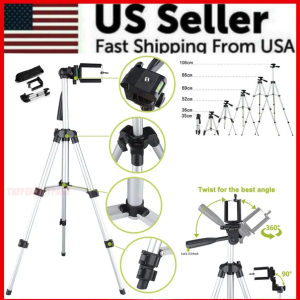
The clamp does the real work, and it is where cheap sets fall apart. Look for a spring-loaded grip that holds firmly rather than relying on tight screws, and for rubber pads that stop the phone sliding. The clamping range matters too — a clamp that only grips bare phones is useless once you slip a case on. A good clamp opens wide enough for a rugged case, locks firmly enough that the phone does not twist when you tap the shutter, and holds level so you are not fighting a tilt while framing. Ball heads are easier to adjust than the flat three-way heads you find on cheap kits. Test the grip by holding the phone upside down for a moment, because any slip at that angle means the clamp will not survive a busy day of shooting.
Do you need a remote shutter?
It is genuinely useful, but it is not the first thing to buy. Tapping the screen physically shakes the phone, and that is exactly the movement a tripod is there to remove. A remote removes that last source of blur, and it is the only way to get into group shots comfortably without a timer. Many headsets with volume buttons trigger the shutter for free, and built-in voice commands work almost as well. If you shoot a lot of long exposures or self-portraits, a small remote is worth the pocket space. If you mostly shoot still objects, a two-second timer gets you most of the way there. Some remotes also trigger a burst of shots rather than a single frame, which is worth having if you photograph anything that moves unpredictably.
Mounts & Stands — holder. Designed for everyday carry and backed by our 30-day happiness guarantee.
How do you keep a phone steady in wind?
A phone is light, so it catches wind more easily than you would expect. The cheapest fix is weight — hang your bag or a small pouch from the tripod’s centre column hook, or weight the legs with a stone if you are outdoors. Lowering the tripod also helps, because less of it sticks up into the breeze. Avoid extending the thinnest bottom leg section unless you have to; those sections are the least stable. If you regularly shoot outdoors in gusts, a slightly heavier tripod with wider foot spread will pay for itself in usable frames. If you cannot add weight, reduce the lever arm by collapsing the thinnest top leg sections entirely, since they move far more than the thicker ones.
Are phone tripods useful for video?
Yes, but with one caveat: motion. A tripod is superb for static shots, interviews, overhead cooking clips and anything where the camera should not move. It is a poor substitute for smooth motion, which needs a dedicated stabiliser. If you are starting out with video, use the tripod for locked-off shots and learn to move deliberately. Also check that the head pans smoothly — a sticky head produces judder that no editing can rescue. Practice the physical movements: slow, steady pushes, and no sudden corrections. A counterweight on the opposite side of the head can also smooth out a pan on lighter tripods, and it costs nothing but a pouch of sand.
For more on getting sharp images, see how to take better photos with your phone and our guide to night photography with a phone.
Frequently asked questions
- Can I use a camera tripod for a phone?Yes — most phones fit a standard clamp that screws onto the same universal thread. Just make sure the clamp grips your case.
- Why does my phone slide off the clamp?Usually the rubber pads are worn or the clamp range is too small for your case. Choose a clamp that opens wider than your phone is thick.
- Is a flexible tripod good enough?It can be for wrapping around a rail or a door handle, but flexible legs drift slowly and cannot hold a phone level in a breeze.
- How much should I spend on a first tripod?A modest travel tripod with a decent clamp beats an expensive head with a poor clamp. Prioritise stability and grip.
- Do tripods work for horizontal video?Yes, as long as the ball head rotates 90 degrees and the clamp stays square — check before you head out.


