
Night photos go wrong because the camera lets in less light than you think it needs, then amplifies the signal — which produces noise. The fix is to get more light into the sensor or keep the phone physically still. Neither needs special equipment; both need a method you can repeat without thinking.
- Steadiness beats sensitivity — a phone that cannot move produces sharper low-light frames.
- Tap to lock focus and lift the exposure a little instead of letting it settle on the setting.
- Use night mode when the scene is still, and a tripod or brace when it is not.
- Keep the lens clean and avoid bright light sources directly in front of it.
Why is my night photo blurry?
Because the shutter stays open longer and the phone moves during that time. The amount of light at night is a small fraction of daylight, so exposure times stretch from a fraction of a millisecond to a tenth of a second or more. Any hand movement that is invisible in daylight becomes obvious at night. Even steady-looking hands sway about a millimetre, which is enough to soften the entire frame. The only real remedy is to stop the phone from moving, either by bracing it or using a tripod. Bracing the phone against a railing, a gate or a parked car works just as well, and it needs no equipment at all. A wall also radiates noticeably less heat than a metal railing, which keeps the phone cooler during a long exposure and prevents an early shutdown.
Screen & Lens Protection — camera lens. Designed for everyday carry and backed by our 30-day happiness guarantee.
What does night mode actually do?
Most night modes take several short exposures in quick succession and merge them, which produces a brighter frame with less noise than one long exposure. That works beautifully when the subject holds still — a building, a street, a parked car. It fails completely when anything moves, which is why people appear blurred through moving crowds. Choose night mode for static scenes, and for moving subjects either catch them at the peak of a movement or lift the exposure and accept some noise. Because it stacks images, a tripod makes it dramatically better. If night mode engages and disengages repeatedly, the camera cannot decide whether you need it, which usually means the scene is right on the edge of its range. If it keeps switching itself off, the light level sits right on the edge of its range, and moving toward the nearest strong light source usually fixes it.
How do you keep the phone still without a tripod?
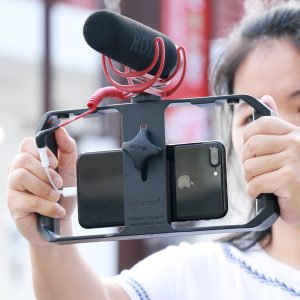
A wall, a windowsill or a tabletop will do. Lean against the wall, tuck your elbows into your sides and press the back of the phone against the frame to create three points of contact. Brace the elbows on a ledge if there is one, and use a two-second timer so that the press does not end the quiet. A small grip accessory also reduces movement by giving the hand something solid to hold. The combination of timer plus brace fixes the majority of casual night photos. Resting the phone on a lens cap or a folded jacket gives you a small, stable tilt that is far easier to frame with than a flat surface. A soft bag with a working zip gives you a stable surface at almost any height, which is often the difference between a usable frame and a blur.
Why does my photo still look noisy?
Noise is the sensor amplifying a weak signal. The more light that reaches the sensor, the less amplification is needed, and the less noise appears. So anything that gets more light into the sensor helps — and a dirty lens is the first thing to fix. Night shooting also makes flares more obvious, because a bright light smeared across the frame becomes more visible against a dark background. Clean the glass, block the brightest direct source with your hand if you can, and lift the exposure modestly rather than to its maximum. A slightly noisy but sharp frame is always more useful than a clean, soft one, because noise can be smoothed in editing but blur cannot. If the noise is uniform and mild, a gentle smoothing pass in editing hides most of it without turning the whole frame into a plastic-looking image.
Grips & Ring Holders — holder. Designed for everyday carry and backed by our 30-day happiness guarantee.
Is it worth using an app instead of the camera?
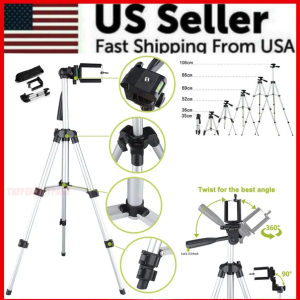
For beginners, the stock camera is usually best because it has been tuned to the hardware. A manual app only helps once you understand what the settings do, and its real value is holding the shutter open for longer than the default allows. That manual shutter speed is very powerful with a tripod — street scenes with light trails become possible. Start in automatic, learn to brace and focus manually, and only then move to a manual app. If you want to explore, our guide to phone tripods explains the setup. Learn to set focus manually before anything else, because autofocus hunts in the dark and wastes the exposure while it does. Without that step the camera hunts in the dark and burns the exposure while it searches, which is one of the most common reasons for a shot lost.
How do you shoot moving subjects at night?
This is the hardest case. Long exposures smear motion, short exposures need lots of light, and night has little. Look for the brightest available light and let the subject move through it, or ask them to pause. Bounce the available light off a pale surface instead of firing a flash directly — even a sheet of paper does this reasonably. High-intensity flash ruins the background entirely. In practice, moving subjects at night are best captured at a lit doorway or a bright shop window rather than in open street darkness. You can read our tips on taking better photos for the general habits that carry over. A short, quick sequence that catches the right moment often beats a single perfectly exposed frame that arrived a second too late. Shoot several more frames than you think you need, because the sharpest one is rarely the first, and the difference only shows when you zoom in.
Frequently asked questions
- Why does the sky get washed out at night?Usually street lights and exposure. Move so the bright source is behind you or shielded, and drop the exposure slightly.
- Should I turn the flash off for night scenes?Yes. Flash only reaches a metre or two and it flattens everything in front of the background.
- Does a phone case cover block the flash?It can, if the camera cutout is slightly small. Check that the case leaves the flash and the lens fully clear.
- How do I shoot stars with a phone?Use a tripod, manual shutter speed, and lock focus at infinity. Without a tripod you will get star trails.
- Why are my indoor shots worse than outdoor ones?Indoor light is weak and usually mixed, so the sensor struggles. Get closer to the brightest light source.


