
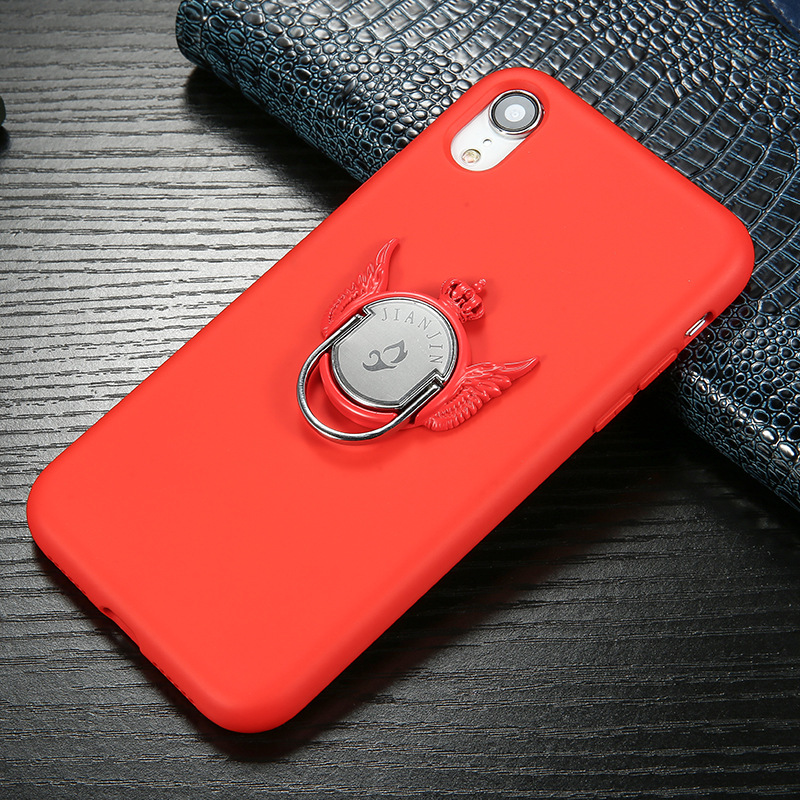
On a bus or train, your phone is safest when it is out of sight and attached to you. Keep it in a closed front pocket or a zipped internal bag pocket, use a strap or a finger loop if you are holding it, and never leave it on a seat or a tray table. Most phones lost on transport are either lifted at a door during a rush or left behind at a stop.
- Keep the phone in a closed front pocket or a zipped internal bag pocket.
- Hold it with a strap or finger loop if you must use it while standing.
- Never leave a phone on a seat, a tray table or a luggage rack.
- Step away from the door before you take the phone out at a stop.
Where is a phone most exposed on a bus or train?
Three places. The first is the doorway at a stop, where a crowd pushes and a hand can reach a pocket without being noticed. The second is a seat next to the aisle, where the phone sits on a lap or a tray table in full view. The third is the platform itself, where people stand still with a phone out and a train arriving behind them. The common factor is either a moment of crowding or a moment of stillness, and both give a thief a clean opportunity that a busy street would not. The safest habit is to put the phone away before the doors open, not after.

How should you hold a phone while standing on a moving carriage?
Use one hand for the rail and the other for the phone, and keep the phone low and close to your body. A wrist strap or a finger loop means the phone stays attached if your grip slips or someone bumps you. Do not hold it out over the aisle, where it can be knocked or taken. If you are carrying a bag as well, put the phone in the bag before you board rather than juggling all three once the train is moving. If you need both hands, put the phone away, because a moving carriage is where a phone gets dropped and then stepped on.
Is it safe to keep a phone in a back pocket on a crowded platform?
No. A back pocket is the easiest pocket to reach without you feeling it, and it is also the pocket you sit on, which is bad for a phone with a large glass back. On a crowded platform, use a front pocket with a zip or a button, or an internal bag pocket that closes. If your bag has an open outer pocket, treat it as decoration rather than storage, because a phone there is visible and reachable. Grit is the other reason to keep the phone closed away, and dealing with dust under a screen protector covers what to do when it gets in anyway.
What gear makes a phone harder to grab?
Four things help. A case with a wrist strap or a finger loop keeps the phone attached to your hand. A bag with a zipped internal pocket keeps it out of reach and out of sight. A slim pouch worn under a jacket keeps it on your body rather than in a bag. A screen lock with a short auto-lock timer means a taken phone is not immediately useful. A bag worn across the body is also harder to pull away than one carried on a shoulder, and it leaves your hands free. None of these stops a determined thief, but each removes an easy opportunity.
How do you keep a phone safe when you are seated by the door?
Move your phone to your front pocket before the carriage fills up, and keep your bag closed on your lap with the zip facing you. Avoid the seat nearest the door if you can, because it is the seat with the most traffic passing and the shortest escape route. If you are using the phone for a ticket or a map, put it away again before the train slows, since the stop is when people move and hands are busy. Set a reminder for your stop instead of watching the screen. If you are buying a case for a phone that spends its day in a bag, the differences between silicone, TPU and polycarbonate cases are worth knowing before you choose.
What should you do if your phone is taken on transport?
Tell the staff or the driver immediately, because on a train the doors can be held and on a bus the driver can call ahead. Use another device to lock the phone remotely and change your email password before anything else. Suspend the SIM with your carrier so the number cannot receive verification codes. Ask the operator whether the carriage has a camera, and note the time and the direction of travel, because those details are what a report actually needs. Report it to the operator’s lost property office if you think it was left behind, and to the police if you saw it taken.
Frequently asked questions
- Are phones often stolen on public transport? They are taken at doors during crowding and left behind on seats at stops, which are the two situations to design around. Keeping the phone closed away and checking your seat before you leave covers both. The moment a train slows is the moment to have your phone already in a pocket, not on a tray table.
- Should I use my phone on a crowded train? Briefly, if you must, with a strap and a firm grip and the phone held close to your body rather than out over the aisle. Long use on a crowded carriage makes you a target and makes the phone easy to knock out of your hand, and a phone dropped on a train floor is likely to be stepped on.
- Is a zipped bag pocket better than a front pocket? Both are good, and the right answer depends on your day. A zipped internal bag pocket hides the phone completely and keeps grit out, while a front pocket keeps it on your body if the bag is set down or taken. Do not use an open outer bag pocket or a back pocket for a phone.
- What is the safest way to carry a phone while cycling or on a scooter? In a pouch or a mount that locks, never loose in a pocket. A phone that falls from a moving bike lands on a hard surface at speed, which is the worst kind of drop it can take. Check that the mount grips the case rather than only the bare phone, and use a strap as a second line of defence.
- What should I write down in case my phone is lost? The phone’s model, its serial or IMEI number, and your carrier’s contact details, kept somewhere other than on the phone. You will need those to suspend the SIM and to report the loss. If your phone is covered, keep the policy number and the claim line in the same place. Photograph the box label and store it in the cloud.