
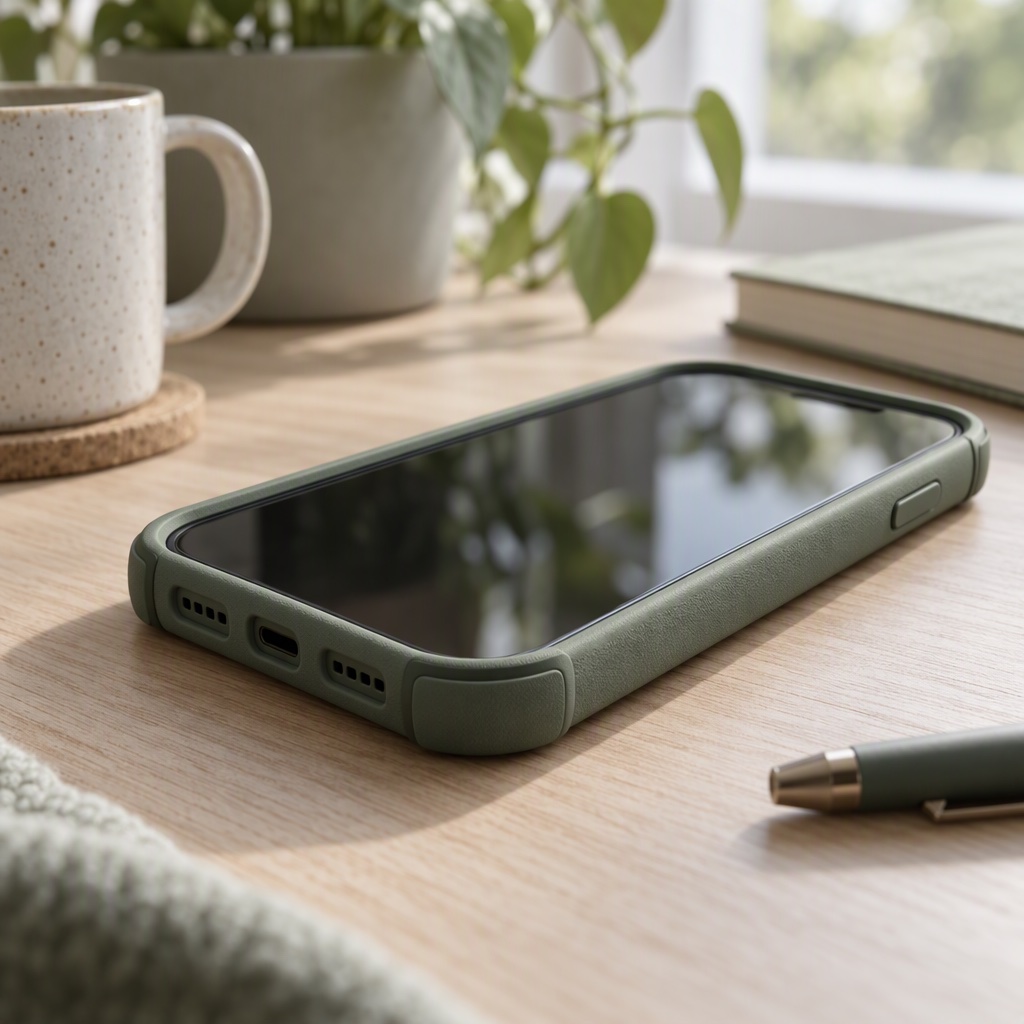
Salt air is easy to underestimate. You cannot see it, it does not feel wet, and it leaves no obvious mark on the first day. But spend a week near the coast and its effects start to show: buttons that feel gritty, hinges that stiffen, and a finish that looks duller than it did at home. Salt air settles on everything, and a phone case is no exception. Understanding what it does and how to counter it is the difference between a case that lasts one summer and one that lasts several, and it takes far less effort than replacing a case every year.
- Rinse the case with fresh water after coastal days.
- Dry metal parts carefully, since salt corrodes them first.
- Clean more often in coastal air than you would inland.
- Choose materials and finishes that tolerate salt well.
What does salt air actually do to a phone case?
Salt air carries tiny particles of salt that settle on surfaces as the moisture around them evaporates. On a phone case, this leaves a fine, slightly abrasive film that gradually dulls a finish and works its way into seams, button openings, and hinges. It is not dramatic in a single day, but over a holiday it accumulates, and if it is never rinsed away it keeps building. The film also attracts moisture, which is why coastal air feels damp and why corrosion is more likely near the sea. Different materials respond differently: soft-touch coatings can go sticky, clear plastics can cloud or yellow faster, and metal parts can pit or stiffen. The good news is that salt is water soluble, so a fresh-water rinse removes most of it before it can do lasting harm. A case that is rinsed regularly never gives salt the chance to build up.

iPhone Cases — case. Designed for everyday carry and backed by our 30-day happiness guarantee.
Why do metal parts suffer first?
Metal corrodes faster than plastic, so the metal parts of a case show the effects of salt air before anything else. Buttons, ring holders, hinges, magnetic rings, and any exposed screws or clasps are the usual weak points. Salt accelerates the process, and if the metal is in constant contact with a damp surface, corrosion can begin surprisingly quickly. You will notice it as a dull patch, a stiff movement, or a rough texture where there used to be a smooth finish. To slow this down, dry metal parts thoroughly after any exposure to salt water or spray, and avoid leaving the case damp for long periods. If a hinge or ring starts to stiffen, clean it gently rather than forcing it. Keeping metal dry is the simplest way to keep it working.
How do you rinse and clean a case after the beach?
Rinse the case in fresh water as soon as you reasonably can, since fresh water dissolves and carries away the salt that seawater leaves behind. Take the case off the phone first, so you can rinse the inside as well as the outside, where salt also collects. Use plain water, or a little mild soap for stubborn marks, and avoid harsh cleaners that can damage coatings. Work the water into the button openings and any hinges, then shake out the excess. Dry the case with a soft cloth, paying extra attention to metal parts and to any crevices where water lingers. Let it air dry completely before putting the phone back in. A rinse and a proper dry take only a few minutes and prevent most of the damage salt air would otherwise cause over time. If you cannot rinse straight away, at least wipe the case with a damp cloth to remove the worst of the film.
How do you look after buttons, ports, and hinges?
These are the small moving parts that fail first in coastal conditions, so give them a little attention. After a rinse, work the buttons and hinges gently while they dry, so any trapped moisture escapes and the movement does not seize up. Check the charging port for grit and salt, and clear it carefully with a soft, dry brush rather than a metal pin, which can scratch the contacts. If the case has a port cover, clean around the seal so it closes properly, since a seal packed with salt and sand will not protect anything. Avoid oiling hinges unless the maker recommends it, since oil can attract grit. If a button feels rough, a gentle clean usually restores it. Small parts are cheap to look after and expensive to replace. For more, see our guide to cleaning a phone case properly.
How often should you clean a case in coastal air?
More often than you would inland, because salt builds up every day you are near the sea. A daily rinse during a coastal holiday is ideal, and a quick wipe with a damp cloth on days when you are not on the beach still helps. If you live by the coast year round, a weekly clean keeps the case in good condition and prevents the slow accumulation that causes long-term damage. Keep a soft cloth in your bag or by the door so cleaning is easy to do rather than a chore. Watch for warning signs: a dull finish, a sticky texture, or stiff buttons mean it is time for a proper rinse. Cleaning little and often is far easier than trying to restore a case that has been left salty for months, and it costs nothing but a few minutes. Treat the clean as part of unpacking after a day outdoors, and it becomes a habit rather than a chore.
What should you look for in a case for coastal living?
Choose materials that tolerate salt and moisture rather than those that show every mark. A matte, mid-tone finish hides the dulling that salt causes, while glossy surfaces and pale colors show it immediately. Look for a case with few exposed metal parts, or with metal that is well coated, since these are the components that suffer most. A tight fit keeps salt and grit away from the phone itself, and a covered charging port adds another layer of protection. If you want a ring or a grip, choose one that can be removed for cleaning. Check that the case can be rinsed without damage, and read the care advice before you buy. For coastal trips in general, our guide to protecting your phone at the beach is a useful companion. Choose a case you can clean easily, and salt air becomes a minor concern. A case that is simple to rinse will always outlast one that is difficult to look after.
Frequently asked questions
- Can salt air really damage a phone case? Yes, over time. Salt settles on the surface and works into seams and metal parts, dulling finishes and causing corrosion if it is not rinsed away.
- How do I remove salt from a case? Rinse it with fresh water, inside and out, then dry it thoroughly. Fresh water dissolves the salt that seawater leaves behind.
- Which parts are affected first? Metal parts: buttons, hinges, rings, and clasps. They corrode faster than plastic, so dry them carefully.
- How often should I clean a case at the coast? Daily during a holiday, and weekly if you live near the sea. Little and often beats a deep clean later.
- What case material is best near the sea? A matte, mid-tone finish with few exposed metal parts. It hides salt marks and tolerates moisture well.


