
A school project that involves filming or photographing usually needs a steady shot, and that means a tripod. Handheld video wobbles, group photos lose their framing, and long recordings tire your arm long before the project is done. The right tripod for a school project is not the biggest or the most technical one; it is the one that holds your phone safely, sets up in seconds, and fits in your bag alongside everything else you carry. Choosing well comes down to height, stability, and how you will attach the phone, plus a little thought about where you will actually use it. Get those right and the tripod disappears into the background of your work.
- Match the tripod height to the shots you need.
- Choose a firm clamp that does not press the buttons.
- Light and compact beats heavy and unused.
- Check the head tilts and pans smoothly.
How tall should a tripod for a school project be?
Height decides what you can shoot. A short tripod that sits on a desk is fine for close-up work, stop-motion, or filming a model, but it cannot give you an eye-level interview shot. A taller tripod that extends toward head height lets you film people at a natural angle, which looks far more professional. Many compact tripods combine both, extending from a low tabletop position to a taller standing one, which is why they suit students so well. Think about the tallest shot you need and choose a tripod that reaches it with the legs slightly spread rather than fully extended, since a fully extended tripod is the least stable. If your project involves filming outdoors, add a little height allowance for uneven ground.
Mounts & Stands — holder. Designed for everyday carry and backed by our 30-day happiness guarantee.
What kind of clamp holds a phone safely?
The clamp is the part that touches your phone, so it matters more than the legs. A good clamp grips the sides of the phone firmly without covering the screen, the buttons, or the charging port, so you can still start and stop recording easily. Spring-loaded clamps are quick to use, while screw clamps hold more securely but take longer to adjust. Check that the clamp opens wide enough for your phone, especially if you use a thick case, and that the padding will not scratch the edges. A clamp that lets the phone rotate between portrait and landscape is a real convenience for projects that mix both. Test the grip before you trust it: a phone that slips mid-recording ruins the take, and a fall from tripod height can crack a screen. A clamp that takes a few seconds longer to tighten is worth it if it holds the phone rock solid.
How do you keep a tripod steady?
Stability comes from weight, spread, and surface. A heavier tripod resists wobble better, but a light one with well-spread legs can be surprisingly firm on a solid floor. Always spread the legs evenly and lock each joint, and avoid extending the center column more than you must, since a raised column makes the whole thing top-heavy. On uneven ground, adjust the legs to different lengths rather than propping the tripod on a book. Indoors, keep it away from doorways and busy walkways where someone might bump it. If you are filming a long take, weigh the tripod down with a bag hung from the center hook, if it has one. A steady base is worth more than any feature on the head, and a cheap tripod set up carefully will beat an expensive one balanced badly.
Should you choose a tripod or a stand for a school project?
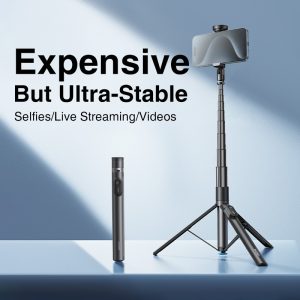
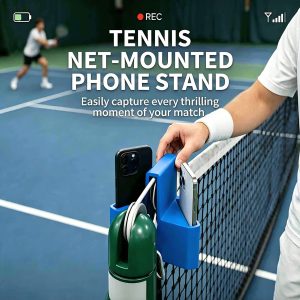
The choice depends on what you are filming. A tripod is the better tool for anything where you need height and a stable angle, such as interviews, presentations, or wide shots of a room. A small stand is handier for tabletop work, video calls, or reading a script while you record, because it is lighter and faster to set up. If your project mixes both, a tripod that also works low to the ground covers the most ground. Selfie-stick tripods are a useful middle option, since they extend tall for group shots and fold small for carrying. Whichever you pick, check the maximum height, the folded length, and the weight before you buy, because those three numbers decide whether the tripod is actually useful to you. A stand you can set up with one hand while holding a script is worth more than a heavier tripod you avoid using.
Mounts & Stands — holder. Designed for everyday carry and backed by our 30-day happiness guarantee.
How do you carry and look after a tripod?
A tripod you leave at home is no help, so carry it in a way that suits your day. A model that folds short enough for a backpack side pocket is easier to bring than one that needs its own bag. Keep the joints clean, since grit in the locks makes them slip and jam. Wipe the legs after outdoor use, and dry them before you fold the tripod away, because damp metal and fabric do not age well. Store it loosely rather than clamped tight, so the springs and locks are not under constant pressure. If a leg starts to slip, check the lock rather than forcing it. A little care keeps a cheap tripod working for years. If you store it in a locker or a shared room, keep it in a cloth bag so the legs do not get scratched or bent. For more on the basics, our guide to phone tripods is a good starting point.
What should you check before you buy?
Before you buy, confirm four things: the maximum height, the folded length, the weight, and the clamp width. Then think about the head. A ball head is quick to adjust, while a pan-and-tilt head is easier for smooth side-to-side movement, which suits video. Check that the phone plate or clamp attaches securely and does not wobble when you tap the screen. If your project involves group photos, look for a model with a wireless shutter or a place to mount one. For more options, see our guide to taking a group photo on a tripod. Buy for the project in front of you and the ones you expect next term, and skip features you will never use. A simple tripod that suits your phone and your bag will earn its place far more often than a complicated one.
Frequently asked questions
- What height tripod do I need for a school project? Match it to your tallest shot. Eye-level interviews need a taller tripod; tabletop work needs only a short stand.
- Will my phone fit the clamp? Check the clamp width against your phone, especially with a case on. Most adjust to fit common sizes.
- Is a cheap tripod good enough? Often yes. A simple, stable tripod with a firm clamp covers most school projects without costing much.
- How do I stop the tripod wobbling? Spread the legs evenly, lock the joints, and avoid raising the center column more than necessary.
- Can I use a tripod for video and photos? Yes. A pan-and-tilt head suits video, while a ball head is quicker for stills.


