
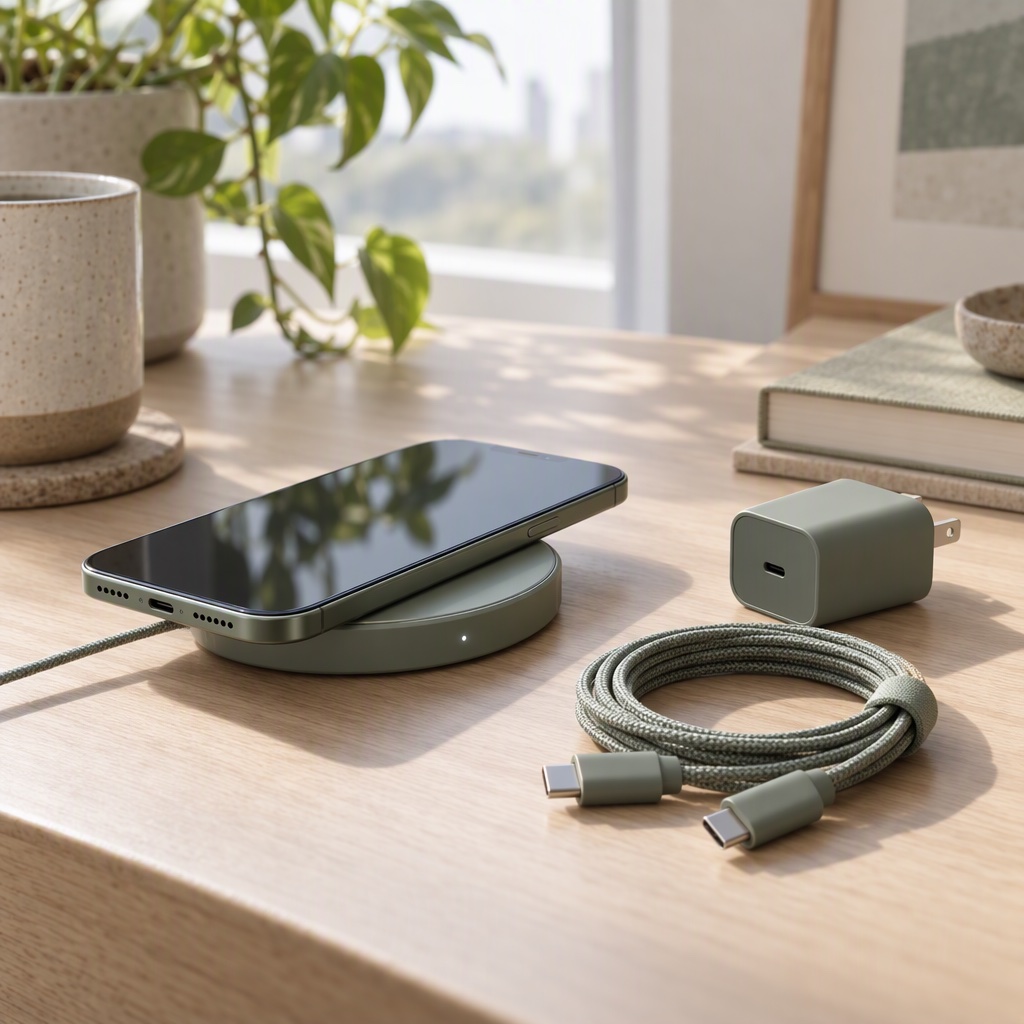
Charging a phone in a tent is a small problem with a few simple answers. There is no wall socket, the space is enclosed and often damp, and you may be relying on a battery for several days. The good news is that a phone does not need much power to stay useful, and with the right power bank and a little planning you can keep it topped up without carrying anything heavy. The aim is to charge safely, keep the battery healthy, and avoid the situation where the phone dies just when you need it for a map or a torch.
- A power bank is the simplest way to charge in a tent.
- Keep the bank and the phone dry and off the ground.
- Charge in daylight and avoid charging overnight in a sealed tent.
- Save battery by dimming the screen and using airplane mode.
What are your options for power in a tent?
Without a socket, you have three realistic options. The first is a power bank, which you charge at home or in the car before your trip and then use to top up the phone in the tent. This is the simplest and most reliable method for most campers. The second is a campsite hookup, if the site provides one, which lets you charge from a mains outlet at your pitch, though you will need a cable and often a suitable plug. The third is a solar panel, which can trickle charge a bank during the day but is slow and depends on good weather. For a typical tent trip, a power bank does almost all the work, with a hookup as a backup if it is available. Plan around the bank and treat everything else as a bonus. Charge everything you can before you leave home, because that stored power is what carries you through the trip.
How do you choose a power bank for tent camping?
Choose a bank that covers the number of days you are away, then add a little margin. Think in charges rather than capacity numbers: a weekend of light use might need three or four phone charges, while a longer trip needs more. A bank with a clear battery indicator is worth choosing, because guessing at the level is frustrating in the dark. Look for a sturdy casing that can survive being packed with other gear, and a size that does not add too much weight to your bag. A magnetic bank is convenient for quick top-ups, while a cable bank is more efficient for full charges. If you are camping with others, a larger bank with two outputs lets you share, though it is heavier to carry. Match the bank to your trip length and your tolerance for weight. A clear indicator saves guessing, and a sturdy case survives being packed with other gear.
How do you charge safely in a small space?
Tents are enclosed, and that changes a few things. Charge during the day when you can, and avoid leaving a phone or a power bank charging unattended overnight in a sealed tent, where heat has nowhere to go and the risk is higher if something goes wrong. Keep the bank and the phone off the tent floor, since ground moisture and condensation can reach them, and never let a cable run through a puddle or a damp patch. If the tent gets hot in the sun, move the bank into the shade before charging. Check that the cable is in good condition, since a damaged cable is a common cause of overheating. A little care about heat and moisture keeps charging safe and keeps your gear working for the rest of the trip. If anything feels unusually warm, unplug it and let it cool before you carry on.
How do you make a phone battery last longer while camping?
Stretching the battery is often easier than carrying more power. Lower the screen brightness, since the display uses more energy than anything else. Switch to airplane mode when you do not need a signal, especially overnight, and turn off Bluetooth and location services when they are not in use. Shorten the screen timeout so it does not stay lit in your pocket. Use the phone for one thing at a time rather than running navigation, music, and photos together. If you are somewhere cold, keep the phone close to your body, since cold reduces battery performance. Take fewer, better photos rather than a hundred of the same view. For more, our guide to charging a phone at a campsite covers the practical side. A phone that is used lightly can last several days on a single charge, which is often easier than carrying more power.
What about solar panels and campsite hookups?
Solar panels are appealing, but they are a top-up rather than a main supply. A small panel can recharge a power bank slowly on a bright day, which helps on a long trip, but it will not charge a phone quickly and it does nothing in poor weather or shade. If you use one, set it out early and leave it undisturbed, and do not rely on it for essential power. A campsite hookup is more dependable where it is offered, letting you charge from a mains outlet at your pitch. Bring the cable and any adapter you need, and charge your power bank as well as the phone so you have stored power for later. Use solar and hookups to extend your bank, not to replace it. Between them, they keep a longer trip comfortable. If you use both, charge the bank during the day and the phone in the evening, so you always have power in reserve.
What should you check before you buy?
Check the capacity against the length of your trip, and the weight against how far you will carry it. Look for a clear charge indicator and a sturdy case, and confirm the ports match the cables you already own. If you plan to use a hookup, check what connection the site provides and whether you need an adapter. If you are considering a solar panel, be realistic about how much sun you will get and how much power it will actually add. Check the return policy so you can change your mind if the bank is heavier or slower than expected. For travel-specific tips, our guide to using a power bank when traveling is a good next step. A modest, well-chosen setup beats an ambitious one you regret carrying. Weigh everything in your bag before you go, and leave behind the pieces you know you will not use.
Frequently asked questions
- How do I charge my phone in a tent? Use a power bank charged before your trip. A campsite hookup can help if your site provides one.
- Can I charge overnight in a tent? It is better to charge during the day. In a sealed tent, heat has nowhere to go, so avoid unattended overnight charging.
- How much power do I need for a weekend? Think in charges: three or four phone top-ups for light use, plus a margin for photos and maps.
- Are solar panels worth it? As a top-up, yes, on bright days. They are slow and unreliable as a main supply, so do not depend on one.
- How do I save battery while camping? Dim the screen, use airplane mode, turn off unused radios, and keep the phone warm in cold weather.


