
A water slide is a hard test for a phone case. You are wet, moving fast, and often holding the phone one-handed while a wave of water washes over you. The risks are not just water: it is the impact at the bottom of the slide, the grit of a wet pocket, and the moment you fumble a slippery case and watch it slide away. Choosing a case for this is really about choosing how much protection you want around the phone, and how much you trust yourself to hold on. A few sensible features make the difference between a fun day and a phone that never works properly again.
- Treat splash and brief immersion as the realistic goal, not deep diving.
- Pick a case that seals the ports and covers the whole phone, not just the back.
- Choose a texture or strap that stays grippy when wet.
- Dry the case and the phone carefully afterward, especially the ports.
What actually threatens a phone at a water park?
Water is only part of the story. A fast slide ends with a jolt, and a phone in a loose pocket or a thin case can take a real knock. Wet hands are slippery, so the phone is more likely to be dropped than on a normal day. Sand, grit, and sunscreen get into seams and ports, and a case that traps moisture against the phone can do more harm than good. Chlorinated pool water and salt water both leave residue that corrodes contacts over time if it is not rinsed away. The realistic threat is not a long soak at depth but a combination of splash, brief immersion, impact, and the general chaos of a wet, crowded day.
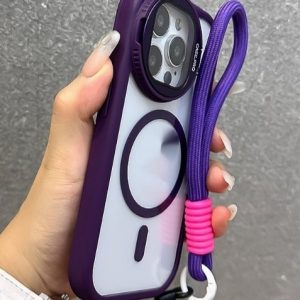
iPhone Cases — case. Designed for everyday carry and backed by our 30-day happiness guarantee.
How much water protection do you need?
Be honest about what the phone will actually face. If it is in a pocket or a bag for most of the day and only gets splashed, a well-sealed case with covered ports is usually enough. If you plan to take it down the slide or into the water with you, you need a case that is genuinely sealed and rated for immersion, and even then you should check the rating rather than assume. No case is a guarantee, and a seal that is damaged, dirty, or not fully closed will let water in. A full-cover case that wraps the whole phone gives you more margin than a slim shell, and it is the sensible choice if the phone is going anywhere near the water. If you are unsure how much protection a case really offers, read waterproof versus water-resistant phone cases before you decide.
What makes a case easy to hold when wet?
Grip is the feature people forget until the phone is airborne. A smooth, glossy case becomes very slippery when wet, while a textured surface, a raised edge, or a strap gives your fingers something to catch. A strap or a lanyard attached to the case is the single best insurance against dropping the phone, because even a brief fumble gives you a second chance to grab it. A raised lip around the screen and the camera helps too, keeping the glass off the ground if the phone does land face down. Look for a case that feels secure in a wet hand rather than one that only looks good dry, and test the grip with damp hands before you rely on it. If you are buying online, read the description for words like textured, ribbed, or non-slip, and avoid anything described as glossy or smooth.
How do you keep water out of the ports?
The charging port, the speaker grilles, and any buttons are the weak points. A case that covers them with a flap or a sealed membrane keeps water out, but the flap has to be closed properly every time, and a single lapse is enough. Before you go near the water, check that every cover is seated and that there is no grit trapped in the seal, because a grain of sand can hold a flap open. Avoid charging while the phone is wet or while the case is sealed around a damp port. If the phone does get wet, dry it thoroughly before you plug anything in. It is far better to go without charging for an afternoon than to risk damage to the port.
What about carrying the phone between rides?
Between rides, the phone needs somewhere safe that is not a wet pocket. A strap or a pouch that keeps it on your body is better than a loose pocket where it can slip out on a slide or be sat on. If you are leaving the phone with someone else or in a locker, a case with a strap is easier to hand over and harder to lose. Keep it out of direct sun when you are not using it, because a sealed case in the sun can get hot, and heat is bad for the battery. A dry bag or a locker is the safest option for the long gaps between rides, and a case that seals well is your fallback for the moments when you want to keep it with you. Decide before you go whether the phone stays with you or gets locked away, because that choice determines how much protection you actually need.
How do you dry and care for the case afterward?
After the water, take the phone out of the case and let both dry in the open air. Wipe the case with a soft cloth, rinse it in fresh water if it has been in salt or chlorinated water, and let it dry completely before you put the phone back in. Check the seals and the flaps for grit, and clean the charging port gently with a dry brush rather than a wet one. Do not use heat to speed drying, since warm air can push moisture further in. If the case looks stretched, cracked, or stiff, replace it rather than trusting an old seal. A few minutes of care after a wet day keeps both the phone and the case working for the next trip, and it is far easier than replacing a phone that has been sitting in salt. For more on keeping a phone safe near water, see how to protect your phone at the beach.
Frequently asked questions
- Is a normal case enough for a water slide? Only if the phone stays dry. For anything more than a splash, you want a sealed, full-cover case.
- Can I take my phone down the slide? Only in a properly sealed case, and even then it is a risk. A locker or a dry bag is safer.
- How do I stop the case getting slippery? Choose a textured surface or add a strap. A lanyard gives you a second chance if you fumble it.
- What should I do if water gets in? Switch the phone off, dry it thoroughly, and do not charge it until every port is completely dry.
- How long does delivery take? Standard tracked delivery takes ten to twenty business days, orders over thirty-five dollars ship free, and there is a thirty-day returns window.


