
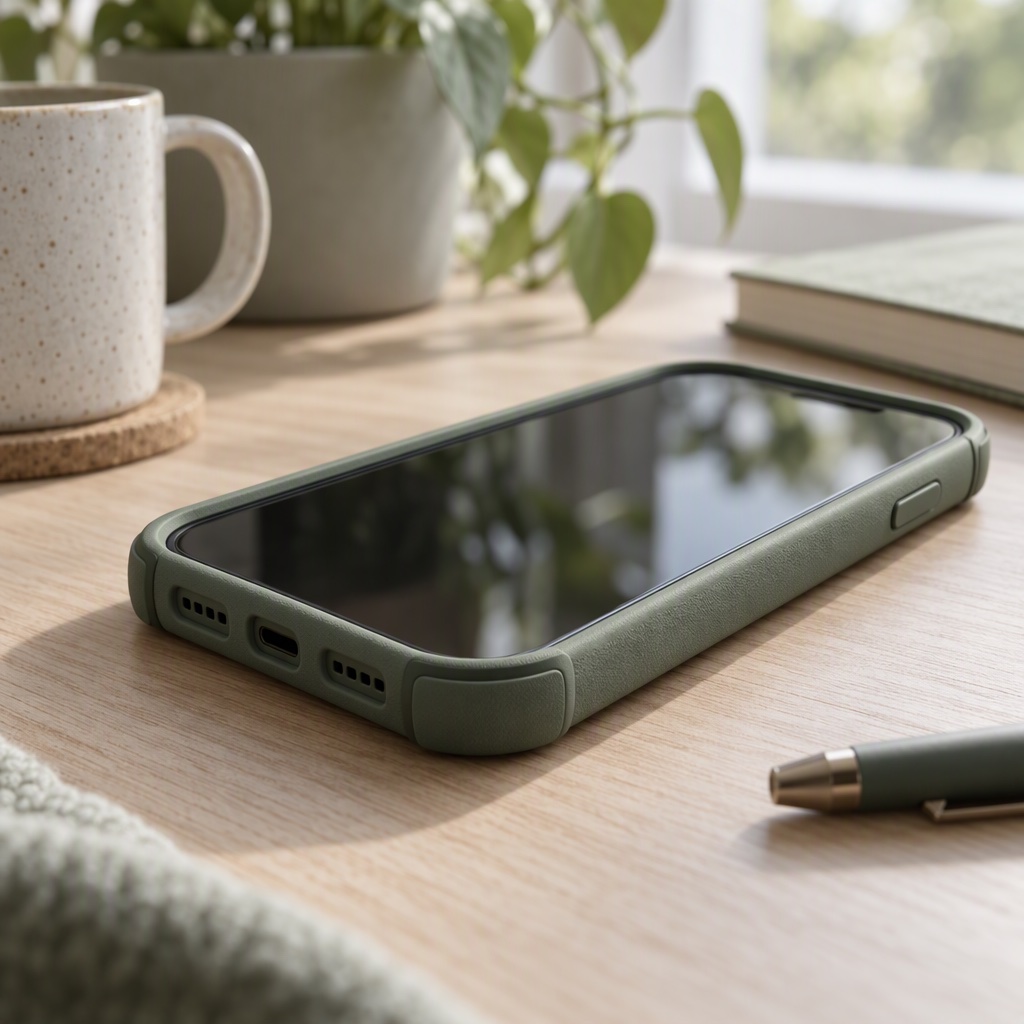
A sticky phone case is one of the most annoying small problems a phone can develop. It collects lint, drags against your pocket, and feels unpleasant in the hand, and it often appears suddenly after months of being perfectly fine. The good news is that stickiness is almost always a surface problem rather than a sign the case is worn out, which means it is usually fixable at home. Understanding why it happens tells you how to clean it properly and how to keep it from coming back. In most cases you can fix it in a few minutes with things you already have at home.
- Stickiness is usually a coating or grime problem, not a worn-out case.
- Wash soft cases with mild soap and warm water, then dry fully.
- Skip alcohol and harsh solvents, which can make the surface worse.
- Replace the case only when the surface has genuinely broken down.
Why does a phone case become sticky in the first place?
Most stickiness comes from a buildup on the surface. Hand oils, sunscreen, lotion, food residue, and pocket lint combine into a thin, tacky film that catches everything it touches. Over time this film hardens into something that feels like glue and holds onto dust. On soft-touch cases, a second cause is the coating itself: many matte finishes use a rubberized layer that breaks down with heat, sunlight, and handling, turning gummy as it ages. A third cause is heat, which softens some plastics enough to feel sticky when warm. Figuring out which one you have matters, because grime washes away while a broken-down coating does not. If a wash fixes it, you had grime; if not, the coating is the culprit.

iPhone Cases — case. Designed for everyday carry and backed by our 30-day happiness guarantee.
Is a sticky case ruined, or can it be fixed?
If the stickiness is grime, the case is fine and simply needs a proper wash. If it is a soft-touch coating that has gone gummy, the case is not ruined either, but cleaning will only help temporarily. You can often remove the tacky layer with gentle rubbing, and the case becomes usable again, though it may lose its matte finish. What you cannot do is restore a coating that has chemically broken down, so expect the stickiness to return over weeks. In that situation, the honest answer is that the case has reached the end of its useful life, and a replacement is the better fix. Test with a wash first; if it stays sticky afterward, it is time to let it go. That one test saves you from cleaning a case that is beyond saving.
How do you clean a sticky case without making it worse?
Remove the case from the phone first, then wash it with lukewarm water and a drop of mild dish soap. Rub gently with your fingers or a soft cloth, working into the seams and corners where grime collects. Rinse thoroughly, since leftover soap is itself sticky, and pat dry with a lint-free cloth. For a stubborn patch, a little baking soda on a damp cloth lifts residue without scratching. Work slowly and let the mixture sit for a moment rather than scrubbing hard. Avoid alcohol, acetone, and abrasive cleaners, which can dull or melt the surface and make things worse. Let the case dry completely before putting it back on the phone, because moisture trapped against the phone is its own problem. If the case still feels tacky after drying, the surface has broken down and cleaning will not rescue it.
What causes the sticky coating on soft-touch cases?
Soft-touch and matte finishes feel wonderful when new because they use a thin rubberized layer that grips without being shiny. That layer is the weak point. Sunlight, heat, sweat, and the natural oils on your hands gradually break it down, and once it starts to degrade it turns tacky rather than wearing away cleanly. Cheap cases tend to use thinner coatings that fail sooner, while better-made ones last longer but still age. There is no way to reapply that finish at home, which is why a gummy soft-touch case is usually replaced rather than repaired. If you love the matte feel, expect to replace the case periodically, or choose a leather cover that ages gracefully instead of turning sticky. Leather develops a patina rather than a tacky surface, which is why many people prefer it for a long-term case.
iPhone Cases — case. Designed for everyday carry and backed by our 30-day happiness guarantee.
How do you stop a case becoming sticky again?
Regular cleaning is the simplest prevention. Wipe the case every week or two with a damp cloth, before grime has a chance to build into a film. Keep it away from sunscreen and lotion where you can, since both leave a residue that attracts dust, and give your hands a rinse before handling the phone after applying either. Avoid leaving the phone on a hot dashboard or in direct sun, because heat accelerates both grime baking on and coating breakdown. If your case has a soft-touch finish, storing the phone in a pocket or bag that does not shed lint helps too. A quick weekly wipe takes seconds and keeps the surface feeling like new for far longer. Prevention is far easier than removing a baked-on film once it has set.
When should you replace a sticky case instead?
Replace it when a wash does not fix the problem, when the surface stays tacky after drying, or when the coating comes away on your fingers. Also replace it if the stickiness has spread to the point that the case collects lint constantly, since no amount of cleaning will keep up. Those are signs that the material itself has failed rather than being dirty. If you simply dislike the texture now, that is a fair reason too. A case is an inexpensive thing to replace, and there is no reason to put up with one that feels unpleasant every time you pick up the phone. Our guide to cleaning a phone case properly covers the routine in more detail, and if the real issue is that the case is too slippery rather than too sticky, our tips on adding grip to a smooth case point the other way.
Frequently asked questions
- Can I use alcohol wipes on a sticky case? Best avoided. Alcohol can dull a matte finish and worsen a degrading coating. Mild soap and water are gentler and usually work just as well.
- Why did my case suddenly get sticky? It is rarely sudden. Grime builds slowly until it becomes noticeable, or a coating reaches the point where it breaks down all at once after months of wear.
- Does heat make a case sticky? Yes. Heat softens some plastics and speeds up the breakdown of soft-touch coatings, so keeping the phone out of hot cars and direct sun helps.
- Is a sticky case bad for my phone? Not directly, but it traps dust and grit against the phone, and grit can scratch. Cleaning or replacing it protects the phone underneath.
- How often should I wash my case? Every week or two is plenty for most people. Wash it more often if you use lotion or sunscreen, or if you notice it starting to feel tacky.


