
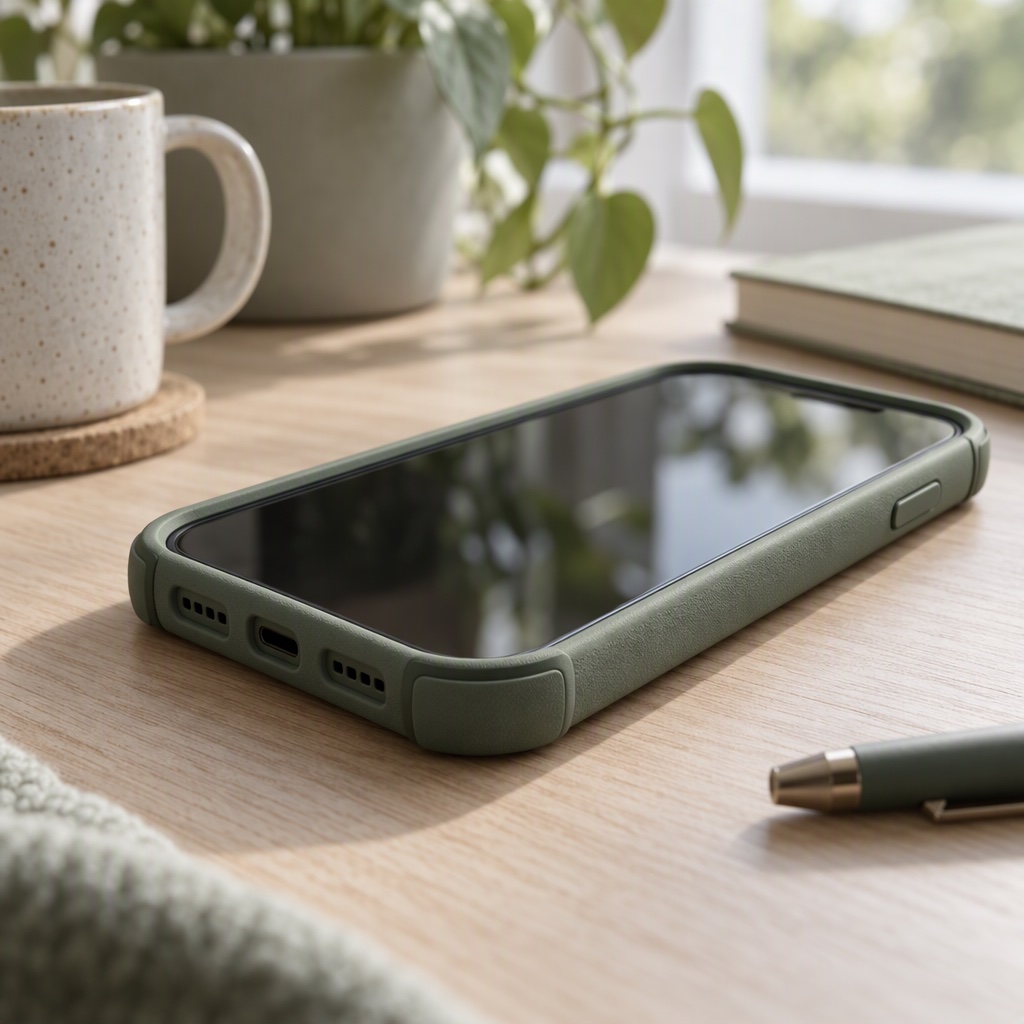
April rain rarely announces itself politely. It arrives sideways, in short bursts, and usually while your phone is in your hand or your back pocket. The reassuring part is that a modern phone is not as fragile as it feels — brief exposure is survivable, and a sensible combination of a full-cover case, a dry inner pocket, and one cloth handles almost everything a wet month can throw at you. What actually causes damage is rarely the raindrops themselves. It is the habits around them: charging a damp port, leaving a phone in a soaked jacket for hours, or trusting a pocket that has a hole in it.
- Rain is less dangerous than the habits around it — most damage comes from charging or storing a wet phone, not from the drops themselves.
- A full-cover case with raised lips keeps splashes away from the screen edges, the camera surround, and the charging port.
- A pouch or zipped inner pocket beats an open outer pocket, which funnels water straight onto the phone.
- If the phone does get wet, dry it fully and let it sit with the ports facing down before any cable goes near it.
How much rain can a phone actually survive?
More than most people expect, as long as the rain is brief and the phone is intact. Water resistance is tested in still, fresh water, not in wind-driven rain, and it fades as seals age, as the phone is dropped, and as it is opened for a repair. Treat resistance as a buffer rather than a guarantee. A phone that gets splashed while you cross a parking lot is almost certainly fine. A phone that spends an hour in a soaked pocket, where water sits against the seams and the charging port, is a different situation entirely. The practical rule is straightforward: brief exposure is survivable, sustained wetness is not. Plan for the second case and the first one takes care of itself without any drama.

iPhone Cases — case. Designed for everyday carry and backed by our 30-day happiness guarantee.
Which case features matter most in wet weather?
A full-cover case does more for you in April than any single feature, because it puts a layer between the rain and the parts that are hardest to dry. Look for raised lips around the screen and the camera, which keep glass off wet surfaces when you set the phone down, and a firm grip around the edges so water cannot run straight into the charging port. A textured or matte outer surface is easier to hold with damp hands than a glossy one, which becomes slippery the moment it is wet. Port covers help, but they are not a seal — they slow water down rather than stopping it. The case is there to buy you time, not to make the phone submersible.
What is the safest way to carry a phone in the rain?
The inner pocket of a jacket or a zipped compartment in a bag beats any outer pocket, because outer pockets collect water and hold it against the phone for hours. If you carry a bag, put the phone in a pouch inside the main compartment rather than a side pocket that faces the weather. If you have no bag, a strap case worn under a coat keeps the phone on your body and out of the wet. Never carry a phone in a back pocket you are going to sit on, and check your pockets for small tears — a tiny hole is all it takes to soak the fabric through. The aim is not perfect dryness but keeping the phone away from standing water.
What should you do the moment the phone gets wet?
Dry it before you do anything else. Shake the phone gently with the charging port facing down, then wipe the whole body with a soft, lint-free cloth, paying attention to the seams around the buttons and the camera surround where droplets tend to hide. Do not press hard on the speaker grille and never push anything into the port. Leave the phone in a warm, dry room for a few hours with the ports facing down so any remaining moisture can drain away. Skip the rice, the hair dryer, and the radiator — none of them help, and concentrated heat stresses the battery. Once the phone is dry and behaving normally, charge it and check that the cable seats properly.
Why is charging a damp phone such a bad idea?
Electricity and moisture are a poor combination, and the charging port is exactly where they meet. If water is sitting in the port, pushing current through the contacts can corrode them, and corrosion is permanent — it does not dry out along with the phone. That is why phones often refuse to charge or display a moisture warning: the device is protecting itself. Even when a damp phone charges happily, the port can warm up more than usual, and repeated exposure shortens the life of the connector until cables start needing to be wiggled. The safe habit is simply to wait. If the phone has been out in the rain, give it a few hours in a dry room first.
How do you keep the phone dry for the rest of the day?
Once the phone is dry, the job is keeping it that way. Change out of the soaked jacket or move the phone to a dry layer, because a wet pocket will re-wet the case the moment you put it back. Carry a small cloth so you can wipe the screen and the case down rather than letting water sit on them between errands. If you are out for hours in steady rain, a pouch inside your bag is worth the extra second it takes to reach the phone. Check the charging port at the end of the day too — a quick look with a light shows whether anything is sitting in there before you plug in for the night. For the wider picture, see how to keep your phone dry in the rain and waterproof vs water-resistant phone cases.
Frequently asked questions
- Can a phone survive a drop into a puddle? Usually yes, if you pull it out quickly. Dry it fully, keep the ports facing down, and wait before charging. The port is the part that suffers most, not the screen.
- Do I need a waterproof case for April showers? Not for ordinary showers. A waterproof pouch earns its place for boating or all-day rain, but a full-cover case and a dry inner pocket handle a normal wet commute comfortably.
- Is rice a good way to dry a phone? No. Rice does not pull moisture out of a phone, and the dust from it can work into the ports and speaker grilles. Air, a dry room, and time do a better job.
- Should I keep my phone in my pocket if my jacket is soaked? Move it to an inner layer or a bag instead. A soaked pocket holds water against the case and the charging port, and that is where the real risk sits.
- How long should I wait before charging a wet phone? A few hours in a warm, dry room with the ports facing down is a reasonable rule. If the phone still warns you about moisture, keep waiting.


