
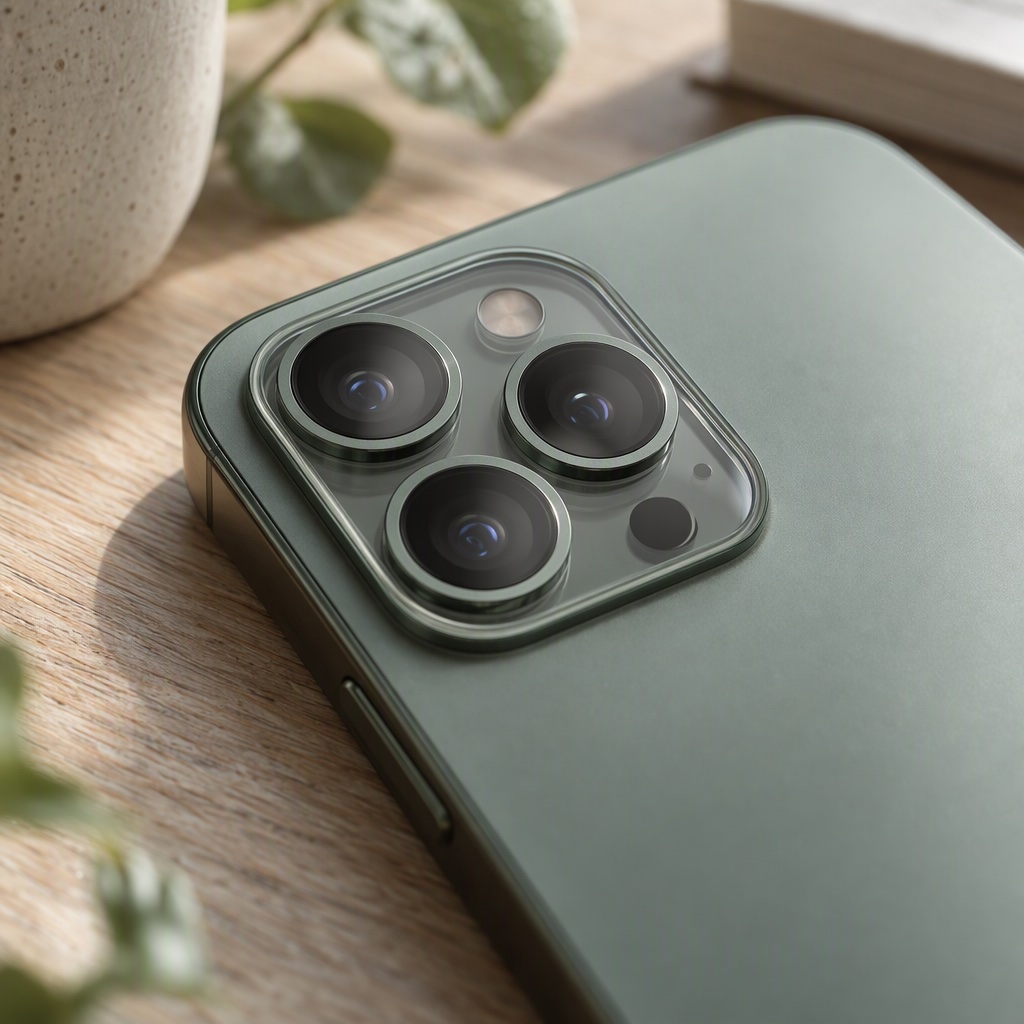
A ring holder is good for selfies when it does three things at once: it holds the phone securely in one hand, it folds out to act as a kickstand or a grip for a wider shot, and it rotates so you can move from portrait to landscape without re-gripping. The best ones have a metal hinge, a smooth rotation and a loop that fits one or two fingers comfortably. The worst ones loosen within a month and the phone ends up on the floor.
- A ring gives you a stable one-handed grip, which is what stops blurry selfies.
- The kickstand function lets you frame a wide shot with a timer or a remote.
- Metal hinges hold their tension far longer than plastic ones.
- Position it low on the case so the phone balances on your finger rather than tipping forward.
How does a ring holder improve a selfie?
Two ways, and neither is about the camera. First, it changes how you hold the phone: a finger through the ring means the phone cannot slide down through your palm, so you can reach further out for a wider angle without dropping it. Second, it takes the strain out of holding still, which is what causes blur. If you have ever had a selfie look sharp at the edges and soft in the middle, that is the wobble of your fingers rather than the lens. A ring also gives you a fixed reference point, so the framing stays similar between shots and you are not hunting for the same position each time. That consistency is why a ring helps more than it seems like it should, and why it is often the first grip accessory people keep using long after they buy it.
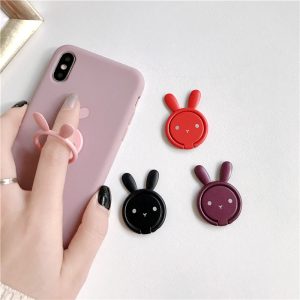
Grips & Ring Holders — holder. Designed for everyday carry and backed by our 30-day happiness guarantee.
What hinge and rotation features matter most?
The hinge is the part that fails. A good hinge rotates through a full range and holds the angle you set it to, rather than flopping back flat when you lean the phone on something. Metal hinges keep their tension for far longer than plastic, which is why a slightly pricier ring usually outlasts three cheap ones. Look for a hinge that rotates a full 360 degrees so the phone can move from portrait to landscape while your hand stays where it is, and check that it can lock at the angle you actually use. A 180-degree hinge that only folds flat is much less useful for a selfie, because it cannot hold the phone at the slight tilt that frames a group. Tight hinges are easier to operate with a fingertip than loose ones, and a stiff hinge is easier to clean than a creaky one.
Where on the case should a ring sit?
Lower is usually better for selfies. Placed in the middle or lower third of the back, the phone balances against your finger when you tilt it up, which is exactly the movement you make to get a higher angle. Placed too high, the phone tips forward and your thumb has to support the weight, which is the grip you were trying to avoid. If you mostly type, a slightly higher position keeps the phone steadier while your thumb reaches the keys, so the ideal position depends on which you do more. Adhesive rings need the position decided before you press down, because repositioning means cleaning the residue and starting again. A case with a built-in ring is stronger than a stick-on pad. Test the position by holding the phone the way you hold it, not the way the product photo does. More on this in our guide to whether phone grips and pop sockets are worth it.
When does the kickstand function matter for photos?
Whenever you want to be in the frame. Flip the ring out, rest the phone on a table, a wall or a car roof, and use a timer or a remote shutter so you can step back and check the framing. That is a completely different photo from a stretched arm selfie: the perspective is better, the angle is more flattering, and the whole group fits. The kickstand also matters for steady video, since a phone propped at a slight angle does not wobble the way a held one does. Look for a ring that holds the phone at a stable angle rather than one that slips on a smooth surface, and consider whether it works with a tripod thread if you want to go further. For anything more than a quick group shot, a small tripod or a stand holds the phone better than a ring on its own.

Grips & Ring Holders — holder. Designed for everyday carry and backed by our 30-day happiness guarantee.
How does a ring affect other accessories and charging?
A bulkier ring can block a wireless charging pad if it sits over the centre of the back of the phone, so check whether it lies flat when folded. Magnetic-compatible rings avoid this problem and also work with magnetic car mounts, which can be handy if you navigate with the phone attached to a vent or a dash. A ring can also interfere with a magnetic card holder, since the two compete for the same space on the back of the case. If you use a crossbody strap or a lanyard, look for a ring with a loop that a strap can thread through, which combines both functions in one accessory. Finally, if you shoot on a tripod, check whether your case or ring has a thread mount, since that turns any tripod into a phone mount without an adapter.
Which ring suits your phone and your hand?
Sizing is personal, and it is the thing most people get wrong on the first try. A loop that fits one finger comfortably is the most common choice, but a loop large enough for two fingers is more stable if you have a heavier phone or larger hands. Very small loops feel secure until you try to remove the phone from your pocket with one hand. Thickness matters too, since a very thin ring concentrates pressure on a fingertip and becomes uncomfortable over a long day. If you use a case, decide whether you want a ring that sticks to the case or a case with a ring built in, because the second option is stronger and does not add adhesive you have to live with. If photography is the reason you are buying one at all, our guide on taking better photos with your phone covers the technique side.
Frequently asked questions
- Do ring holders weaken phone signal or charging? They do not affect signal at all. Thick metal rings placed over the wireless charging coil can slow or stop charging, so a flat magnetic ring or a lower-positioned one is the safe choice.
- Why did my ring holder loosen after a few weeks? Almost always the hinge and the adhesive. Heat and repeated rotation wear out a plastic hinge, and a cheap adhesive pad eventually lets go from the edges inward, which is why a case with a built-in ring lasts longer.
- Can I reuse a ring holder on a new case? The adhesive on a stick-on ring is single-use, and reuse usually fails within a few weeks. Remove it, clean the old residue from the case, and fit a new ring to the new case.
- Is a ring holder better than a pop-socket style grip? It depends on whether you want the kickstand. A collapsing pop socket offers a similar grip but usually less reliable angle holding, while a ring is generally stronger and easier to clean.
- Can I use a ring holder with a tripod? Only if it has a tripod thread, which most do not. For tripod work, use a phone clamp or a case with a threaded mount rather than relying on the ring.


