
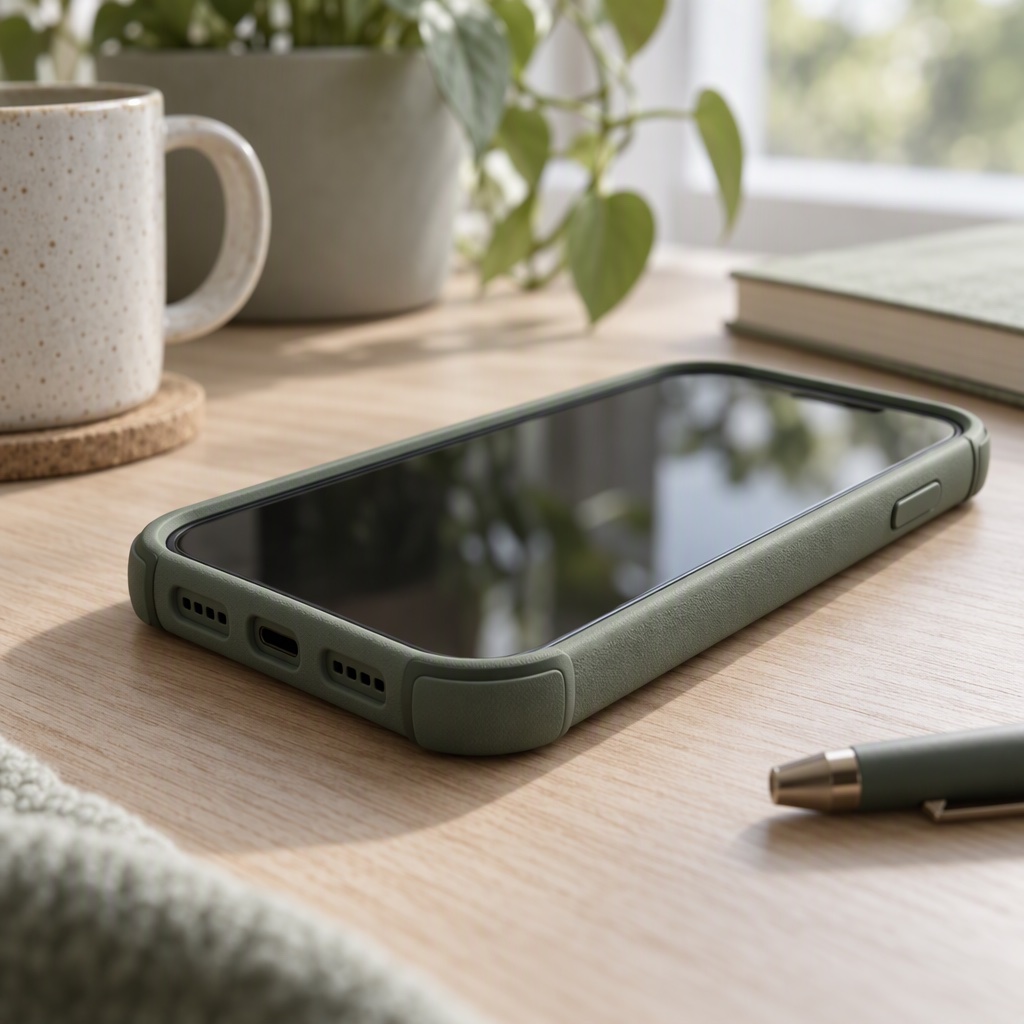
A screen protector that has started lifting at the edge is one of those small annoyances that gets worse if you ignore it. The lift is almost always caused by something trapped under the edge — a speck of dust, a drop of moisture, or skin oil from installation — or by a case rim pressing against it. The fix is usually quick: press it back down properly, or remove and re-seat it before dust gets further under. Here is how to tell which situation you are in.
- Lifting almost always starts with something under the edge — a speck of dust or moisture trapped at installation.
- Press the edge back down firmly with a card; if it lifts again within a day, dust is still underneath.
- Take the case off before installing or re-seating a protector — a case rim is a common cause of edge lift.
- If the adhesive has dried out, pressing will not help — replace the film rather than fighting it.
Why do protector edges lift in the first place?
Edge lift has three usual suspects. The first is contamination: a single dust speck, fiber, or fingerprint left on the phone’s glass at installation holds the protector away from the adhesive, and the gap slowly widens as the edge catches on pockets and bags. The second is your case: a case rim that presses on the protector’s edge, or a case that is slightly too tight for the film, acts like a lever slowly peeling it away. The third is the adhesive itself — a cheap or old film simply has less grip, and heat, humidity, and time all weaken it further. Identifying which suspect applies decides whether you press, re-seat, or replace.
What is the quick fix for a small lift?
For a lift of a few millimeters, start by cleaning the edge: lift the corner just enough to wipe away any visible dust or grit from both the phone’s glass and the underside of the film, using a microfiber cloth or a piece of tape to lift specks off. Then press the film back down firmly, working from the lifted edge towards the center with a card — an old bank card wrapped in a cloth works — and hold for thirty seconds to let the adhesive re-grip. Work in good light, because the specks you are hunting are almost invisible under a dim bulb, and give yourself five quiet minutes rather than trying to fix it on a bus. If the edge stays down for more than a day, you are done. If it lifts again immediately or within hours, there is still something trapped underneath, and pressing harder will not fix it. Time to re-seat or replace.
When should you remove and reinstall?
Remove the film when the lift keeps returning, when you can see dust or a bubble spreading under the edge, or when the adhesive has clearly lost its grip across a wide area. Peel the film off slowly from a corner — tempered glass films usually come off in one piece, while plastic films may stretch and tear — and clean the phone’s glass thoroughly before installing a new one. This is also the moment to check the case fit, because if the rim of your case is what caused the lift, a new film under the same rim will fail the same way. Install the film with the case off, then fit the case afterwards and check the alignment.
How do you install a protector so edges stay down?
Prevention is easy and mostly about timing and cleanliness. Work in the dustiest-free room you can find — a bathroom after a hot shower has settled is a classic trick, because the humidity makes airborne dust settle. Wipe the phone’s glass, then use a dust removal sticker or tape to lift any remaining fibers before you apply the film. Peel the backing, align from the top edge down, and press from the center outwards to push air and any remaining dust away from the middle rather than trapping it at the edges. Keep the case off until the adhesive has settled for a few hours, and never install a protector on a screen that is even slightly damp.
iPhone Cases — case. Designed for everyday carry and backed by our 30-day happiness guarantee.
How does the case affect edge lift?
Cases and protectors meet at a boundary, and that boundary is where lift begins. A case with a raised lip that overlaps the protector’s edge can press on the film and slowly lift it, especially on phones with curved glass edges where the protector has to bend. A full-cover or clamshell case often holds the protector’s edge down instead of prying it up, which is one reason full-cover cases are popular with glass films. The test is simple: install the protector with the case off, let it settle, then fit the case and check that the rim sits against the film without pressing on it. If your case is the culprit, a different case style is a more permanent fix than any amount of re-pressing.
When is it time for a new protector?
Replace the film when the adhesive has failed across a wide area, when the film itself is cracked or chipped, when scratches have built up to the point of clouding your view, or when the same corner keeps lifting no matter how carefully you re-seat it. Protectors are consumables — that is their job, taking the damage instead of the screen — and a replacement is a small price compared with the alternative. Keep a spare film in a drawer, because the moment you need one is usually the moment your current one chips, and a lifted edge left in place collects dust that can work its way under the screen’s own seals. Catching the problem at the first lift, rather than the fifth, is what keeps the whole thing a two-minute job. For installation technique, read how to install a screen protector without bubbles and screen protector buying guide: glass, film, and hybrid.
Frequently asked questions
- Can I tape over a lifting edge? Clear tape will hold it down as a short-term fix, but it collects lint at the edges and looks messy. Re-seat or replace the film properly as soon as you can.
- Do glass films lift more than plastic ones? Fit and installation matter more more than the material, but stiff glass films are less forgiving of a slightly uneven case rim. Both will lift if dust or moisture is trapped underneath.
- Is a lifting protector dangerous? It is not dangerous, but the gap lets dust and moisture sit between the film and the screen, and a lifted edge catches on pockets. Fix it promptly rather than leaving it half-attached.
- How long should a protector last? Months to a year with careful installation and daily use is typical. Replace at the first lift that will not stay put, or when scratches start clouding the glass.
- Does humidity cause edge lift? Yes — moisture weakens adhesive and can seep under an edge in steamy rooms. Make sure the screen is completely dry before installing, and dry the phone fully after any damp conditions.


