
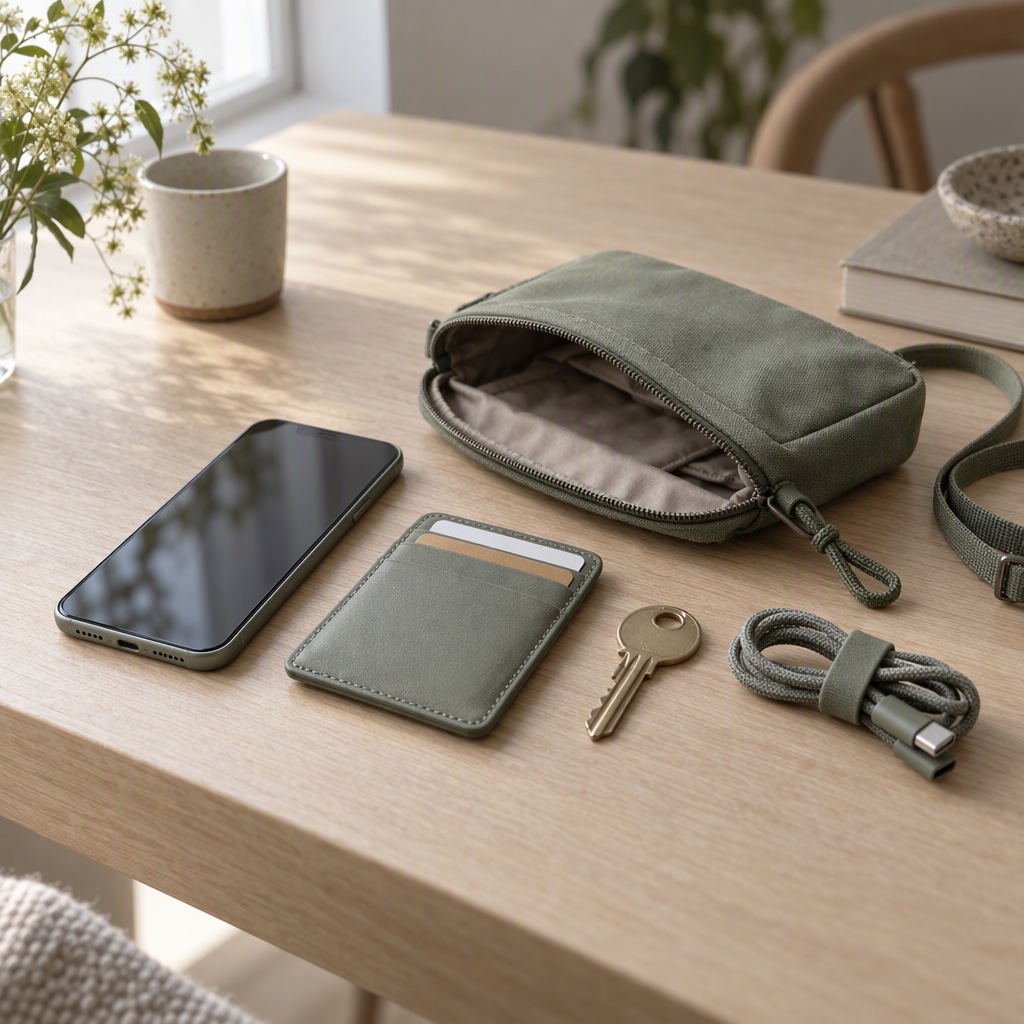
A beach bag for a phone is really two things: something that keeps water, sand, and salt away from the device, and something you are willing to carry when your hands are full. Most products sold as waterproof fall into one of two camps — a fully sealed pouch that keeps water out completely when it is closed properly, or a water-resistant bag that shrugs off splashes and rain but will not survive being dunked. Knowing which one you need is the whole decision, and it depends on whether the bag is staying on the sand or coming into the water with you.
- Decide first whether the bag will get splashed or fully submerged.
- A sealed roll-top or zip-lock pouch is the only kind that survives a dunking.
- Sand is as much of a problem as water, so choose a closure grit cannot pass.
- Rinse the bag with fresh water after every salty day.
What does waterproof actually mean for a bag?
In everyday use the word covers a wide range. A water-resistant bag is made of a fabric that sheds rain and splashes, with seams that may still let water through under pressure. A waterproof bag is sealed, usually with a roll-top closure or a watertight zip, and is designed to keep contents dry if it is briefly submerged. For a phone, the difference matters, because a phone that gets wet inside a bag is no better off than one that got wet on the sand. When you are shopping, look at the closure rather than the fabric. A bag with a proper roll-top and welded seams is doing real work; a bag with a single zipper and a pretty print is mostly fashion, however it is described. The same distinction applies to the phone itself, which is why our explainer on waterproof versus water-resistant phone cases is worth reading alongside this one.
How much protection does a beach day really need?
Match the bag to the plan. If the phone stays on a towel under an umbrella while you swim, a simple pouch that keeps out sand and the odd splash is plenty, and it will be lighter and easier to use than a fully sealed bag. If you plan to take the phone into the water, on a paddleboard, or on a boat, you need a sealed pouch and a way to keep it attached to you. If the phone is going to sit in a bag on a boat deck where waves come over the side, choose the sealed option even though you are not swimming. The mistake most people make is buying a light pouch for a wet activity, or a heavy sealed bag for a day on dry sand. Think about the worst five minutes of your day, and buy for that. Our guide to protecting a phone at the beach covers the rest of the kit.
What size bag do you need for a beach day?
Small is usually better. A pouch sized for a phone, a card, and a key is easier to seal properly, easier to carry, and less likely to be left open. Larger bags tempt you to add a towel, sunscreen, and a water bottle, at which point you are carrying a beach bag rather than protecting a phone, and the weight makes it awkward in the water. If you need to carry more, split the job: a small sealed pouch for the phone, and a separate bag for everything that is allowed to get wet. That way the phone stays protected without you hauling a large sealed bag around all afternoon. Check the dimensions against your phone in its case before ordering, because a snug fit is easier to seal than a loose one.
How do you carry a phone when you go in the water?
The bag needs a way to stay with you. A crossbody strap worn under or over a shirt keeps the pouch against your body where you can feel it, and it will not swing while you swim or paddle. A wrist strap works for a quick dip, and a lanyard is fine when you are walking rather than swimming. Whatever you choose, check that the attachment point is part of the bag rather than a small clip that could work loose, and test the strap at home before you rely on it. In moving water, keep the pouch close to your body and avoid letting it trail behind you where a wave or a current can pull at it. If the water is rough, the safest option is often to leave the phone on shore.
Which closures and materials keep water out?
Roll-top closures are the most reliable for a soft bag: you fold the top over several times and clip it, which creates a seal that water struggles to cross. Watertight zippers with a rubberized edge work well too, though they need to be closed fully and kept clean, because a grain of sand in the teeth breaks the seal. Simple press-stud or velcro flaps are splash protection only. On materials, coated fabrics and thick thermoplastic polyurethane are the usual choices, and both are fine as long as the seams are welded or taped rather than stitched. Stitching leaves tiny holes. Whatever the design, the seal is only as good as your habit of closing it, so choose a closure you will actually use every time.
How do you look after a waterproof bag after a salty day?
Rinse it in fresh water and let it dry fully open. Salt is the quiet enemy of beach gear: it stiffens coated fabrics, corrodes metal clips, and leaves a residue that can work into a zip. Fresh water removes most of it in seconds. Dry the bag inside and out before you store it, because a sealed pouch left damp will smell and the coating will degrade. Check the closure for sand and wipe it clean, since grit in a zip or a roll-top clip is what causes leaks later. Store the bag flat rather than folded along the same crease every time, because repeated folding weakens the coating. If the bag has kept your phone dry through a full season, a five-minute rinse is a fair price.
Frequently asked questions
- Can I use a normal zip-lock bag instead? A quality freezer bag can keep a phone dry for a short time, and it is better than nothing. It is not built for repeated use, the seal weakens once it is wet, and it offers no protection against sand or a drop.
- Will a waterproof bag let me use the touchscreen? Most sealed pouches let you tap and swipe through the plastic, though it can feel less responsive than bare glass. Test it with your phone inside before you rely on it for photos.
- Do I need a floating bag? If you are swimming or paddling, a floating pouch is worth having, because a dropped phone that sinks is gone. A strap attached to your body is the other half of that protection.
- How often should I replace a waterproof pouch? Replace it when the coating feels stiff, the zip drags, or the seal no longer clips firmly. Test a pouch with a tissue inside before each trip, and replace it if any moisture gets through.
- Is a waterproof bag enough on its own? For sand, salt, and splashes, yes. For swimming with the phone, pair it with a strap so the bag stays with you, and keep the phone out of the water altogether if conditions are rough.


