
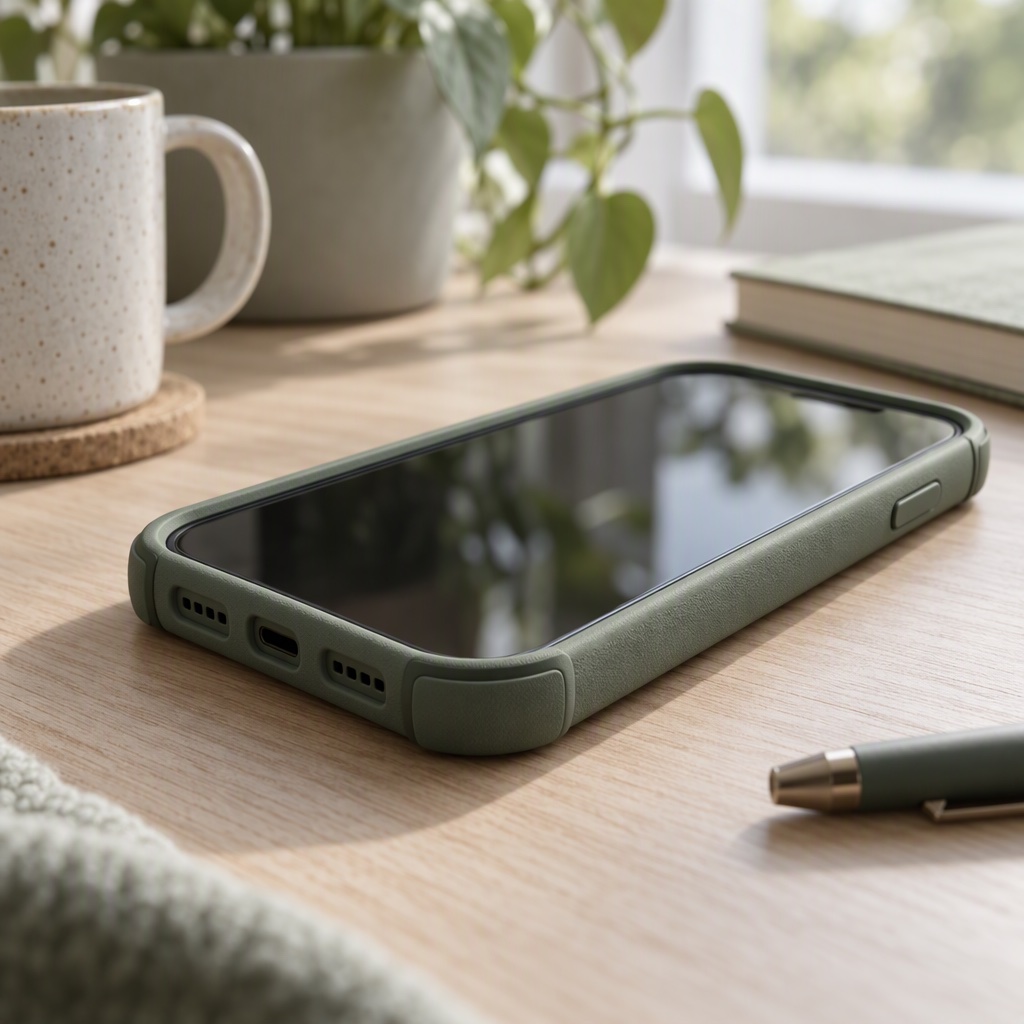
Choosing a screen protector for a case means thinking about fit before you think about features. A case wraps around the edges of the phone, and that overlap decides how much of the screen a protector can cover and where its edges need to sit. A protector that reaches too far to the edges can be pushed up by the case, while one that stops too short leaves a gap where dust and scratches collect. The safest approach is to choose the protector and the case as a pair, or at least to check that the two are designed to work together. Get the fit right and everything else, from clarity to touch response, follows more easily, so it is worth spending a moment on this before anything else.
- Match the protector to the case, since the case decides how much edge is covered.
- A protector that reaches too far can be lifted by the case lip.
- A protector that stops too short leaves exposed edges that collect dust.
- Check that both are made for the same phone model.
Why does the case matter when choosing a screen protector?
A case sits over the edges of your phone, so it claims some of the space a screen protector might otherwise cover. If the protector extends into that space, the case can press on its edge and lift it, which is one of the most common reasons a protector starts peeling. If the protector stops well short of the case, the exposed strip at the edge gathers dust and can chip. The case also affects how the protector sits at the corners, where coverage is hardest to get right. For these reasons, the case and protector are really one decision. Looking at them together, rather than buying each on its own, avoids the frustrating mismatch that sends people back to buy a second protector. A tempered glass protector paired with a well-fitted case is the usual, reliable combination.
Should you match the protector to the case or the phone?
Both matter, but the phone model comes first. A protector must match your exact phone so the cutouts, curves, and size line up. Once that is settled, the case shapes the fine detail of how much edge coverage works. Some cases leave a small margin around the screen, which suits a slightly smaller protector; others wrap closer, which suits a protector designed to stop just short of the edge. The clearest path is to choose a case and protector that are both intended for your phone and, ideally, noted as compatible with each other. If you are replacing only one of the two, check that it will sit happily with the other before buying. Matching both to the phone first, then to each other, keeps the fit clean.
What about edge coverage and raised lips?
Many cases have a raised lip around the screen, a small ridge that keeps the glass off a flat surface when the phone is face down. That lip is useful for protection, but it also means a full-coverage protector can collide with it. The solution is usually a protector that leaves a narrow border, letting the case lip sit cleanly around it. Some protectors are shaped with a slight inset for exactly this reason. If your case has a pronounced lip, a protector that covers every millimeter of the screen is more likely to be pushed up at the edges. Check how much lip your case has, then pick a protector whose coverage respects that border. For a broader look at protector types, our guide on screen protector buying guide: glass, film, and hybrid is a useful companion.
Does a case change the fit of a protector?
Yes, and it is the main reason a protector that fits one setup fails in another. The case determines the usable area of the screen, so the same protector can sit perfectly with one case and lift with the next. Curved screens make this harder still, because the protector has to follow the curve while the case grips the edges. If you change cases, it is worth checking whether your current protector still sits flat, since a new case with a tighter lip may start to push it up. The safest habit is to treat the pair as a unit: when you change one, review the other. That way you avoid the slow peeling that comes from a quiet mismatch between two parts that were never tested together.
What about lens protection with a case?
Many cases have a raised section around the camera, and that changes how lens protection fits. A lens protector needs to sit within the case’s camera opening without being pressed or lifted, just like a screen protector at the edges. If the case leaves a generous border around the lenses, a lens protector will usually sit fine. If the case wraps tightly, a thicker lens cover may not fit. Some people prefer a clear lens film, which adds protection without much bulk, while others rely on the case’s raised ring alone. Either way, the same rule applies: check that the lens protection and the case are compatible before buying. A camera lens protector that sits cleanly inside the case opening keeps your photos sharp and your lenses safe.
How do you fit a protector so the case does not lift it?
Fit the protector before the case, on a clean, dust-free surface. Line it up carefully so the edges are even all around, since an off-center protector is more likely to meet the case lip on one side. Press from the center outward to push out air, and let the protector settle before putting the case back on. Once the case is on, check the edges by running a finger around the border to feel for any lifting. If the case is pressing on the protector, a slightly smaller protector or a case with a gentler lip will solve it. Our article on how to install a screen protector without bubbles covers the technique in detail. Standard tracked delivery takes ten to twenty business days, orders over thirty-five dollars ship free, and there is a thirty-day returns window.
Frequently asked questions
- Should I buy a screen protector and case together? It helps. The case decides how much edge the protector can cover, so choosing them as a pair avoids lifting and gaps.
- Why does my screen protector lift at the edges? A case lip pressing on a protector that reaches too far is the usual cause. A slightly smaller protector or a gentler case lip fixes it.
- Do I need a different protector for a curved screen? Yes. Curved screens need a protector shaped to follow the curve, and the case must leave room for that shape to sit flat.
- Will a lens protector fit with my case? It depends on the case’s camera opening. Check that the lens protector sits within it without being pressed or lifted.
- How long does delivery take? Standard tracked delivery takes ten to twenty business days, and orders over thirty-five dollars ship free with a thirty-day returns window.


