
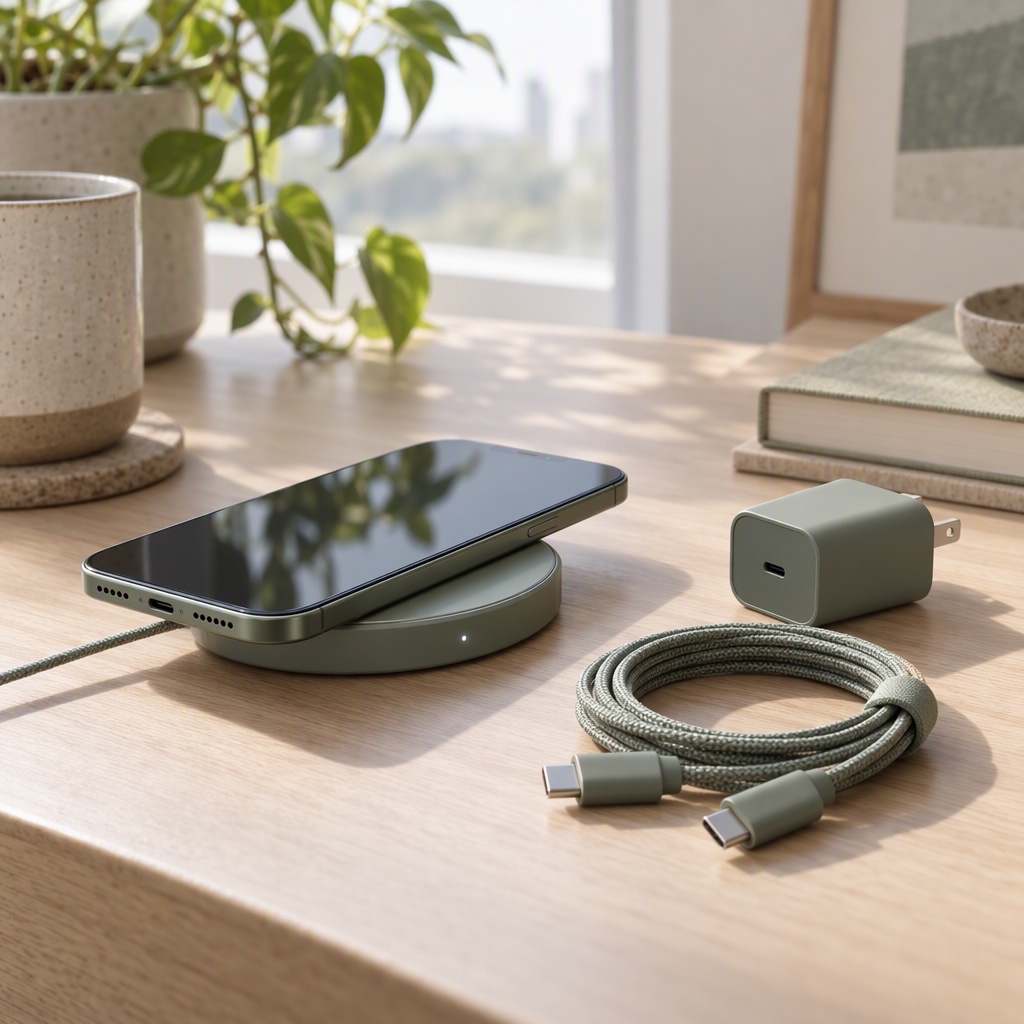
The wattage printed on a charging puck is the maximum power it can deliver, not a promise of what your phone will receive. A puck rated for fifteen watts will only push fifteen watts if your phone accepts that much and if the puck is fed by a strong enough adapter. In practice, most phones settle well below the headline figure for most of a charge. Understanding what the number does and does not mean saves you from buying a puck your phone cannot take advantage of.
- Wattage is the puck’s maximum output, not a guaranteed speed.
- Your phone sets the real limit, and it decides what to accept.
- A weak adapter or cable will cap the puck below its rating.
- Higher wattage only helps if the phone and adapter both support it.
What does the wattage number on a charging puck actually mean?
Wattage is a measure of power, calculated by multiplying volts by amps. A puck rated at fifteen watts can deliver up to fifteen watts of power to a compatible phone. That figure is a ceiling rather than a target, because the phone negotiates with the puck and asks for only as much as it can safely accept. Two pucks with the same rating can behave differently in practice depending on how well they hold their output and how much heat they generate. The number is a useful starting point for comparison, but it is not the whole story. Think of it as the size of a pipe rather than the speed of the water flowing through it, and you will read the number the right way.
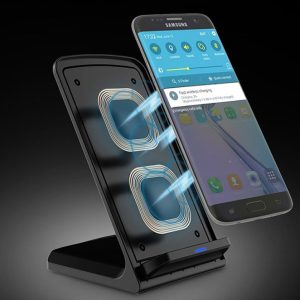
MagSafe & Charging — charger. Designed for everyday carry and backed by our 30-day happiness guarantee.
Why does a wireless puck deliver less power than the number suggests?
Wireless charging loses energy in the gap between the coil in the puck and the coil in the phone. Some of the power is converted to heat rather than stored in the battery, so a puck rated at fifteen watts might deliver closer to ten or twelve watts of useful charge. The alignment matters too: if the phone sits slightly off-center, efficiency drops and the phone may throttle the rate to avoid overheating. Case thickness plays a part as well, because extra distance between the coils weakens the transfer. A magnetic puck solves the alignment problem by snapping the phone into the correct spot every time, which is one reason magnetic charging often runs both faster and cooler than a plain flat pad. That is why a wired connection of the same wattage usually feels faster. The puck is not underperforming; wireless charging is simply less efficient by design, and the rating reflects what leaves the puck rather than what reaches the battery. Expect a slower charge and you will not be disappointed.
Does a higher wattage puck charge faster?
Only if everything else in the chain supports it. A phone that accepts ten watts will not charge faster on a twenty-watt puck, because the phone sets the pace. The adapter feeding the puck matters just as much: a weak adapter will starve a powerful puck, and a thin cable can cap the current before it ever arrives. So a faster charge needs a phone that accepts high wattage, an adapter that can supply it, and a cable rated for the current. If any one of those is the weak link, the whole chain runs at the slowest rate. Buy for your phone’s actual capability rather than for the biggest number on the box, and put the money into a solid adapter instead.
How do you match a puck to your phone?
Find out the maximum wireless charging rate your phone supports, then choose a puck that meets or slightly exceeds it. There is no harm in a puck rated higher than your phone needs — it will simply run below its ceiling — but there is no benefit either. What matters more is that the puck comes with or works with a strong enough adapter. Many wireless pucks need a particular adapter wattage to reach their top rate, and using a weaker one quietly halves the performance. If you want the flexibility of fast wired charging as well, a multi-port desktop charger can feed a puck and a cable at once, so you are covered whichever way you prefer to charge. Check the recommended adapter before you buy, and the puck will hit its rated speed.
MagSafe & Charging — charger. Designed for everyday carry and backed by our 30-day happiness guarantee.
Why does charging slow down partway through?
Most phones charge fastest when the battery is low and then slow down as it fills. This is deliberate: pushing full power into a nearly full battery generates heat and stresses the cells, so the phone tapers the rate for the last stretch. That is why the final twenty percent can take as long as the first fifty. Heat is the other brake. If the phone or puck gets warm, the phone reduces the charging rate to protect itself, and it may pause entirely if it gets too hot. Charging on a cool surface, removing a thick case, and avoiding direct sun all help keep the rate steady. The slow tail is normal behavior, not a fault with the puck, and every phone does it to some degree.
What else affects wireless charging speed?
Several small things add up. Alignment is the biggest: center the phone on the puck so the coils line up, and use a magnetic puck if your phone or case supports it, because it snaps into the right spot every time. Case thickness and any metal plate inside the case can block the field, so check compatibility before assuming a slow charge is the puck’s fault. Ambient temperature matters, since a hot room slows charging for everyone. Background activity also plays a role, because a phone running games or navigation while charging may barely gain any charge at all. If you want the fastest possible top-up, put the phone down, close heavy apps, and let the puck do its work without competing for power. For the wider comparison, our guide to wired versus wireless charging explains where each method wins, and what actually changes charging speed covers the rest of the chain.
Frequently asked questions
- Will a higher wattage puck damage my phone? No. The phone only draws what it can handle, so a more powerful puck is safe. It will simply run below its maximum for a phone that accepts less.
- Why is my puck warm to the touch? Some warmth is normal because wireless charging loses energy as heat. If it is uncomfortably hot, check alignment, remove a thick case, and make sure the adapter is appropriate.
- Do I need a special adapter for a fast wireless charge? Often yes. Many pucks only reach their top rate with a sufficiently powerful adapter, so check the recommended wattage before you assume the puck is slow.
- Can I charge through a case? Usually, if the case is thin and has no metal plate. Thick or metal-lined cases weaken the field and slow the charge, so test with the case off if speeds seem low.
- Is wireless charging worse for battery health? The extra heat is a mild negative, but the difference is small in normal use. Keeping the phone cool matters more than the method you choose.


