
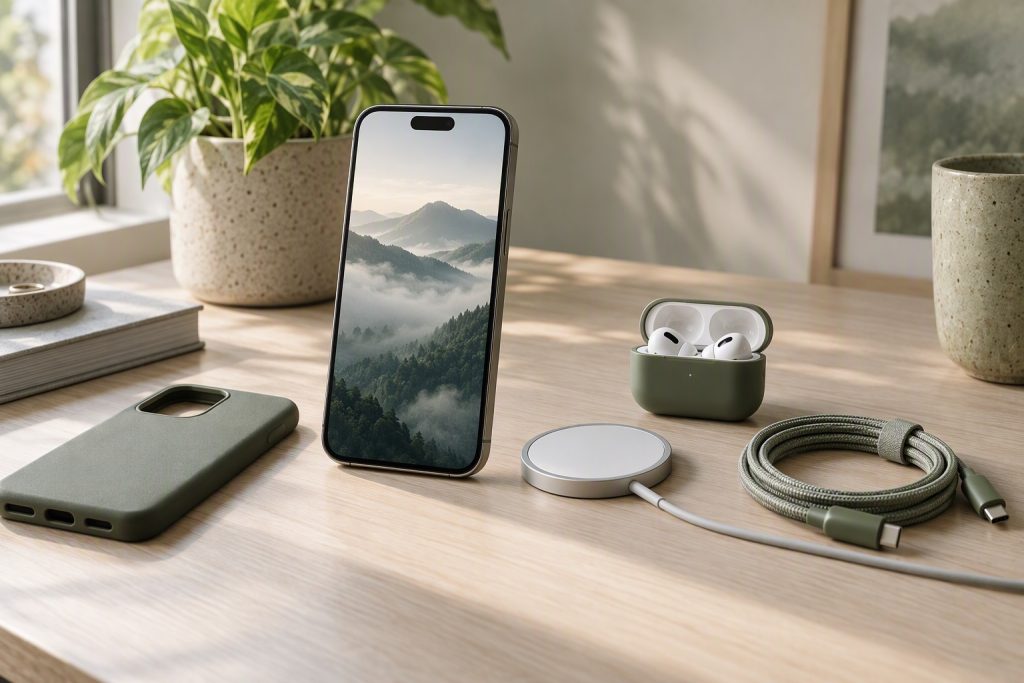
Humidity is the quiet problem in a phone case. It does not crack a screen or bend a frame, so it never gets the attention that drops and scratches do — but over a wet spring, damp air works its way into the materials a case is made from and changes them. Leather softens and then stiffens, fabric holds a smell, clear shells fog from the inside, and adhesives slowly give up. None of that happens overnight, which is exactly why it goes unnoticed. Understanding which materials absorb moisture and which ignore it is the difference between a case that lasts two seasons and one that lasts five.
- Humidity affects the case more than the phone — the materials absorb moisture and slowly change shape, color, and feel.
- Hard shells, glass, and metal are largely unaffected; leather, fabric, and foam liners absorb the most.
- The gap between the case and the phone traps damp air, so the inside stays wet longer than the room does.
- Air cases out weekly, dry them away from direct heat, and never store them in a sealed plastic box.
What does humidity actually do to a phone case?
Humidity is water suspended in the air, and a case that spends weeks in damp air slowly takes it on. The early effects are mild: a slight softness, a tacky feel, a faint smell, or a dull haze under a clear shell. Over time the more useful problems appear. Adhesive holding a liner or a magnet can soften, dyes can migrate onto lighter surfaces, and stitching on a fabric or leather case can loosen as the fibers swell and shrink with the weather. Humidity rarely destroys a case in a single afternoon — it works slowly, which is exactly why it is easy to ignore until a case that felt fine in January feels slightly wrong by the end of a wet spring.
iPhone Cases — case. Designed for everyday carry and backed by our 30-day happiness guarantee.
Which materials handle humidity best?
Not all materials react the same way. Hard polycarbonate shells, tempered glass, and metal frames are essentially unaffected — they may fog on the outside, but they do not absorb water. Thermoplastic polyurethane, the flexible material behind many slim cases, is fairly tolerant and returns to its original shape once it dries. The materials that struggle are the ones with an open structure: leather, suede, woven fabric, and foam liners soak moisture up like a sponge and hold onto it. Silicone sits in the middle — it does not absorb much, but a soft silicone shell can trap a thin film of moisture against the phone and feel clammy for days. If you live somewhere genuinely damp, a hard shell with a smooth finish is the least demanding choice you can make.
Why do leather and fabric cases suffer most?
Leather and fabric are the materials most people fall in love with, and the ones that demand the most in humid weather. Leather is skin: it swells slightly as it takes on moisture, then stiffens and can crack as it dries, and repeated cycles of that eventually leave it looking tired. Light-colored leather is also prone to water spotting, where droplets leave darker rings that fade unevenly. Fabric absorbs more water than leather and dries more slowly, and the padding underneath can stay damp long after the outside feels dry — which is precisely the condition that encourages a musty smell. Neither material is a bad choice, but both need regular airing rather than a season spent in a damp bag or a closed drawer.
What happens inside a case in a humid room?
A case is not a sealed container, but it does slow the movement of air, and that is the part that matters. In a humid room, moisture works in around the edges and settles in the gap between the case and the phone’s back panel. Because that gap is poorly ventilated, it stays damp longer than the room does. Dust and skin oils mix with the moisture to form a film that can dull a clear case from the inside and leave marks on the phone’s finish. If the phone also warms up while charging, that trapped moisture turns into a very gentle steam — not harmful in itself, but it does speed the process along. The fix is not a sealed case but one you remove and air out regularly.
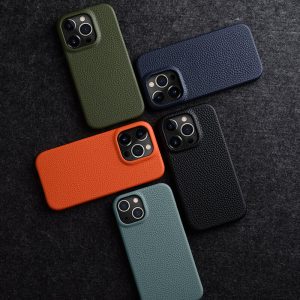
iPhone Cases — case. Designed for everyday carry and backed by our 30-day happiness guarantee.
How do you dry a case that has absorbed moisture?
Take the case off the phone first, because the phone needs air as much as the case does. Wipe the case with a dry, soft cloth, then let it sit somewhere with moving air — a windowsill in the shade, a spot near a fan, or any room with a window open — rather than in a closed drawer or a sealed bag. Do not use a hair dryer, a radiator, or direct sun, all of which can warp flexible cases and dry leather out so fast that it cracks. Leather benefits from being wiped and then left to dry slowly at room temperature; fabric needs longer than you think, so give it a full day. Clear shells should be washed with mild soap and water, dried completely, and refitted only once every surface feels dry.
How do you stop humidity from getting in at all?
You cannot keep a case out of humid air, but you can stop it from sitting in it. Rotate cases if you own more than one, so each gets a rest in a dry place between uses. Store spares in a breathable cloth bag rather than a sealed plastic box, which traps whatever moisture was already present. Give a case a quick wipe when it comes in from the rain, and take it off the phone at the end of a wet week so both can breathe overnight. If you keep a case in a gym bag or a bathroom, move it — those are the two dampest places a phone accessory ever ends up. A little airflow is the whole trick. For the cleaning side, see how to clean a phone case properly and how to take care of a leather phone case.
Frequently asked questions
- Will humidity damage my phone as well as the case? Only if moisture reaches the ports. A case that traps damp air against the back panel is low risk; a wet charging port is the part worth worrying about.
- Are clear cases worse in humid weather? They show the problem more. Moisture and dust trapped inside leave a haze that is obvious on a clear shell and invisible on an opaque one.
- Can I put a damp case back on my phone? Better not. Let it dry fully first so you are not sealing moisture against the phone’s back panel for the next few days.
- How often should I air out a case? Once a week in humid weather is plenty. Take it off overnight in a dry room and wipe the inside with a dry cloth.
- Does a case protect a phone from humidity? Not really. It slows air movement but does not seal. Keep the phone out of damp rooms and dry the port area when it gets wet.


